
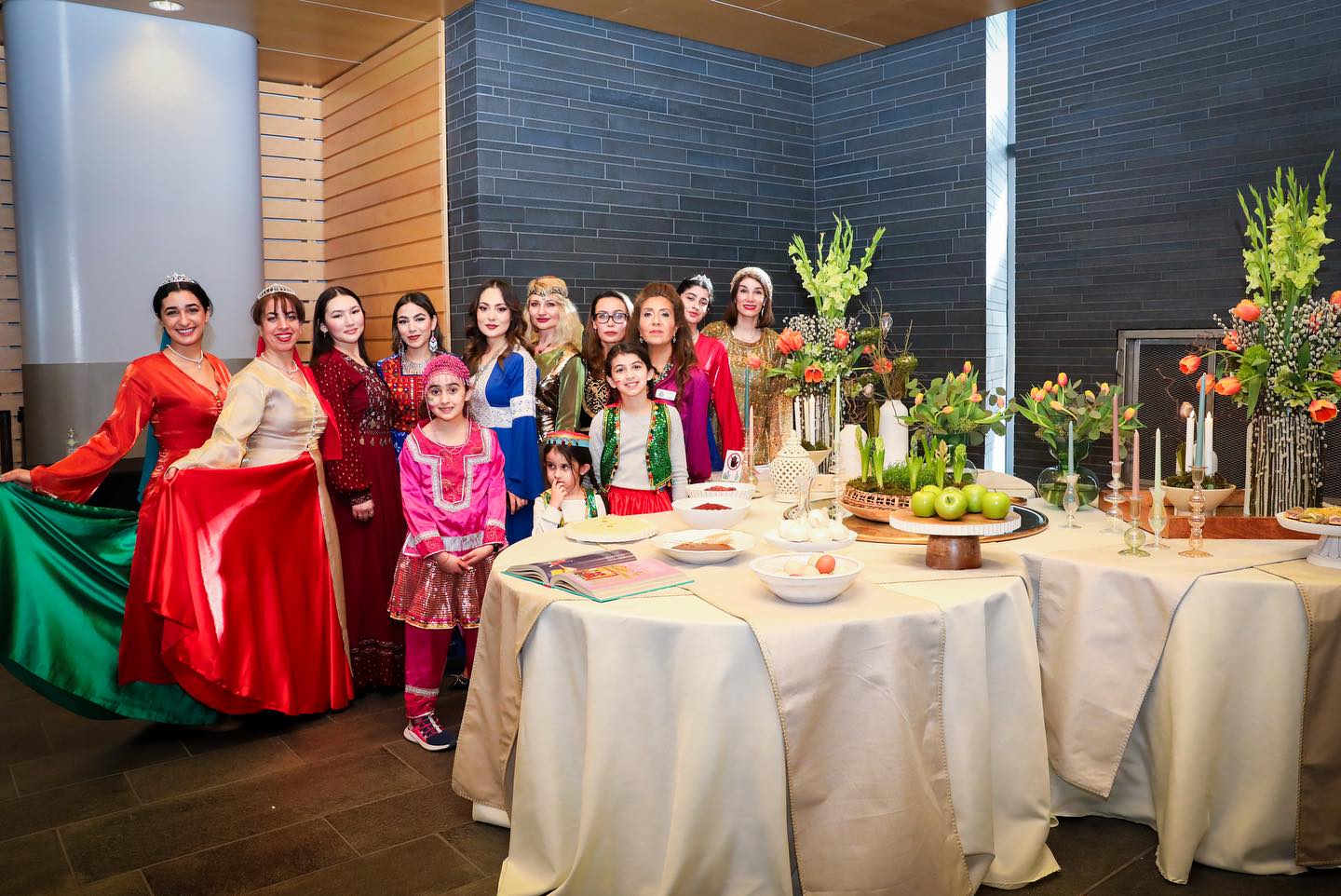
What Is Nowruz, and How Is It Celebrated in the Seattle Area?
Every year, as winter loosens its grip and the first days of spring arrive, millions of people across the world mark the occasion with one of humanity’s oldest celebrations. Nowruz — literally meaning “new day” in Persian — has been observed for over 3,000 years. Rooted in ancient Persian civilization, it begins at the precise moment of the spring equinox, usually March 20 or 21, when day and night are nearly equal in length.
In 2009, the United Nations Educational, Scientific, and Cultural Organization (UNESCO) recognized Nowruz as an Intangible Cultural Heritage of Humanity, and today it is celebrated by more than 300 million people across the Middle East, Central Asia, and beyond.
The traditions of Nowruz vary across cultures and countries, but renewal and community sit at the heart of every celebration. In Iran, families arrange the Haft-Seen — a ceremonial table set with seven symbolic items, each beginning with the Persian letter “S,” representing values like health, love, and prosperity.
In Afghanistan, people wear new clothes, gather with extended family, and prepare Haft Mewa, a traditional dish made from seven dried fruits and nuts. In Central Asia, communities gather to prepare sumalak, a sweet wheat-sprout paste stirred communally for up to 24 hours, connecting neighbors through shared labor and memory.

PhotoYari
Here in the greater Seattle area, these ancient traditions have found a vibrant new home. According to a study I conducted, Nowruz in King County, Washington: Cultural Continuity, Identity Reconstruction, and Community Belonging, immigrants from Afghanistan, Iran, Uzbekistan, Turkey, and other Nowruz-celebrating countries have built a thriving community.
With them, Nowruz has evolved from quiet family gatherings into prominent public celebrations. What once unfolded in private living rooms now fills Seattle City Hall, public libraries, performance centers, university halls, and the Washington State Capitol.
Several organizations have driven this transformation. The Seattle–Isfahan Sister City Advocacy (SISCA) hosts large-scale celebrations annually at Seattle City Hall, drawing thousands attendees with cultural performances, art exhibitions, and traditional cuisine.
The Seattle–Tashkent Sister City Association (STSCA) brings Central Asian traditions to the forefront through its annual Nowruz festival, while Peyvand, a Persian cultural nonprofit, focuses on education — developing Nowruz installations for King County libraries and creating school kits to introduce the holiday to younger generations.
The Hazara Community of Washington (HCWA) brings Afghanistan’s diverse heritage to life through traditional clothing, live music, and dance, creating an engaging and entertaining experience. The Kurdish Association of Washington (KAWA) adds yet another dimension, showcasing Kurdish heritage through music and dance.
For many people, Nowruz is not only a celebration — it is a time of emotional renewal, a connection to culture, and a way to build community. In the diaspora, Nowruz often becomes more intentional and meaningful than in countries where it is widely celebrated, because it must be actively preserved. Families teach children the meanings behind the traditions, while community organizations bring Nowruz into libraries, schools, and public spaces to encourage cultural exchange and understanding.
Shahrzad Shams highlighted the contrast between celebrating Nowruz in Iran and in the United States: “In Iran, the arrival of Nowruz permeates public life; in the diaspora, celebrations are often confined to private homes. Outdoor festivities are limited, and because children typically have school the following day, families rarely stay awake to mark the exact moment of the spring equinox that ushers in the new year.” As Shams recalled, “there were many times when I found myself sitting alone at the Haft-Seen table — an experience that was both joyful and bittersweet.”

LSS Photography
Nowruz also serves as a cultural anchor, helping people stay connected to their heritage and pass it on to younger generations who grow up far from their ancestral homelands. Despite challenges, Nowruz in the Seattle metropolitan area has not faded; instead, it has become stronger. It creates a sense of belonging, brings together diverse communities, and connects people to a shared cultural identity while enriching the region’s multicultural life.
Mahsum Kavut, an active member of the Kurdish Association of Washington (KAWA), emphasized that Nowruz is deeply intertwined with identity: “As a Kurd, cultural expression is not merely a choice but an essential part of existence. The ability to share one’s culture is fundamental to being recognized and understood. In this sense, Nowruz becomes a powerful vehicle for asserting presence, preserving heritage, and resisting cultural erasure.”
In Seattle, Nowruz is not merely preserved — it is actively rebuilt each spring, carrying ancient roots into new ground.