
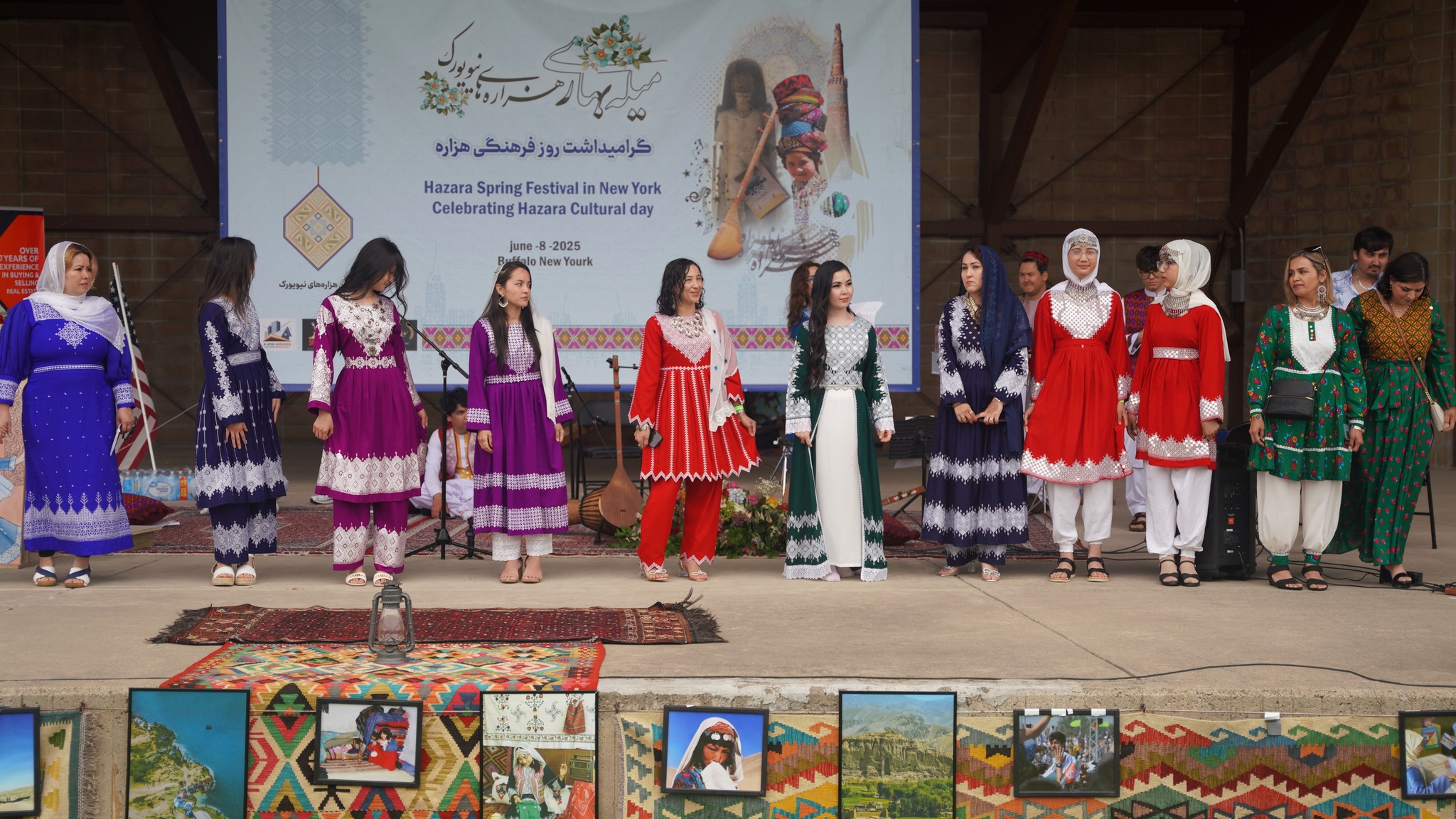
Every year around May 19, colorful Hazaragi dresses appear across social media feeds. Traditional songs echo through community halls and parks in cities thousands of miles far from Afghanistan. Young people dance local Hazaragi dances beside elders who carry memories of exile, war, and loss. Tables fill with steaming plates of Hazaragi dishes. For one day, scattered communities across the world feel connected again.
It is called International Hazara Culture Day — a celebration born not only from affirmation, but from survival.
Since 2018, Hazaras have marked May 19 as a day to celebrate Hazara identity, history, and culture. What began in Pakistan soon grew into a global celebration embraced by Hazaras and their allies across the world, observed across Europe, North America, Australia, and parts of Asia. Also here in the Seattle area — last year at Marymoor Park, and this year at Lake Sammamish State Park. For many Hazaras, the day is deeply emotional. It is a rare chance to publicly celebrate a heritage that has long been suppressed, denied, marginalized, or targeted.
The Hazara people are an ethnic group native mainly to central Afghanistan, a mountainous region historically known as Hazarajat (Hazaristan). Significant Hazara communities also live in Pakistan and Iran, while hundreds of thousands now live across Western countries as immigrants, refugees, and diaspora communities. Hazaras speak Persian and are mostly Shia Muslims.
But Hazara history is also marked by persecution.
One of the darkest chapters came between 1891 and 1893 during the rule of Amir Abdul Rahman Khan, often called the founder of the modern state of Afghanistan. Following campaigns declared against the Hazaras, large-scale massacres, forced displacement, enslavement, and land confiscations devastated the community. Backed by a council of religious clerics, he labeled the Hazaras as infidels and ordered jihad against them. Historians estimate that more than 60 percent of the Hazara population was killed or displaced during this period. The trauma of those years still lives in Hazara collective memory.

Aman Sedaqat
Discrimination did not end there. For generations, Hazaras faced political exclusion, social marginalization, sectarian violence, and barriers to employment and opportunity in Afghanistan. Beyond genocide and persecution, Hazaras have also experienced cultural erasure. Their history, identity, and cultural practices were often marginalized, suppressed, or excluded from mainstream narratives.
Cultural expression has often felt restricted or unsafe for them. That history helps explain why Hazara Culture Day matters so deeply.
For many Hazaras culture has become a form of resistance, a way of protecting identity from erasure. Music, dance, poetry, language, embroidery, traditional clothing, storytelling, and food are not simply customs; they are acts of remembrance.
Hadi Miraan, a Hazara poet and author writes, “The revival of traditional Hazara dances should be an essential part of the diverse programs celebrated on Hazara Culture Day. These dances should be understood not simply as cultural performances, but as part of a broader effort to rebuild historical memory, seek cultural justice, and reclaim the dignity and human rights of the Hazara people. Reviving these traditions helps preserve a rich cultural heritage while also healing a wounded collective memory and restoring a sense of belonging, identity, and social connection within the community.”
In many Western countries, Hazaras are now reclaiming parts of their heritage that earlier generations were often forced to hide. A teenager in Seattle wearing traditional Hazara clothing, a poetry reading and dance in Melbourne, a cultural festival in Germany, or a small family gathering in Toronto may seem ordinary from the outside. But for many Hazaras, these moments carry the weight of history.
There is also another reason the celebration resonates so widely: Hazaras have often felt invisible in discussions about Afghanistan. Many activists and scholars have pointed to the underrepresentation of Hazaras in academic research, media coverage, and official narratives about the country.
Hazara Culture Day pushes back against that invisibility. It says: We are here. We have a history. We have a culture worth celebrating.

Ali Elham
Ali Amiri, a university professor and author of several books, said in a podcast interview that Hazara culture has long been dynamic, open-minded, and receptive to the positive influences of other cultures. He said, “Hazaras have, through a long and changing history, preserved a strong cultural spirit that has survived from ancient times to today and continued to live on through different generations and historical changes.”
Hazara culture remains vibrant. Hazara music carries both sorrow and resilience. Traditional clothing reflects the colors and patterns of the central highlands of Afghanistan. Family gatherings are filled with poetry, humor, and storytelling. Across the diaspora, artists, writers, musicians, and young activists are finding new ways to preserve and reimagine their heritage.
Perhaps that is what makes Hazara Culture Day so powerful. It is not only about the past. It is about continuity and resistance.
A people who survived massacres, displacement, and generations of discrimination are still singing, still creating, still gathering around the same foods and stories. Across borders and continents, May 19 has become more than a cultural celebration. It is a quiet declaration that identity can endure even after attempts to erase it.