
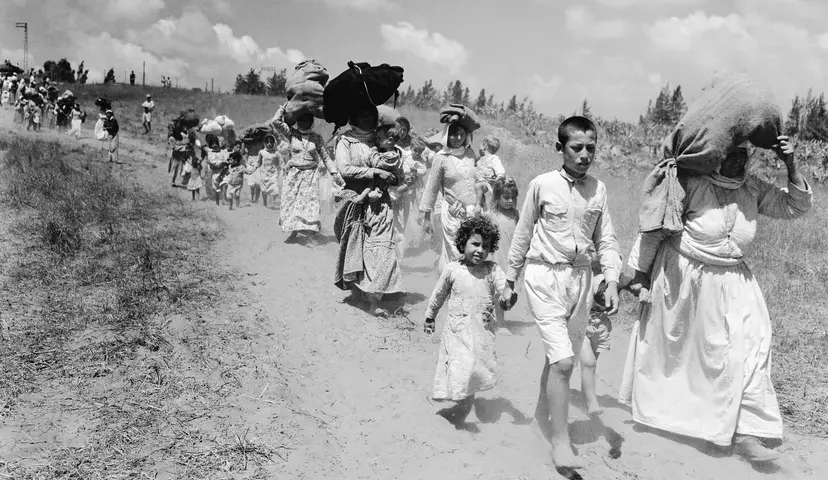
Generations of Palestinians have faced displacement, conflict, and uncertainty, with the events of 1948 continuing to shape life in Gaza today.
The history of Gaza cannot be separated from the broader history of Palestine. From the mass displacement of Palestinians during the 1948 Arab-Israeli War to the ongoing conflicts of the 21st century, Gaza has become a symbol of both resilience and tragedy. Examining this history is essential to understanding the humanitarian crisis that continues to affect millions of Palestinians today.
More than 70 years ago, hundreds of thousands of Palestinians fled or were forced from their homes during an event known as the Nakba, or “catastrophe.” The displacement that began in 1948 did not end with a single war. For many Palestinians, it marked the beginning of decades of displacement, occupation, and recurring violence that have shaped life in Gaza and continue to fuel one of the world’s most contested humanitarian crises.
To understand the crisis in Gaza today, it is important to begin with the Nakba, a defining event in Palestinian history. The word “Nakba,” meaning “catastrophe” in Arabic, refers to the mass displacement and dispossession of Palestinians during the 1948 Arab-Israeli War, which accompanied the establishment of the state of Israel.
According to the United Nations, more than half of the Palestinian population was displaced from their homes as a result of the conflict. The events of 1948 created a refugee crisis that continues to affect millions of Palestinians and their descendants across the Middle East.
For many Palestinians, the Nakba is not only a historical event but also the beginning of an ongoing struggle for justice, self-determination, and the right to return to their homeland.
The consequences of the Nakba were especially significant for Gaza. As hundreds of thousands of Palestinians fled or were forced from their homes during the 1948 war, many sought refuge in the Gaza Strip. The sudden arrival of displaced families caused Gaza’s population to increase rapidly, placing pressure on the territory’s already limited resources.
Refugee camps were established to provide shelter and assistance, but many developed into permanent communities as families remained unable to return to their homes. According to Al Jazeera, more than 70% of Gaza’s population consisted of refugees or descendants of refugees from the 1948 displacement.

Saher Alghorra / ZUMA Press
The loss of homes and communities affected more than just where people lived. Hundreds of Palestinian villages were depopulated or destroyed during and after the war, leaving many families separated from their land, property, and cultural heritage.
For Palestinians, memories of these villages have been passed down through generations, preserving a connection to places that no longer exist in their original form. As a result, the events of 1948 remain a central part of Palestinian identity and collective memory.
Many Palestinians view the Nakba not as a single historical event but as the beginning of an ongoing experience of displacement and conflict. Its effects continue to shape Palestinian life, particularly in Gaza, where refugee communities have remained a significant part of the population.
Nearly two decades after the Nakba, another major turning point occurred during the Six-Day War of 1967. As a result of the conflict, Israel captured the Gaza Strip and the West Bank, beginning a period of military occupation that would have lasting political and social consequences.
For Palestinians in Gaza, the occupation introduced new restrictions and tensions that further complicated daily life and deepened the region’s instability. Israel withdrew its permanent ground forces and settlements from Gaza in 2005 but continued to control key aspects of the territory’s borders, airspace, and maritime access. Following Hamas’ takeover of Gaza in 2007, Israel and Egypt imposed significant restrictions on movement into and out of the territory.
On Oct. 7, 2023, Hamas-led militants launched a surprise attack on southern Israel, killing approximately 1,200 people and taking more than 250 hostages, according to Israeli authorities. In response, Israel launched a large-scale military offensive in Gaza, stating its goals were to dismantle Hamas and secure the release of the hostages.
The resulting conflict caused widespread destruction, displaced much of Gaza’s population, and created a devastating humanitarian crisis. According to the United Nations and humanitarian organizations, the fighting severely damaged homes, hospitals, schools, and essential infrastructure, leaving civilians struggling to access food, clean water, shelter, and medical care.
These developments added new layers to a conflict already shaped by decades of displacement and competing claims to land, security, and self-determination.
More than seven decades after the Nakba, many Palestinians continue to live with the consequences of displacement, loss, and conflict. Generations have grown up in refugee camps and communities shaped by uncertainty and repeated cycles of violence.
While the Nakba is often discussed as a historical event, its consequences are still visible in Gaza today. In its timeline documenting the humanitarian catastrophe in Gaza, Doctors Without Borders describes how many people have been forced to leave their homes multiple times as a result of ongoing violence and military operations.
For many families, displacement is not just a part of history but a continuing reality that affects where they live, how they access basic necessities, and whether they can remain with their loved ones.
Understanding this historical background helps explain why questions of land, identity, and the rights of refugees continue to play a major role in the Israeli-Palestinian conflict.
The story of Gaza is not only a history of conflict but also a story of endurance. From the Nakba to the humanitarian crisis unfolding today, generations of Palestinians have faced displacement, loss, and uncertainty.
Although decades have passed since the events of 1948, their consequences continue to shape the lives of Palestinians in Gaza, connecting the struggles of the past with the challenges of the present.