
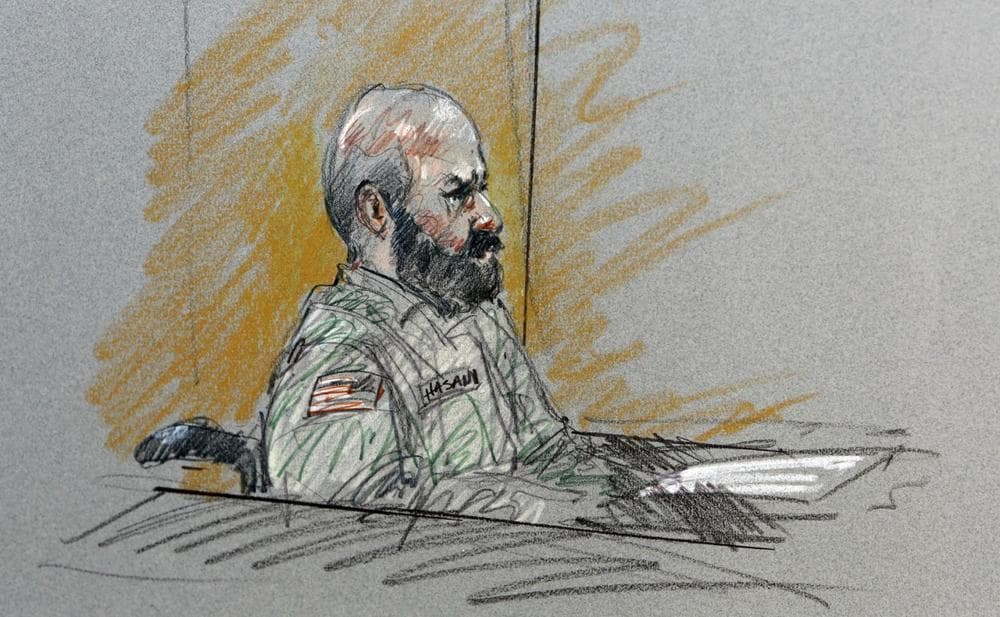
Last month the Pentagon took steps towards executing Nidal Hasan via firing squad, and there were floating ideas of broadcasting it. It will be the first military execution in 60 years, and the first firing squad military execution since World War II. It would have also been the first broadcast public execution in American history. The decision to broadcast it was touted by Defense Department spokesman Sean Parnell in his X post “Judgment day for Hasan has finally come.”

Joe Raedle, retrieved from KPBS
Major Nidal Hasan was an Army psychiatrist and was stationed in Fort Hood, Texas. On Nov. 5, 2009, at a processing center for troops being deployed to Afghanistan, he brought two firearms into Fort Hood, and was convicted of killing 13 people and injuring 32. The attack ended when he was shot by a security officer and thus paralyzed. He was sentenced to death in 2013.
He stated that he attacked because of the actions the United States was taking in the Middle East. The military spent $5 million to carry out Hasan’s trial, and the majority of that money went towards security measures.
In approving the public execution, President Donald Trump followed the recommendations of Defense Secretary Pete Hegseth. Hegseth ran the idea of broadcasting Hasan’s firing squad execution to deter crime, however University of Stanford’s John Donohue III, a Professor of Law, pointed out, “This is a terrible idea for a number of reasons. There is no credible evidence that the death penalty deters murder. … Determined efforts to establish a deterrent effect of the death penalty have uniformly failed, and so the idea that a public execution of the type that Secretary Hegseth desires will have a beneficial effect is without empirical support.”
The United States’ last known public execution was in 1937 in Missouri, but the most publicized final execution was on Aug. 14, 1936, in Owensboro, Ky. The victim in question was Rainey Bethea, a Black man who pleaded guilty to murdering Lischia Edwards.
Out of all 38 countries in the Organization for Economic Co-operation and Development, the United States is one of the two countries that still performs capital punishment, the other being Japan. And in 2025, the United States executed 46 more people than Japan.
Brigitte Woosley, retrieved from Voice of America News
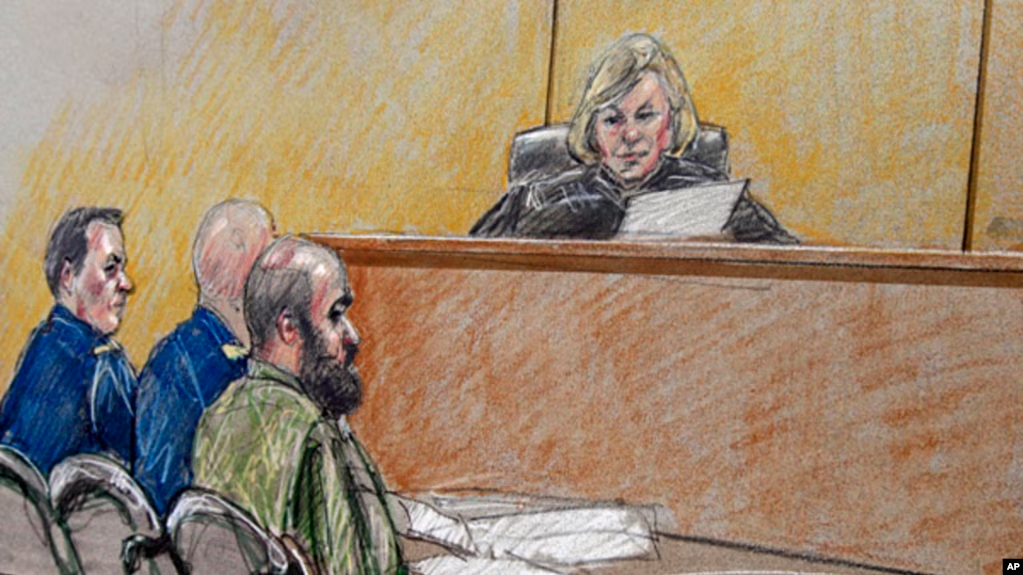
On Oct. 15, a week after the broadcasting idea was initially proposed, President Trump announced that the execution would, in fact, not be live-streamed. However, Nidal Hasan will still be executed by the military, and it will still be via a firing squad set for December.
Those injured or families of the victims are allowed to spectate. Sean Parnell wrote to ABC News, “President Trump and Secretary Hegseth spoke about the decision to not livestream Hasan’s execution ahead of the Truth Social announcement. The secretary supports the President’s decision, and they are completely aligned.”
In a poll, eight out of 10 Americans were opposed to the notion of livestreaming or broadcasting Hasan’s execution, which is what many think turned the tide of this decision. What this means for future states’ capital punishment methods is still unknown.
The victims of the Fort Hood shooting, however, are relieved to hear that the public execution will not be livestreamed. “Justice doesn’t need to be broadcast to be real,” said Keara Torkelson, a victim of the Fort Hood shooting. “And the victims and survivors shouldn’t have to relive any part of this through a public spectacle.”