
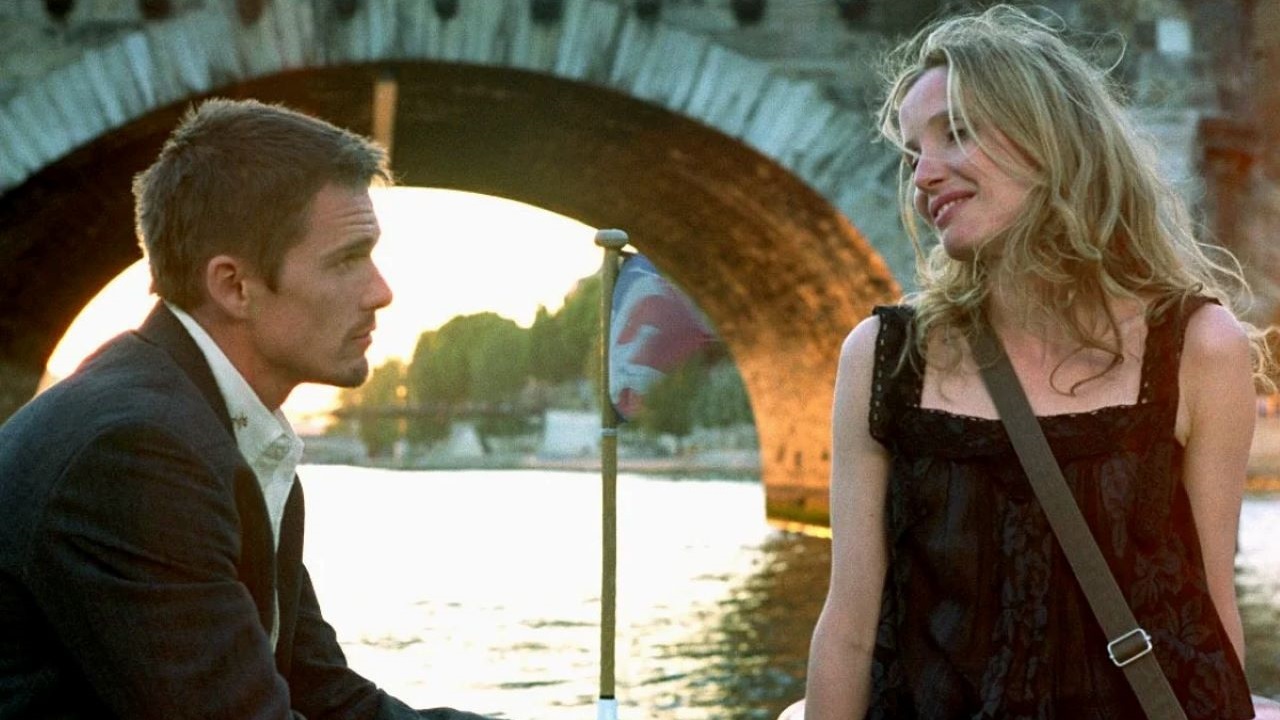
Nearly nine years after I first watched “Before Sunset”, I returned to it and found that the film had never really left me. Some films stay with us because of their dramatic stories or unforgettable images. Others linger for different reasons – they make us imagine the lives we might have lived, the beautiful dreams we have carried, the conversations we wish we had had, or the people we might still meet someday. For me, “Before Sunset” has always belonged to the second category.
I have a particular fondness for minimalist, low-budget films that rely on realistic dialogue rather than elaborate plots or spectacular visuals. “12 Angry Men” is one example. I enjoy films that give people space to talk, disagree, reveal themselves and change their minds. Richard Linklater’s “Before Sunset”, (starring Ethan Hawke and Julie Delpy) does exactly that.

PBS
The film is the second installment in Linklater’s Before trilogy, following “Before Sunrise” and preceding “Before Midnight”. The three films were released roughly nine years apart, allowing the characters to grow older alongside the actors who portray them. Of the three, “Before Sunset” has always felt the sweetest and most captivating to me. Its beauty lies not in grand romantic gestures but in the small moments between two people who have a history together and perhaps still have something left to discover about each other.
Watching the film again, I realized that I was not seeing exactly the same movie I had seen nearly nine years earlier. My perspective had changed, and so had the world around me.
When I first watched it in Kabul, Afghanistan, one detail that caught my attention was how openly Céline (played by Delpy) talked about her sexual experiences and former boyfriends. At the time, that openness stood out to me. Watching it again, I found it much more ordinary. In today’s cultural landscape, conversations about sexuality, polyamory, and open relationships have become more visible and, I believe, more humane. What once seemed striking to me had become less surprising.
I also found myself noticing the film’s quieter references to American culture, including its relationship with gun ownership. These details might seem minor, but they reminded me that watching a film is never entirely separate from the person watching it. We bring our own experiences, cultural backgrounds and assumptions to the screen. A scene that feels unusual at one point in our lives might seem perfectly familiar years later. Sometimes the film has not changed at all; we are the ones who have changed.
Another reason I continue to appreciate the trilogy is its refusal to present love as a perfect, effortless experience. Romantic films often make love look like a solution to life’s problems, as though finding the right person will make everything else fall into place. Linklater’s films are more interested in what happens after the initial attraction: the misunderstandings, disagreements, frustrations and compromises that come with sharing a life. Particularly in “Before Midnight”, the final film, love is shown alongside tension and conflict. Disagreement is not necessarily evidence that a relationship has failed, it can be part of what makes a relationship real.
That realism is what makes the romance in “Before Sunset” so appealing to me. The conversations between Jesse and Céline feel less like carefully written speeches designed to impress an audience and more like the kinds of conversations people have when they are trying to understand one another. Their words carry the weight of what has happened between them, as well as the uncertainty of what might happen next. Beneath their casual exchanges is a question that many of us recognize: How much of our lives is shaped by the choices we make, and how much by the opportunities we miss?
Rewatching the film also awakened a small, sweet wish in me. I imagined that perhaps nine years from now, I might be walking through the streets of Paris with a woman, stopping for coffee and talking about love, relationships, and life. But perhaps that scene does not need to take place in Paris. It could happen here in Seattle, walking through downtown with a woman and talking about our different cultural backgrounds.
I could share something about the Persian-speaking world, about the places and experiences that have shaped my understanding of life, while listening to her stories in return. The setting might be less cinematic than Paris, but the conversation could be just as meaningful.
Of course, the reality might not be as beautiful as the version I have created in my imagination. Real conversations can be awkward. People misunderstand each other, run out of things to say or discover that their expectations do not match. A walk that seems magical in a film might simply be an ordinary afternoon in real life. Yet there is something lovely about imagining such a possibility, even without knowing whether it will ever happen. That might be worth missing a flight for.
Perhaps that is part of what “Before Sunset” has given me over the years. It has not made me believe that romance is always beautiful or that every meaningful encounter leads to a lasting relationship. Instead, it has reminded me of the pleasure of conversation itself – the chance to encounter another person’s world, share a little of my own and discover what might emerge between us.
Nearly nine years after watching it in Kabul, I am now watching it from a different place, with different experiences, and a different understanding of the world. The film remains the same, but my relationship with it has changed.