
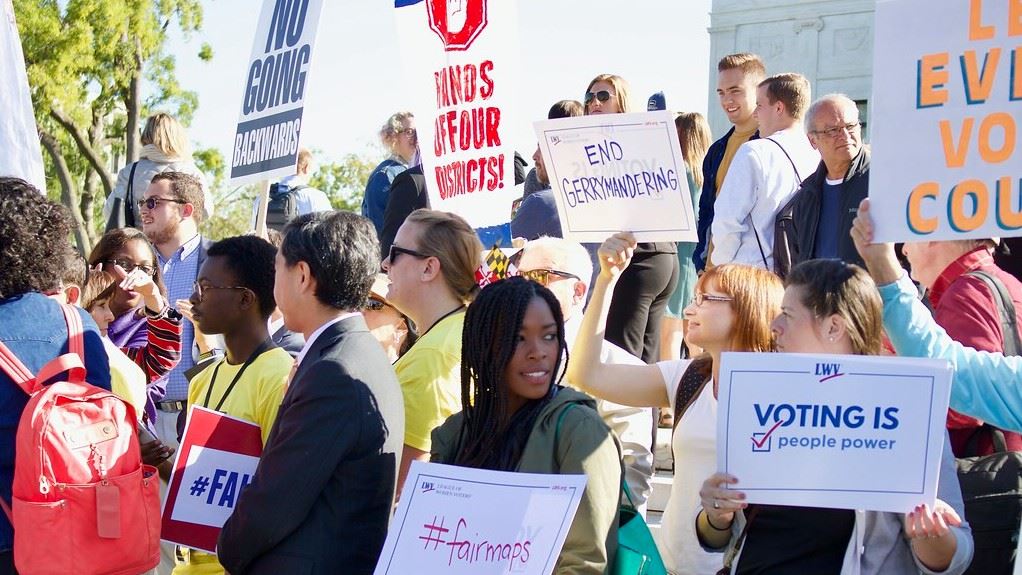
With midterms coming up on November 3, many young voters in America believe voting won’t bring change. Plagued by the costs of living and an affordability crisis on things like gas, healthcare, and food prices, young voters across America are struggling.
Voting at the beginning of American history was reserved to white men who owned property. This meant that everybody else outside of this group had no say in their government.
Obviously, throughout history this changed, we now live in a time where all American citizens at the age of 18+ have the right to vote regardless of race, gender, or economic status. So why are young people not voting?
According to King County Elections Ballot return statistics, in the November General Election, 134,029 18-24 year olds were registered to vote and only 30,480 (22.74%) voted in the General Election. Compare this to the 314,739 65+ year olds registered to vote, and 201,463 (64.01%) who voted in the General Election.

Washington Secretary of State
One misconception is that young voters just don’t care, but that’s not necessarily true. Young voters stepping into the world feel a sense of uncertainty in their government. There is a lack of trust and understanding on how their government works. Erin Ramirec, a student at Highline College, states that there is a desensitization in politics amongst young people – they don’t realize the impacts politics has on their lives.
According to the Harvard Youth Poll in an article “A Generation Under Pressure — and Losing Faith in the System” by the Institute of Politics at Harvard University, “Just 33% of young Americans say they trust the 2026 elections will be conducted fairly, while 43% do not and 21% are unsure, highlighting deep uncertainty about the integrity of the process.”
Young voters do believe that being an active participant in their government is important, but many don’t believe that things like voting will make a true difference. Steven Leng, an international student at Highline College from Cambodia who won’t be able to vote, said, “Voting is important because if you’re living in a country, your vote is important. … The media and the people determine how a government should run, so it’s important to vote.”
With the Trump administration politically aligned with Silicon Valley and encouraging the development of AI through the construction of data centers, and news of the Trump administration using millions of taxpayers dollars to fund Republican campaign advertisements, it’s easy to feel that voting is pointless.
Young voters are overwhelmed with everything that’s going on. As they step into politics, they are hit with loads of information, and don’t get the time to properly assimilate into society. This builds up into a negative view and creates disinterest for them about politics.
Young voters begin to feel a sense of helplessness on what they don’t understand, and in the words of Rory O’Kane, a student at Highline College, who said, “People who expect the worse accept the worse.”
In an interview, Abigail Afework said, “Politics has gotten so extreme, and America is even more divided than ever.” Ever since the presidential election in 2024, people in politics now stand at two ends, with very little in-between, things seem either one way or the other.
This affects young voters because with no middle ground, and no prior education into politics today, things can get overwhelming, especially since they have to worry about inflation on living expenses like food and healthcare.
This does not mean that young voters aren’t doing anything about it. Nguyen Le, an international student at Highline College from Vietnam may be new into politics, but she doesn’t allow herself to stay uninformed, and this is the same for the majority of young voters.
In a conversation with Akira De Guzman and Martha Ronero, both students at Highline College, not only do they believe that voting is important, but they also believe voting creates a community in which Americans get to use their collective voice to make decisions.
Despite all the feelings that young voters may feel, they do care, and they will do something about it. Voting may not be the main action that young adults take, but they’re not doing nothing. Through volunteering, signing petitions, advocating, joining community organizations, and discussing political issues with those around them, young adults are taking action, sometimes just in their own way outside of the voting booth.