
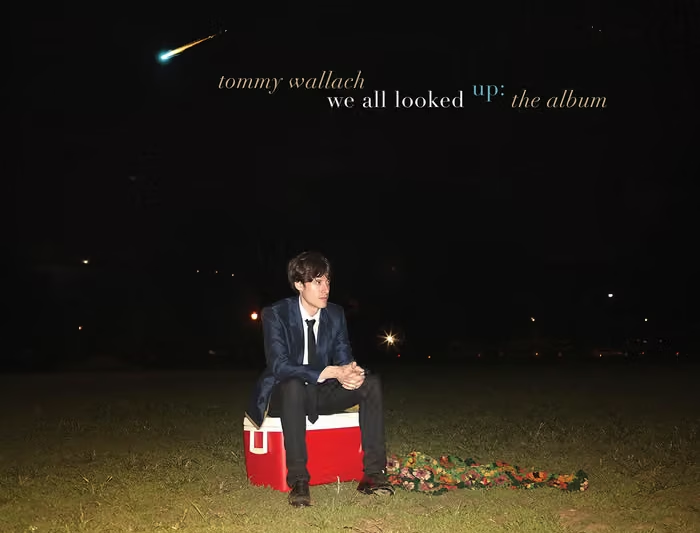
Tommy Wallach debuted with his 2015 novel “We All Looked Up”, and despite the soap opera written on the page, between the lines is a story about philosophy, the meaning of life, and that you never have to let the world define who you are. It’s a book that can simultaneously make you roll your eyes and make you bawl on the same page.

Visit Bellevue
The book centers around high school kids in Seattle who are very archetypal in their characters. Peter, a senior jock with a beautiful plastic girlfriend who, as the book sets up, he cheated on with Eliza after a frustrating argument. Peter also has a younger sister nicknamed Misery (cliche, I know) who is dating Andy’s best friend. Andy is set up as a skater slacker kind of kid, who hangs out with the wrong kind of people – including Bobo, his completely dreadful best friend. Eliza is set up to be a quiet, moody, nonchalant, and promiscuous girl who doesn’t really care about anyone or anything. And then, Anita, the goody-two shoes star-child prodigy.
They live their stereotypical lives until they discover an asteroid is going to hit the Earth in two months, and must discover what they want out of the short lives they now get to live.
The book, straight out of the gate, sets up one of the two major themes of the story. Peter goes to his history teacher after school, because in class he explains a Pyrrhic victory can be like achieving a deal with a national sports deal, but not being happy about the rest of your life. Peter asks his teacher what he should try to do with his life then (being an athlete was what was going to define his life) and the teacher responds “that’s for you to decide”.
A Pyrrhic victory is something you technically won, but the cost of winning was so devastating that it was practically a loss. That one idea orbits the entire plot, and every kid will experience a Pyrrhic victory in the short term, and the asteroid serves as the long term Pyrrhic victory. Peter, Anita, Andy, and Eliza will fight for their short term victories with the asteroid looming over their head. Every accomplishment they achieve over the course of the two months becomes existentially worthless.
The second theme that is sewn into every page is the karass, which is introduced a little bit later when Andy and Anita (the excruciating slow burn of the story) have their first in depth conversation. A karass, as Andy describes it, is a group of people that are not connected by blood, love, religion, common goal, or other mortal needs. A karass is simply a group of people woven together by divine fate and cosmic force to fulfill a supernal purpose.

Meredith Jenks
That “supernal purpose” is to host a concert on the last day of the world. Cheesy? For sure. But these are four kids that were never meant to interact by the unspoken laws of high school society. And yet, these four kids fall in love, look out for each other in times of need, and celebrate their last day together.
While it is never spoken by one of the main characters, the biggest overarching theme is that the end of the world is both a cage that entraps these kids, and also the key that sets them free. The world that they know is not completely gone. And yet, the world that they know now is completely gone.
They are leaving everything that they once knew behind and coming into something new, even if that new is only for six weeks. Compliments to the chef for somehow fitting an incredibly beautiful metamorphosis of these four kids in six weeks and sticking the landing.
The kids also all have four different, conflicting views on the meaning of life — or their new lives — that subsequently clash with each other throughout the book, especially Eliza’s and Peter’s. Peter believes that life has more meaning than death, and living and loving is the most important thing to do in your life. Eliza believes that everything — death, life, love, and loss, are all simply events that we experience, and one event is no more important than the other. Each event is simply a mountain to climb, and once you reach the summit, you can see the next mountain ahead of you.
Because of this, the conflict of Eliza and Peter’s relationship is that Peter believes Eliza doesn’t truly love him. When in actuality, Eliza wanted their “event” to happen throughout the entire book.
Anita and Andy’s relationship is even more excruciating because Andy is completely oblivious to Anita in lieu of chasing Eliza, and Anita didn’t realize what she felt for him was love until the last 100 pages. But, their philosophies were actually more aligned. They both had a sort of YOLO to them — Anita running away from home, pursuing her music dreams, and almost burning down a Target. Andy begins and ends the book YOLO, but because their philosophies don’t collide, their relationship is very succinct and connected throughout the book.
In my personal opinion (and I hope this convinces you to read this book), a quote that I find to be the heart and soul of the novel, is on page 362. It’s Anita after her final performance, and it reads, “She looked up toward the sky, toward the implacable sparkle of good old Ardor [the name of the asteroid], and saw that the two of them — she and the asteroid — were caught up in a battle of wills. In that moment, she stopped being afraid of it, even if it dared to come, because she knew there was no way it could crave death as much as she craved life.”
Beautiful? Indubitably. A little corny? Absolutely. But this is a book that wraps you up in a cloak of philosophical ideologies and whisk you away, and then promptly drop you in a telenovela. This is a book where one page makes you want to text your loved ones and tell them you love them, and then the next page makes you feel like you’re watching a dystopian “Love Island”.
Tommy Wallach’s debut novel is a symphony of melodrama thoughtfulness. I highly recommend this read if you’re ready to look up.