
There are a lot of moving parts when it comes to taking King County Metro. Riders must know how to pay their fare, how to request a stop, how to read schedules, and more. It can be overwhelming for first time passengers and, in their confusion, they might break the rules of the Code of Conduct. This article is a friendly reminder for the ridership.
It’s important to familiarize oneself with the Code of Conduct before beginning to take public transportation. This saves time for everyone involved, as an informed public is an efficient public. A key thing to remember is that buses are shared spaces and one person’s behavior doesn’t just affect them, it affects everyone.

Max Juedeman/THUNDERWORD
Pay fare
In order to take the bus in King County, one must pay three dollars. This is called a fare. Adults 19-65 pay three dollars per ride, while youth 6-18 ride for free. Low income fare adjustments are available for those who qualify. Fares may be paid in cash, on a debit or credit card, or by using an Orca Card, a digital wallet that is accepted as payment across the Puget Sound region and beyond.
Reserved seating
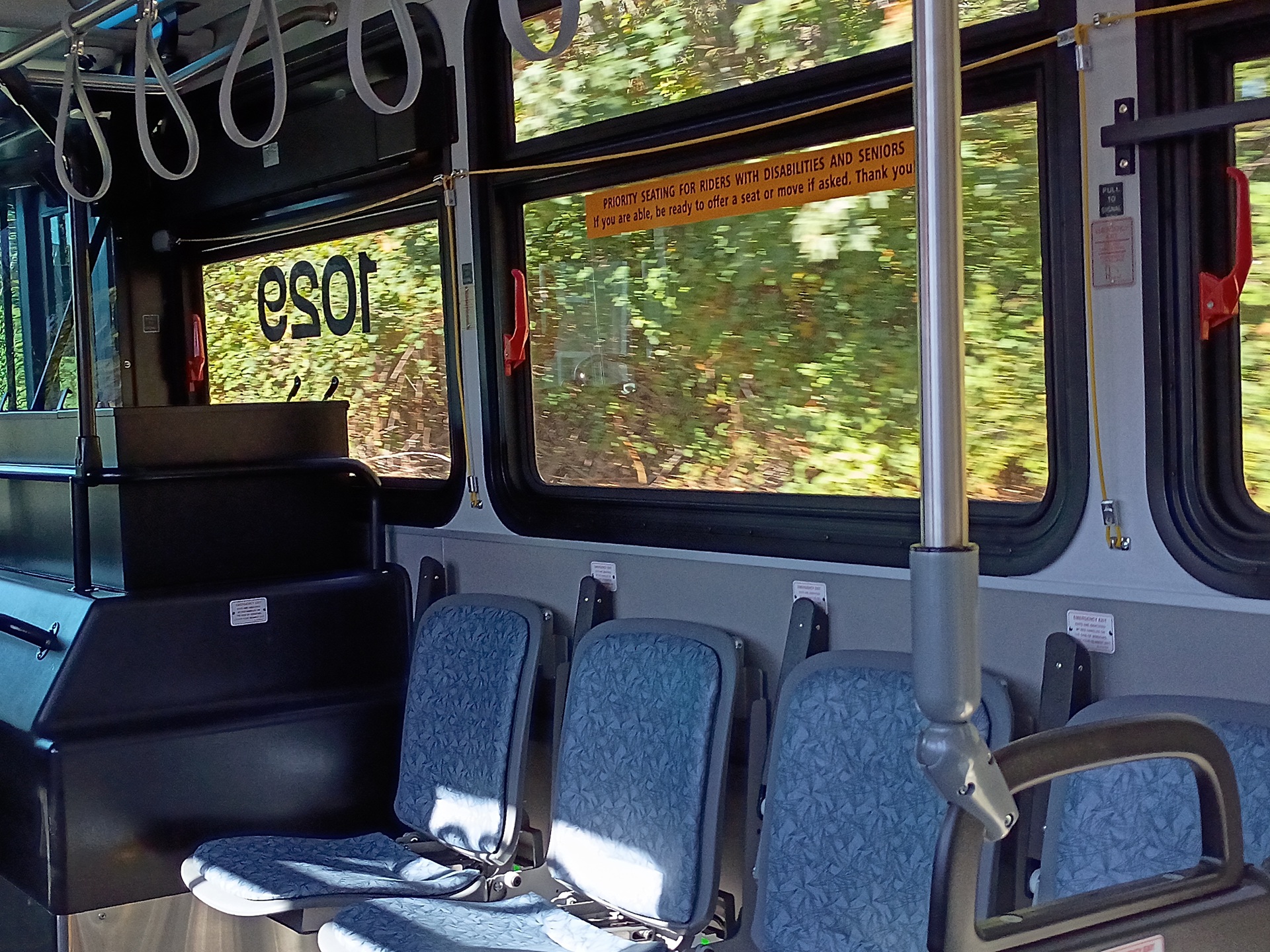
At the front of every bus in King County Metro’s fleet, and in most public transit systems in the country, there are two rows of seats facing the aisle that are meant for the elderly and the physically disabled. It’s incredibly important that these seats are only taken by the people they were intended for.
There are eight seats in total, four on each side of the aisle, and two of each lift up to make room for mobility aids like wheelchairs or walkers as well as strollers. Wheelchairs specifically are secured with a set of hooks that attach to the seats so that every rider is safe and secure on their journey.
If an able-bodied rider is sitting in one of these seats and a physically disabled person boards the bus, they will be asked to find another spot, but it’s best practice to leave them open for those who truly need it.
Buses are vape-free
As per a King County Metro blog by Jeff Switzer, spokesman for the agency, “…smoking and all substance use have always been illegal under the Rider Code of Conduct. Riders in violation are subject to removal and fines.”
Yes, this includes vapes.
Vaping has been normalized in our society in recent years, but that doesn’t mean it isn’t illegal to partake in within a building or on a bus. Even if the window is cracked, the smoker may have to pay a fine of around $250. Addiction is a hard thing to cope with, but think of any passengers who may have respiratory issues like asthma. What may be an uncomfortable ride for one may be lifesaving for another.
Safe bike storage
Please don’t bring bikes onto the bus! Every vehicle in the fleet is outfitted with a bicycle rack on the front, just below the windshield, for the express purpose of transporting bikes without sacrificing space.
Dawna, a longtime operator for King County Metro, said that the best practice for stowing bikes is to, “Get the driver’s attention before loading your bike and before you step in front of the bus, inform the driver that you’re getting your bike. Please use the front door only when loading and unloading, and never step in front of or cross the street in front of the bus without communicating with the driver. That would make everyone safer and avoid any accidents. Plus, it makes drivers happy!”
Transfer stops
A transfer stop is the name for a bus stop that two or more bus routes serve, like a small scale transit center. A local example is the stop near Highline’s campus which serves the 156 and 166 routes.
In the event that a rider is waiting at a transfer stop and the route they are not taking approaches, the polite thing for them to do is shake their head and, if standing, take a step away from the street so as to let the driver know that they don’t intend to board. If the rider does intend to board an oncoming bus, they should take a step forward and raise their hand to signal intent. Not indicating whether or not a rider wants to board can be confusing for operators who largely use visuals to determine whether to pull into a stop.
Remember, making mistakes is a part of learning. As long as riders remain respectful and safe, operators can do their jobs as intended. Oh, and don’t forget to thank them on the way out. Drivers are the heart of the whole operation, they deserve gratitude whenever possible.