
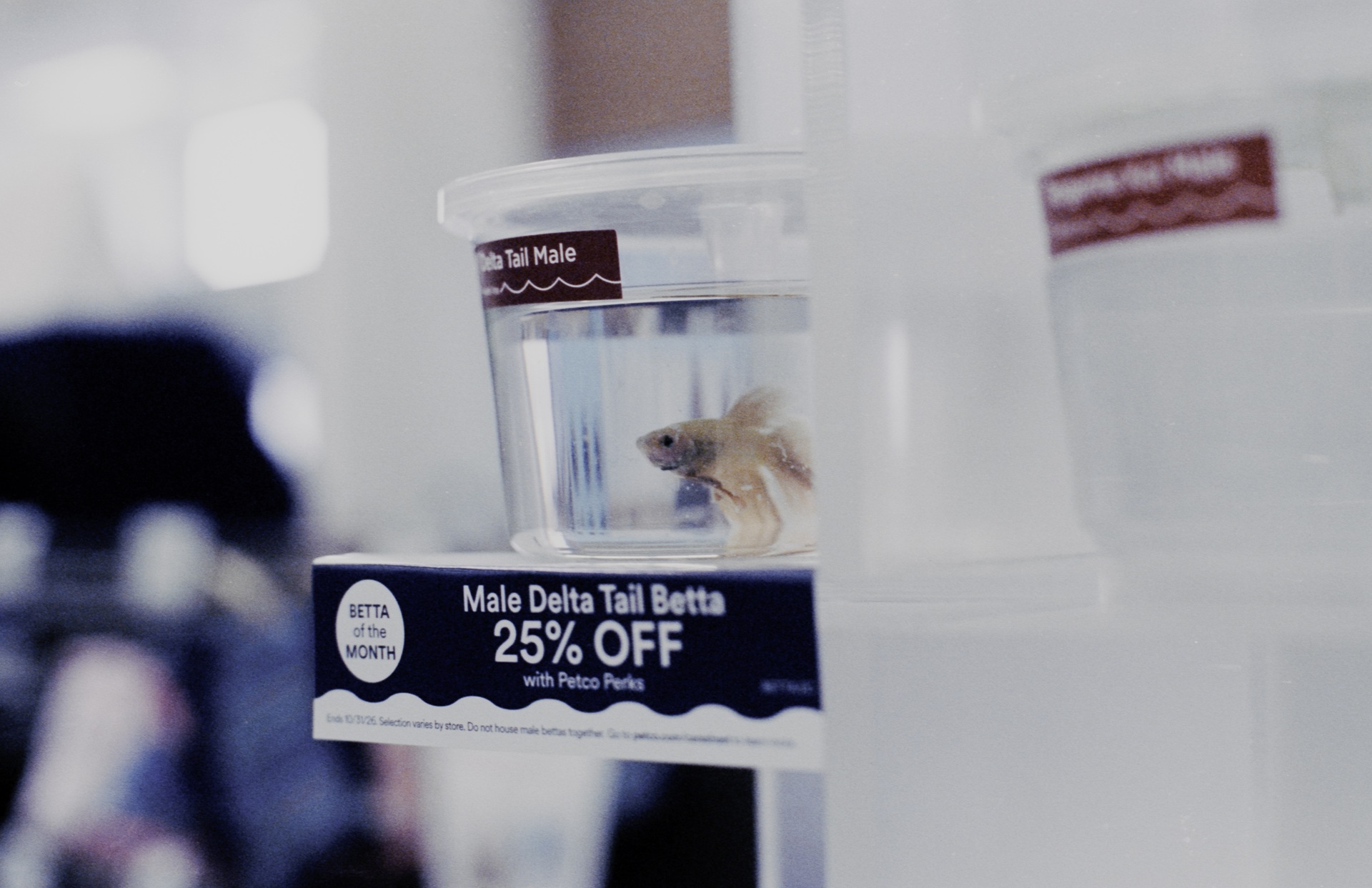
Petco, the first chain that comes to mind when someone says “pet store”, serves 24 million people in the U.S. Walking through a pet store means passing by the aquatics section and seeing the shelves of betta fish (scientific name betta splendens) in their separated cups. It’s uncomfortable, and it desensitizes consumers to seeing bettas in less-than-ideal conditions. However, keeping bettas in cups is a lot more dangerous for the fish — and sparks a lot more passionate controversy than the regular Petco customer may realize.

Rory Sellers/THUNDERWORD
Ethics aside, it’s important to first understand the betta itself. Going back a couple hundred years, the betta fish originates from the rice paddies of Laos, Cambodia, and most well known, Thailand (hence the name Siamese Fighting Fish). Bettas were first imported into Germany and France, then into the United States in San Francisco by Frank Locke in 1910.
Because they originated from oxygen-low rice paddies, they evolved to have what is commonly known as a “labyrinth organ” which allows them to breathe oxygen from the surface. This is one of the major reasons that cups can be deceptively bad for the bettas’ health.
Usually cups have a hole at the top to allow for air circulation. However, the water is not being filtered or circulated in the cups, and if there is ammonia buildup from fish waste, the temperature drops below the recommended 74-82℉, or just goes unfiltered for long periods of time, it can seriously damage the gills, create disease, and (as many Petco customers could attest to after passing by the aquatics section) kill said bettas.
There has been a small movement online to buy these sickly fish off of the shelves to save and rehome them, and there is a plethora of videos of before and afters, from the cup to a tank. These people have good intentions, but with the pre-existing disposition to the public that bettas are the ‘easy beginner fish’ that can be kept in poor conditions, this could be potentially damaging for numerous reasons.
For one, the rescuer must be aware of what the betta fish does demand: 5 gallons, filtered and heated water, mental stimulation, and a good diet. Along with that, the pet store doesn’t mark the purchase of a fish as a “rescue”, just as a signal of demand, continuing the cycle of abuse.

Rory Sellers/THUNDERWORD
PETA (People for the Ethical Treatment of Animals) has a fervent campaign against not only putting bettas in more humane tanks, but removing their sale from pet stores altogether. PETA Campaign Maestro and Executive Director of the Nashville Animal Advocacy Tricia Lebkuecher told National Geographic said, “Ideally we’d like to see no animals sold in pet stores. But we’re focusing on bettas at the moment because they’re routinely subjected to insufficient care, because of the way PETCO markets them.”
Industry fish associations are quick to point out that PETA’s campaigns, advertisements, and investigations are sensationalized to make their point.
Petco staff are all trained in animal husbandry, and, by the rules of their establishment, can refuse a sale if the employee believes the consumer will not adequately care for their animal.
So what do we do? Well, ideally, corporate pet chains should shift away from cups that damage the fish, and to miniature tanks hooked up to filtration systems. However, there is no talk of that happening anytime soon. The best the average pet store consumer can do is make sure they are aware of the needs of the betta, and if there are not any locally owned fish stores or breeders, be aware of what your money is going to when you purchase your fish.
This piece is not a judgment call on a person’s morale for buying a chain pet store betta, but a call to action to treat fish with respect and proper husbandry.