
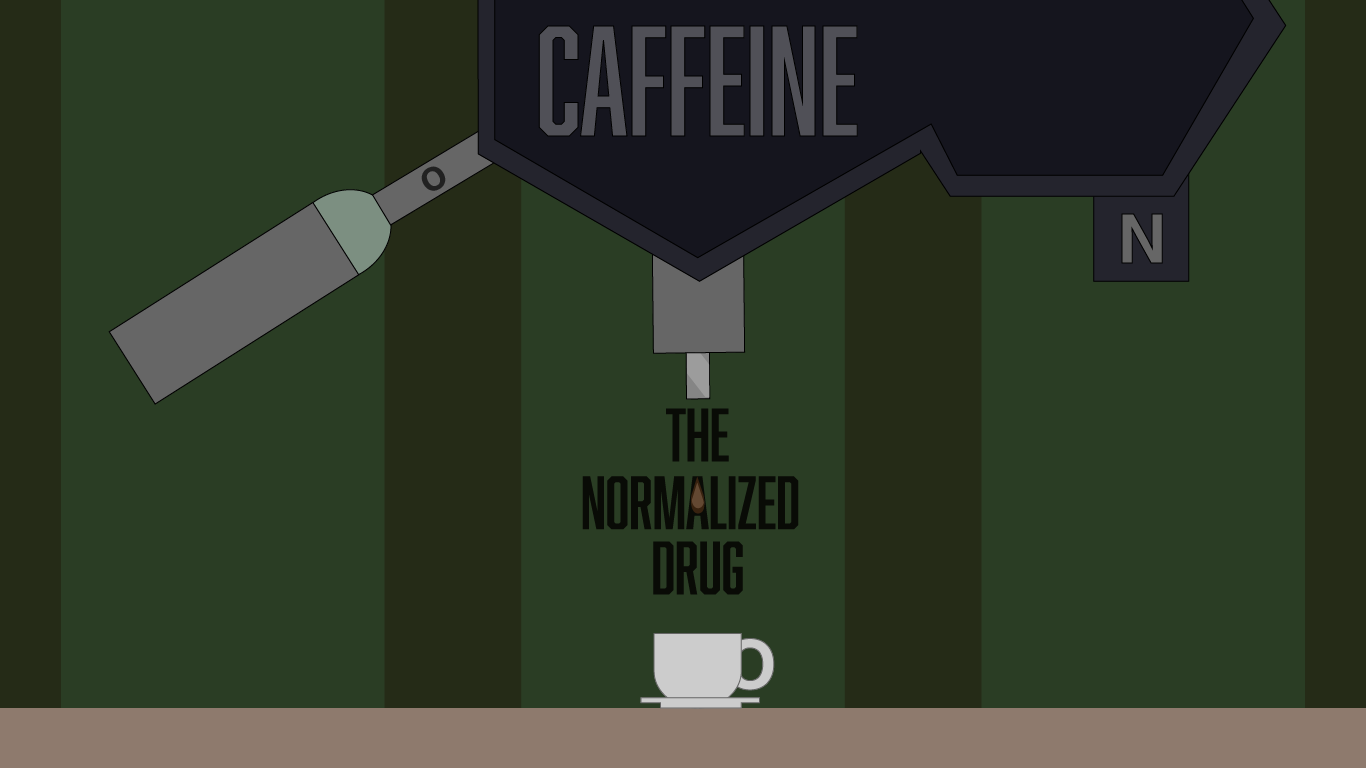
Caffeine is classified as a central nervous system stimulant, or in other words, a drug. Chances are you as the reader consume caffeine in some form as approximately 85% of Americans drink caffeine. The interesting thing is it’s not stigmatized the way any other form of non-medical drug usage would be.
People go on coffee dates all the time or joke about their chronic energy drink addiction. It’s not every day you meet somebody and they’ll ask you to go to a dispensary on the first date. What is it about caffeine that makes it socially acceptable to be addicted to it?

Casandra Soto/THUNDERWORD
Despite the negative effects of excessive caffeine consumption such as anxiety, high blood pressure, insomnia, and heart issues, it’s still normalized if not encouraged to use it and rely on it. It’s more acceptable because its negative effects are less immediately apparent.
Another psychoactive drug, marijuana has been targeted legally since around 1930. Weed had become common in the U.S., and the increased usage amongst Mexican and Black Americans built in an excuse for politicians to demonize and target those marginalized communities.
Because caffeine is naturally occurring in over 100 species of plants, humans and other animals have always been consuming it in some manner. Early active consumption can be traced back to 2700 B.C. with the Chinese drinking tea. However, it wasn’t until the 15th century when coffee was discovered in Ethiopia that drinking caffeine became widespread, rapidly taking over the Ottoman Empire before spreading to the rest of Europe.
Nowadays, if there’s a place with people and business, you’ll find at least three coffee shops. Here in Seattle, you can’t go two steps without seeing a Starbucks. It’s completely fine to tell someone you work as a barista but you would never go around telling people you’re a drug dealer. Meanwhile, most wouldn’t bat an eye when somebody is on their fourth energy drink of the day and is visibly shaking.
Overconsumption of caffeine is considered a staple of school and workplace environments due to its ability to drive productivity, despite the documented negative effects. Yes, it does make someone less tired and that means they can work at a more conscious level. That being said, there are latent dysfunctions to consuming too much caffeine.
The recommended caffeine limit for the average adult is 400mg a day (about eight ounces of coffee or 3.6 cans of Red Bull). Most coffee shops’ smallest size is more than eight ounces, in fact often surpassing double that.
Like with many drugs, one builds up a tolerance over time. One coffee might be enough to get you through the day at first but after a while you’ll start to not feel as much.

Efrain Navarro/THUNDERWORD
In an interview with a woman who owned multiple coffee shops over the course of 18 years said, “It was a local coffee shop chain called Mocha Mojo that had three locations.” After she retired they all closed but she “got bored” and has started working in coffee again.
The woman, who also requested to remain anonymous, had this to say on her relationship with caffeine: “I sometimes have four quad shot mochas in the morning and don’t even get extra energy.” She didn’t say this with any hints of concern either, which shows how strong the tolerance can get.
None of this is to say that caffeine should be stigmatized, however it is important to point out the negative effects and to highlight the double standard. Caffeine and marijuana affect the same parts of your body but in opposite manners. While caffeine makes you more alert, weed often impairs your senses and leads to a state of euphoria. Both have been known to increase anxiety in cases.

Aiden Sonsteng/THUNDERWORD
There was also an interview with a self proclaimed stoner and they had this to say on why caffeine is more normalized: “There’s more of a stigma around smoking compared to drinking something.” They also noted, “If someone is drinking coffee nearby you, it doesn’t affect you as much as someone smoking in your vicinity.”
Since tracking began in 1964, around 2.5 million nonsmokers have died prematurely due to health issues caused by secondhand smoke. As far as scientists know, nobody has ever died because they witnessed someone drink a cup of tea.
Cannabis has some medical uses too, though only in 40 states. It has been used to treat chronic pain, muscle spasms, severe nausea, chemotherapy, epilepsy, PTSD, and insomnia. That last one is important as caffeine tends to cause it.
Marijuana is significant not only due to its similarities with caffeine but also because while most illicit drugs went from legal to illegal and have since stayed there, marijuana has been made legal for recreational use in 21 states. It’s hard to justify weed being illegal when alcohol is legal. In pretty much every way, alcohol can be worse for you than weed.
Alcohol has had a lengthy legal history in the U.S. with the Prohibition era (1920-1933) but people still found a way to obtain it. While excessive alcohol use is frowned upon, simply drinking a little socially isn’t, and is even typically culturally encouraged. Similarly to coffee, you can drink it on a date and usually not be looked at sideways.
People always have and seemingly always will drink caffeinated drinks and there isn’t enough of a reason to stop drinking them. It’s interesting how it became a part of everyday life despite its cousins being very frowned upon by most people.