
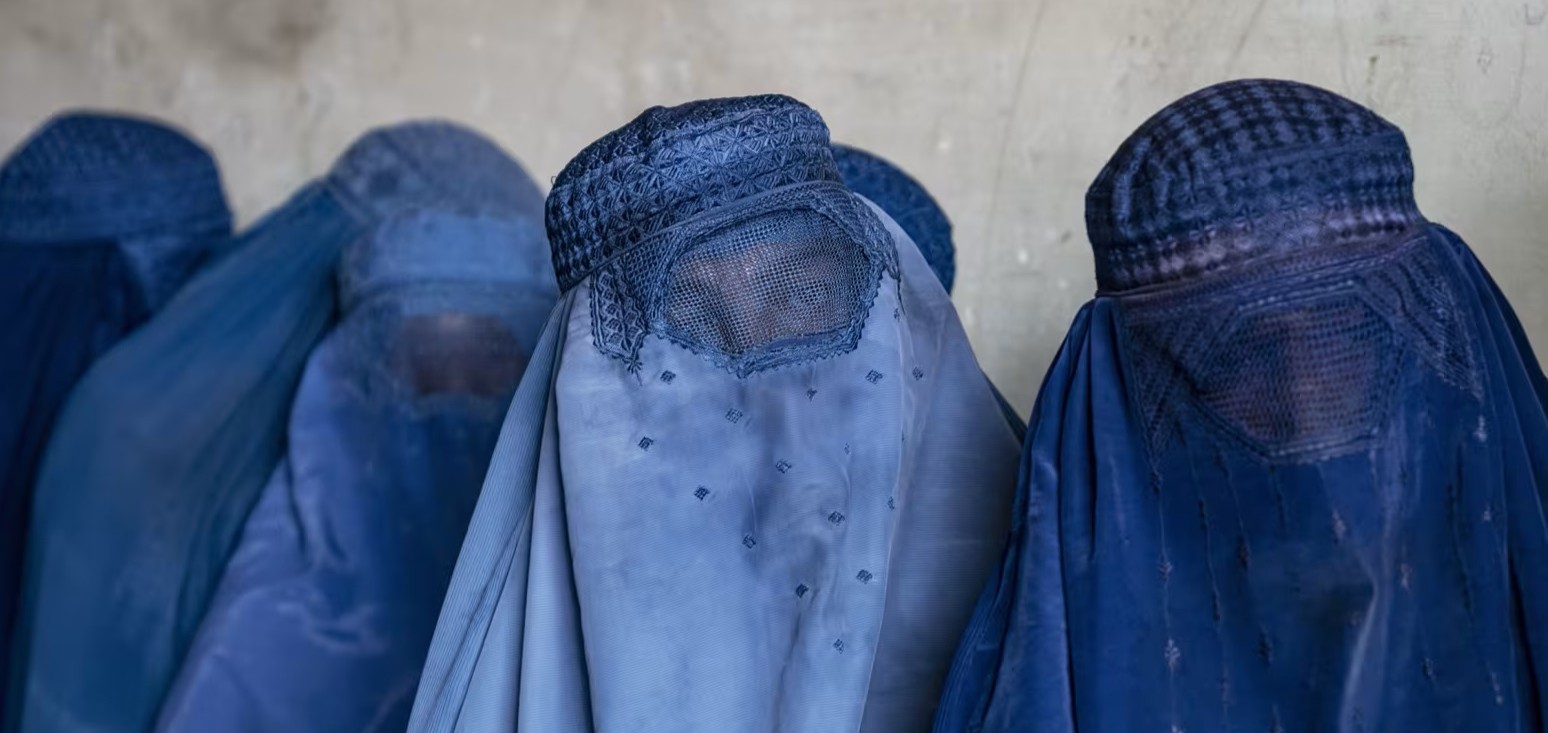
Afghanistan’s new academic year began last week, following the Persian New Year holiday, with official ceremonies and celebrations, yet for the fifth consecutive year, girls and women beyond grade six remain barred from attending school. This leaves over 2.5 million Afghan girls without access to education.
Access to education has gotten increasingly more difficult to achieve; as of January 2026, Afghanistan stands as the only country in the world where formal education is strictly prohibited for women and girls beyond primary school. This is detrimental to not only the women seeking conventional education and careers, but to the nation as a whole.
Despite the detrimental effects on women and girls, education bans additionally have a direct impact on young boys. With the Taliban prohibiting women from teaching boys, they are commonly left with unqualified male teachers or no teacher at all. Parents and students state that education quality is noticeably deteriorating, and corporal punishment has become increasingly common.
“The newly hired teachers have highly aggressive behavior toward the students, so the school environment is full of fear,” said ninth grade student Shafiq M.
Concerns regarding the future of Afghanistan continue to grow, with women and girls barred from almost all educational spaces, leaving boys with unqualified teachers and a curriculum designed to promote discrimination.

Ebrahim Noroozi/AP
Attention towards women and girls in Afghanistan rises as the Taliban’s newly released criminal code loosens restrictions on domestic abuse and violence towards women. After regaining control of the nation in 2021, the Taliban has issued over 80 restrictions on the rights of women and girls. Nearly all forms of paid employment, access to the justice system, and ability to exist in public without male company has been completely eradicated.
Policies of the Taliban have overwhelmingly targeted women’s rights, which has made it one of the most urgent humanitarian crises today.
The new code strips away domestic violence protections, explicitly permiting husbands to physically punish their wives. It defines domestic abuse as a crime only if it results in a broken bone or visible injuries, and allows the imprisonment of women who visit family without their husband’s permission.
Numerous women released from Taliban prisons have accused them of sexual violence while in custody. The UN, Amnesty International, and Human Rights Watch have condemned these policies as “gender apartheid” and potential crimes against humanity. The Taliban justify their actions through their interpretation of Islam, though many Islamic scholars reject this, arguing that these practices are more rooted in Pashtunwali tribal codes.
Under Taliban rule, women have virtually no agency. UN Women has highlighted that Afghan women face widespread restrictions affecting education, employment, and participation in public life. UN reports also note increasing enforcement of restrictive dress codes and severe limitations on women’s freedom of movement.
With restrictions only continuing to grow, each new regulation on healthcare, education, and bodily autonomy is a step towards eradicating Afghan women from public life as a whole.
The Bishnaw project, a platform dedicated to gathering data from Afghan women across the country, has conducted over 44,000 surveys to capture multifaceted realities faced by women and girls across the country. Their most recent survey was published in December 2025, interviewing 8,085 women across 33 provinces about their struggles receiving healthcare.
When asked about major difficulties faced when seeking medical treatment, 38.05% reported cost to be the main issue for women in their household. 24.62% reported Taliban restrictions as their main difficulty, while an additional 20.31% stated their reason to be lack of female health providers. However, this lack of female healthcare providers will only continue growing, as medical education is now banned for all women. With just a quarter of Afghan medical workers in 2025 being female, this number will only continue decreasing as a result of this restriction.
Additionally, women are now prohibited from accessing healthcare all together without the company of a male guardian. These restrictions have proved detrimental, with frequent reports of women being denied ambulances or crucial medical care when alone. A submitted report to the U.N. Human Rights Council describes one instance of an unaccompanied woman forced to give birth outside hospital gates. Another lost her four-year-old son, unable to travel alone in order to seek medical treatment for him.
“We came away from Afghanistan certain that what is happening there is more than repression: it is an attempt to erase women completely,” writes journalist Mélissa Cornet after 10 weeks of interviewing Afghan women and girls throughout the country.
Despite human rights continuously being prohibited by Taliban law, women continue to resist. Many interviewed by Cornet shared similar sentiments: as the dangers of outward rebellion only continue to grow, hope is still revealed through small-scale acts.
With Afghan rule continuing to treat women as subhuman, interviews by Cornet reveal that concealed acts of resistance are a pillar for identity. As the Taliban restricts basic freedoms and bodily autonomy, women throughout the country still continue to study, gather, and celebrate in private. “What remains is a much smaller, quieter kind of hope,” writes Cornet.
“They still spoke, still insisted on being seen, even when visibility itself had become dangerous,” writes journalist Kiana Hayeri. “Even when a system is designed to erase women, there are people who refuse to look away, and women who refuse to disappear. That is what we hold onto.”
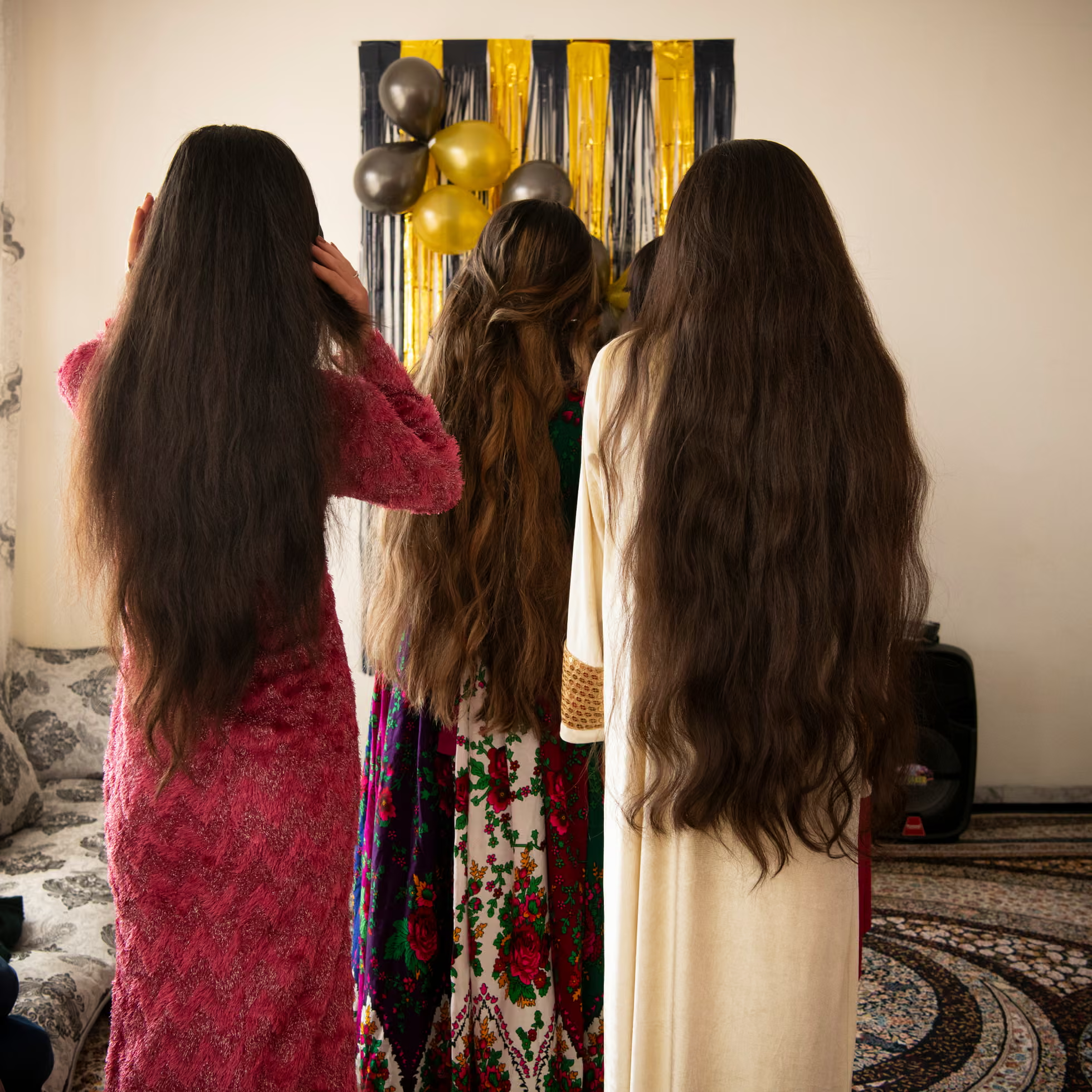
Kiana Hayeri
“Music and dancing have been forbidden by the Taliban, but women continue celebrating behind closed doors.”

Kiana Hayeri
“Music and dancing have been forbidden by the Taliban, but women continue celebrating behind closed doors.”

Kiana Hayeri
“In Kabul, Afghanistan, girls study art within a hidden studio.”

Kiana Hayeri
“In Kabul, Afghanistan, girls study art within a hidden studio.”