
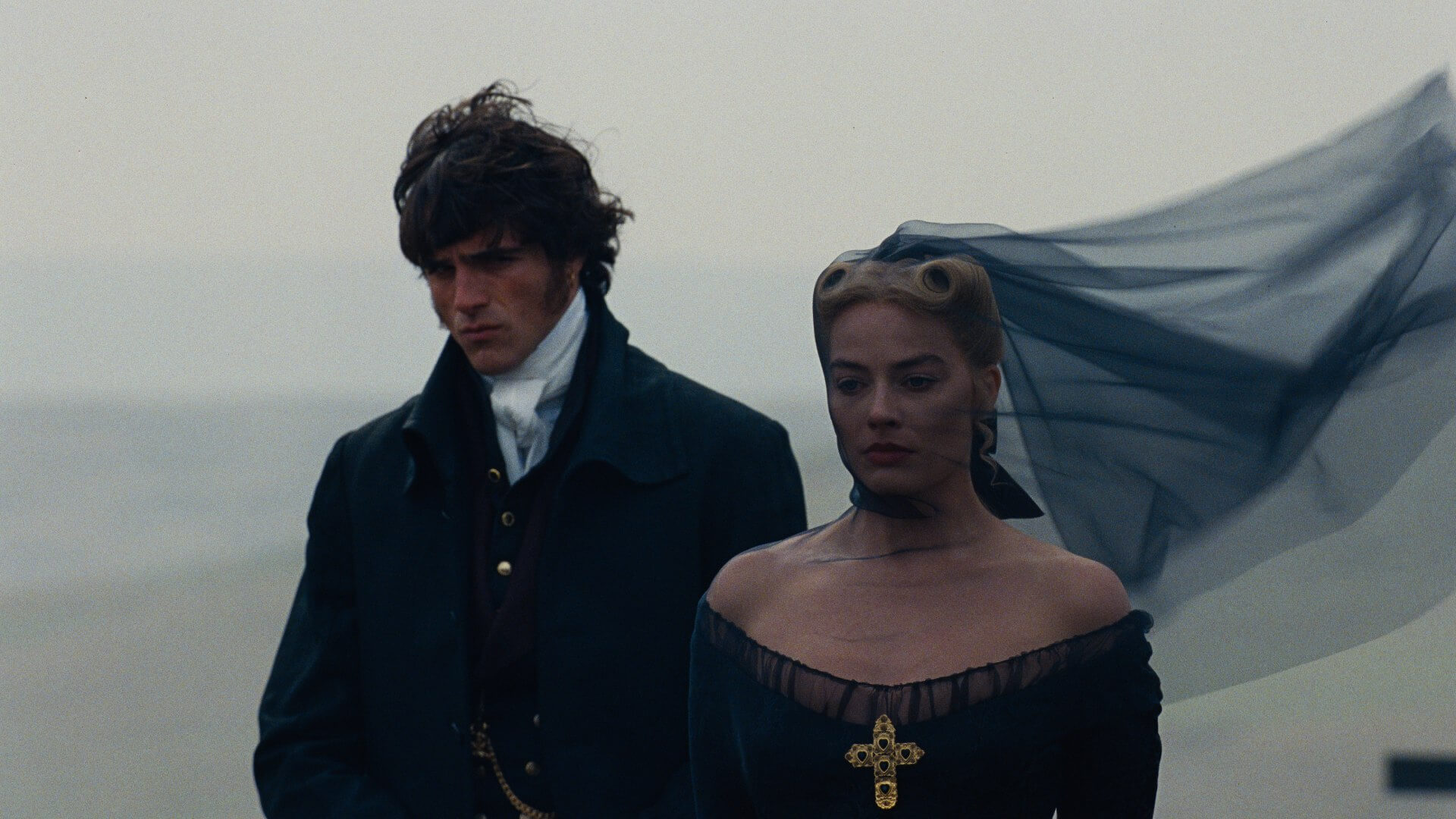
The release of “Wuthering Heights” (2026), starring Margot Robbie and Jacob Elordi, prompted outrage among the general public, being described as a disgusting and inaccurate portrayal of the 1847 novel by Emily Bronte. Despite director Emerald Fennell clarifying she intended to create a “loose interpretation”, it still sparks curiosity regarding the ethics of altering such a staple of English literature.
While much of this adaptation has faced criticism, many debates stem from the undeniable misrepresentation of multiple characters – both in appearance and personality. Despite being played by Australian actor Jacob Elordi in the 2026 film, Heathcliff is a character explicitly described as non-white in the source material.
Despite many people arguing otherwise, it’s largely recognized among fans that the ambiguity of Heathcliff’s race directly impacts the story and how it was intended to be told. Throughout the book, characters are repeatedly shown to be confused about Heathcliff’s race and ethnicity. “Dark skinned gypsy”, “a little Lascar or an American or Spanish castaway”, and “speaking different from the others”, are just a few ways he was described.
When directly questioned about her motives regarding this unexpected casting choice, Fennell simply responds that Elordi represents the Heathcliff she envisioned while first reading the novel as a young teenager.
An additional criticism of the film is its apparent inability to stick to a singular vision. Fennell famously describes her “Wuthering Heights” interpretation being heavily inspired by the way she remembered reading it for the first time at age fourteen, “where I wanted stuff to happen that never happened.”
Further emphasizing her creative vision, Fennell states that it would “not be possible” to create a true adaptation of “Wuthering Heights”, or any book riveling the complexities and depth contained by the original story.
“What I can say is I’m making a version of it … It is ‘Wuthering Heights’, but it isn’t,” states Fennell during an interview with People Magazine.

Warner Bros.
A trailer dripping with mystery and seduction, built upon close-up shots of intricate details and the strikingly stunning faces of Robbie and Elordi, all whilst set to a trending Charli xcx song. Teasing its Valentine’s Day release, this trailer immediately captured the public’s attention – but for all the wrong reasons.
According to audiences, one of the most disturbing changes made when adapting the book to screen is the portrayal of Isabella Linton (played by Alison Oliver). While Isabella in Bronte’s novel is subjected to a violently abusive marriage with Heathcliff, her film counterpart strays far from this blueprint.
In Bronte’s novel, Isabella is tricked into a loveless marriage with Heathcliff, being used as a revenge plot and subjected to violent abuse at his hand. She is tormented psychologically and physically throughout their marriage – Heathcliff even violently hanging her dog at one point–before her eventual escape.
However, Oliver’s portrayal of Isabella in the recent adaptation displays a stark contrast, and one that has been heavily discussed among viewers. Not only does she lack plot and character development held by her novel counterpart, but additionally consents to being used exclusively as a method of revenge within her marriage. Still enamored with Heathcliff, she continues to be subservient despite the lack of love she receives in return.
Within the film, Isabella and Heathcliff bear a far closer resemblance to a BDSM-adjacent dynamic, conflicting heavily with their original severely abusive marriage. Arguably the most notable change was removing a majority of Heathcliff’s cruel actions and abuse towards Isabella. The film decides on entirely removing Heathcliff’s cruel murder of his wife’s dog from the source material. Instead, it decides to “reference” this plot line in a new way: through a scene of Isabella herself chained up like a dog, crawling on all fours at Heathcliff’s feet.
Facing growing backlash throughout the movie’s promotion, Fennell became more and more adamant on setting the record straight. During interviews, she made it clear that her film is simply inspired by “Wuthering Heights”, and was never intended to be viewed as a direct adaptation. Despite her claims, there are some facts suggesting otherwise.
Copies of Bronte’s “Wuthering Heights” have been seen with the classic “now a major motion picture” stickers attached to covers. Not only this, but a movie tie-in edition of the novel, feature Robbie and Elordi, has been released alongside the film.
Additionally, many trailers teased at the film’s release with the flashy description “the greatest love story ever told”, enticing fans to further question how far you can stray from the original message of a novel while still marketing it as a modified adaptation.
Despite widespread scrutiny, there are still avid defenders of Fennell’s portrayal. Many people firmly believe that exceptional cinematography and acting shouldn’t be discredited simply because of inaccuracies to the original source material.
High praise for this film isn’t an unusual occurrence, one viewer describing the storyline as “so great it’s both captivating and terrifying … I have never cried harder for any other movie.”
Others vocalize a different argument, one viewer bringing up that “cancelling art should never be in the question … I understand it didn’t meet much of the book, but we should never get in the habit of overlooking art as a whole and neglecting any good it might have on society.”
This additionally brings up the growing influence of A.I. on artistic creations, and inspires questions regarding artwork being immune to criticism in a desperate attempt to mitigate the growing threat of artificial intelligence in artistic fields.
There is one thing both enjoyers and critics of this movie have notably agreed on: the film itself isn’t objectively bad as a stand-alone. Many suggest it would’ve been much more enjoyable as a “perverse standalone Gothic fever dream”, rather than a poor attempt at interpreting a beloved nearly two-century old novel. Elordi (Heathcliff) has especially been commended for his acting ability, with many expressing disappointment that he had not been given a “better” script.
With the release of “Wuthering Heights” (2026), Fennell unintentionally sparked widespread online discussion of art, politics, and the way they’re inevitably intertwined. While looking through the many complex reactions and justified criticism towards this film, one truth becomes inescapable: art directly reflects the society producing it.