
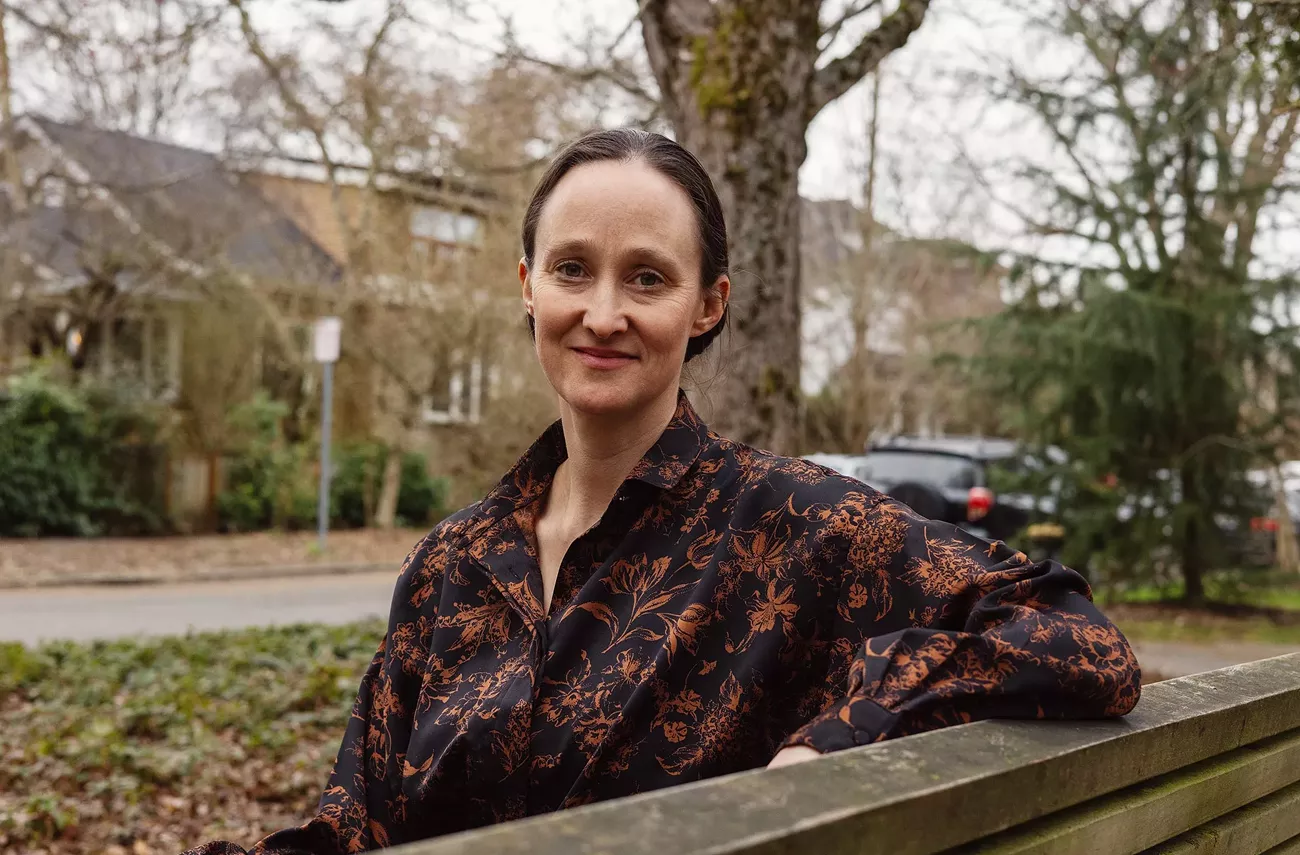
With the summer comes campaigns, and with Seattle’s Mayoral election around the corner, this year promises the potential for new and actionable leadership. Katie Wilson is the cofounder and Executive Director of the Transit Rider’s Union, and her plan, if elected, would be to make public transportation safer by addressing the unhoused and housing crisis in the area.
Wilson goes up against the incumbent Bruce Harrell, who has occupied various seats in city hall since 2008. Harrell was elected the 57th mayor of Seattle in 2021, but his background has long been within the walls of Seattle City Hall. He was elected to Seattle City Council in 2007, and has since earned the backing of Seattle’s Chamber of Commerce and top business leaders in the region, such as Amazon.
Harrell has fallen into a pattern of underdelivering on promises: one of his mayoral campaign promises included opening 2,000 units of emergency housing shelter, and “he did not even come close to delivering those numbers,” according to Wilson.
Harrell is accused of being “out of touch” with Seattle voters, and Wilson promises to build a leadership team that can deliver fast development on what voters are wanting. Wilson criticizes Harrell’s lack of action and weak leadership; choosing to run after a Seattle vote reflected major support for Proposition 1A and a Social Housing Development fund – a proposition Harrell was staunchly against.
She promises to be “a coalition builder who’s able to reach across the aisle to find common goals, without diluting progressive, research-backed policies; and a bold innovator, willing to test new ideas and push forward on issues that have stagnated in this city for a decade,” writes Hannah Murphy Winter, Editor-in-Chief of The Stranger.
Wilson is well known inside and outside city hall. She led a successful campaign to raise the minimum wage in Burien, improve public transportation, and increase progressive revenue in Seattle.
“I’ve spent the last 14 years of my career organizing, building powerful coalitions that win major victories for working people, and I’ve done all that from the outside,” Wilson told The Stranger.
Wilson’s campaign promises fast-acting change to address homelessness and housing in Seattle in a three part plan.
“I would like to explore a municipal rent voucher program, which would basically buy down some of the rents in those units,” Wilson told K5. This would be most helpful for those struggling with affordability and do not require extensive support services.
She’s proposing collaborating with local faith communities, that have the willingness and space to help the people in their communities, to open Tiny Home villages. This is a growing practice across the country in addressing the need for shelter. The Low Income Housing Institute (LIHI) operates or supports 18 tiny house villages in the King-Pierce county area, though they have faced many challenges by landowners.
The Stranger reports, “[Wilson] takes inspiration from dynamic groups like Purpose. Dignity. Action.’s JustCARE, which piloted field teams that could take an individualized approach: working on the ground with people in encampments, assessing each individual’s unique mental health history, any criminal background, and cycle of homelessness, before successfully placing them in a lodging.”
The unhoused crisis, however, is not just a matter of affordability and stock. Those on the street suffer from mental health disorders, addiction, and physical disabilities. To address the growing public health crisis, Wilson offers “rapidly acquiring several buildings and making sure that people are going to have all the support they need.”
“If we’re not investing more in treatment and making sure that treatment is integrated with housing and continuing support services, then we’re just going to fail.”
With all its art and culture, Seattlites are just as familiar with the presence of unhoused persons and tent cities under bridges and in alleys. Often, Seattle Police Department are tasked with sudden removal of these encampments.
“I think that the approach that [Seattle leadership has] taken is a very cosmetic approach… In my opinion, it’s not just about the tents. It is about the people in the tents. And if we are just putting the tents in dumpsters and not giving the people the support they need; the people are still there,” Willson told K5. “I really think that our failures on the homelessness are part of what is driving [crime.]”
Cities around the country saw a spike in crime during the pandemic, and reports have shown Seattle is slower than many to fall.
“Police response times are unacceptably high. Part of the reason for this is because we have our police doing many, many things that they do not need to be doing, for example, responding to many kinds of calls that do not require an armed response… Our police force is overstretched, and we are relying very, very heavily on police overtime right now,” says Wilson.
Wilson’s answer to this is progressive revenue streams instituted by capital gains tax, then invested in support services.
“We see the current [Seattle] administration is not at all prepared for the cuts to federal funding that includes housing and homelessness. That includes transportation infrastructure, and that includes medical assistance and leder care. So we are very likely to lose federal grant funding that is going to impact residents of our city and leave people hungry, without housing, and without medical care. Seattle is not prepared.”
By addressing the unhoused and housing crising, Wilson hopes to brighten the view when families like hers are exploring the city. Her tactics center on her experience on public transit. Wilson herself has gone without a car, relying entirely on Seattle Public Transportation for her and her daughter.
“When I go to our parks, when I go to our playgrounds, when I go to our community centers, I see that through the eyes of someone who has this little human being that I’m trying to raise up into an adult. And I just really want this city to be a place where families like mine can thrive, and where my daughter, when she grows up, can choose to build a life here if she wants.”
Wilson is the only woman on the ticket so far, and she is endorsed by every Democratic Party organization in Seattle including elected democrats. Primary elections take place on August 5, 2025 within parties, and general elections are held November 4, 2025.
All over the country, primary elections are held for mayoral and legislative seats. Zohran Mamdani’s historic win in the New York City primary and Deja Foxx’s grassroots campaign are encouraging new faces to liberal-leaning political parties. What these campaigns have that Wilson’s is lacking, however, are a heavy social media presence.
Mavrie has been serving as editor for the ThunderWord since 2024. She is also the founding president of Highline’s Non-fiction Writers Circle.