
At first, playing a beloved sport at the college level and representing your school sounds like a dream, accomplished through years of hard work and dedication, competing in high stake competitions all to pursue this dream. However, reaching this level of sports might not be the dream it seems to be. While it seems like it’s all years of championships and recognition, what goes unnoticed is the mental aspects, pressure and “burnout” athletes face.
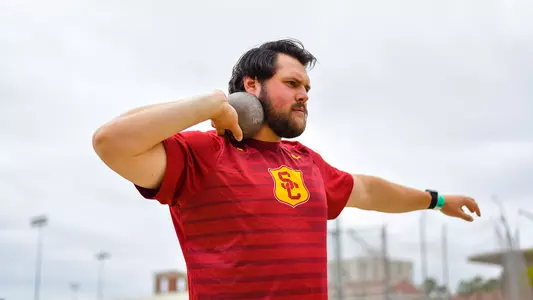
“It started to build up to where it broke me,” said Matthew Katnik, an athlete for USC Track and Field, who began to struggle with his mental health due to competitive pressures. Katnik said in an interview with USC Today, “I just wasn’t myself when I stepped into the ring. I was always thinking about other things. I couldn’t focus.”
Katnik tells about his early mental health struggles in his college sport, giving an example of some of the hidden struggles that go unnoticed within sports at this level.

John McGillen / USC Athletics
Omotade “Tade” Ojora on the track.
British hurdler Omotade “Tade” Ojora said on the Athletic Medicine of USC Student Health website that he struggled during his time as a Division 1 hurdler for USC. He dives into his experience with the pressure of his sport and the beginning of him feeling burnout.
Ojara said, “I thought, what am I really doing this for? I’ll admit that at first, I was doing it because other people expected me to do it. Other people said I could accomplish this or that. At the end of the day, that can only keep you going for so long, seeking other people’s validation.”
Ojara’s statement shows he began to lose his own reason or purpose for doing the sport he was dedicated to. Rather than accomplishing goals for himself he gained the approval of others which is an early sign of burnout. This is just another example of how college sports can wear out their athletes.
Now that we understand the negative effects that college athletics can cause, the question is how many athletes are actually affected by these mental issues? According to the 2023 NCAA Student-Athlete Health and Wellness Study, which surveyed about 23,000 student athletes, the actual statistics show how many athletes suffer such mental health issues, with an impactful gap between male and female genders.
The data reveals during the 2022-23 academic year, 44% of female student athletes and 17% of male student athletes reported constantly or frequently feeling completely overwhelmed by everything they had to do. Also, 35% of women and 16% of men reported feeling mentally exhausted, a core component of athletic burnout.
While participating in college sports can provide many opportunities and open doors, there are hidden costs to young athletes. Katnik and Ojora, along with the NCAA statistics have shown that there can be large mental struggles that come with participating in collegiate sports.
There can often be hidden costs to young athletes who miss competitions due to the pressure and expectations of collegiate sports, leading to burn out and exhaustion. While there may not be an obvious cost to young athletes who may miss a competition, there are mental costs to pursuing their dream.