
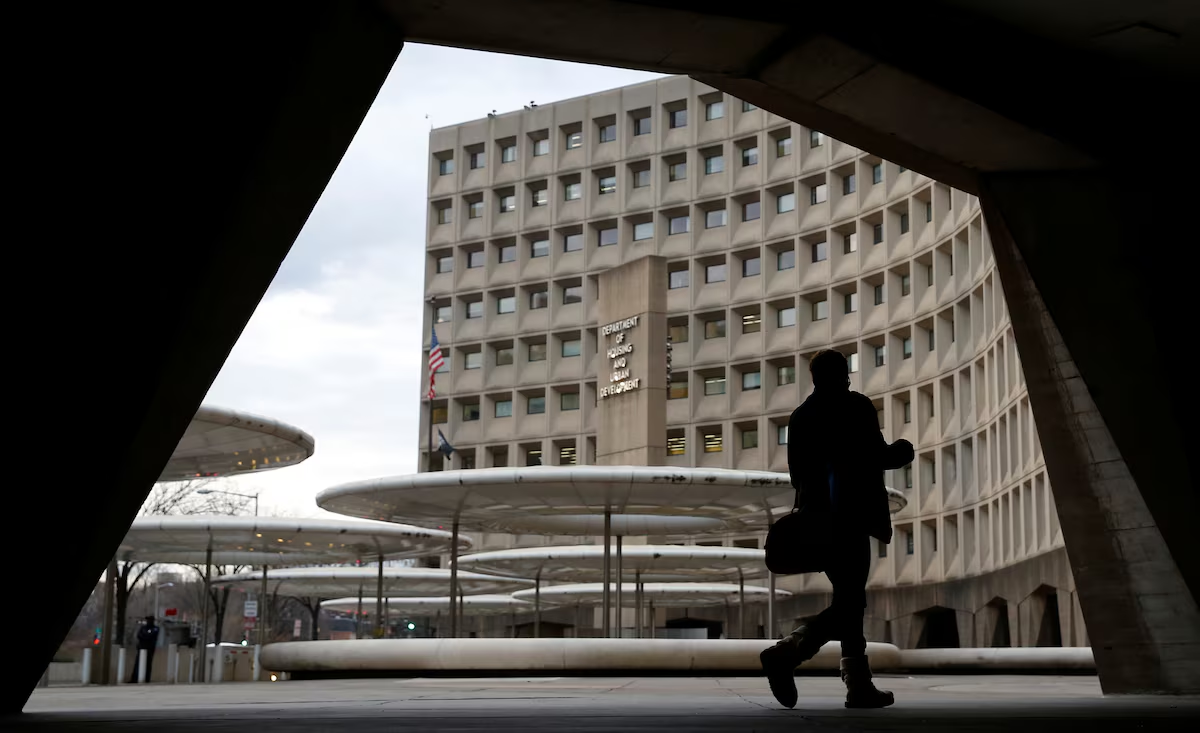
The Department of Housing and Urban Development (HUD) published a proposal that prevents families with mixed immigration status from receiving federal housing assistance. Current HUD regulations dictate that mixed status households (meaning both eligible and ineligible to receive federal housing assistance) can receive assistance based on how many members of the household are eligible. HUD’s proposal would limit the assistance to a temporary 30-day period, effectively barring mixed-status families completely from receiving said assistance.
This proposal, which was was a part of Project 2025, comes as the HUD deadline for housing complexes to verify the immigration status of federally supported tenants nears. A similar proposal from the HUD in Trump’s first term faced significant opposition from low-income housing concerning families being separated or evicted, and was later withdrawn by the Biden administration.
Currently, similar responses are being given by activists. “We defeated this unlawful proposal during the first Trump administration and we’re ready to fight back with our allies and do it again,” National Housing Law Project Executive Director Shamus Roller said in a publicly released statement. “We affirm our commitment to protect immigrants, HUD tenants, and the families in our country who need the stability of a safe home.”
Center on Budget and Policy Priorities estimates 80,000 people (of which, 20,000 are families) could lose access to housing. Additionally, the proposal could impact 3.8 million Americans who are documented, but lack forms of identification that prove citizenship.
HUD Secretary Scott Turner said the current administration has “zero tolerance for pushing aside hardworking U.S. citizens while enabling others to exploit decades-old loopholes.”
Turner is predominantly referencing the criticism from lower-income individuals on undocumented immigrants receiving federal housing. The claim that they are taking their housing and their spots during the process has been a central topic in the proposal discourse.
However, it’s clear that through the current HUD regulations, undocumented immigrants didn’t take up spots for subsidized housing. For undocumented people to live in subsidized housing, they are living as part of family units that include qualified members. Meaning as a family unit, they legally went through the subsidized housing process.
Consequently, unless lower-income individuals were planning on moving in with family units, how undocumented immigrants receive federal assistance through housing isn’t applicable to their situation – meaning they aren’t the reason for difficulties with receiving subsidized housing if they were qualified under HUD guidelines, and waited and received assistance legally.
If lower income individuals who could potentially be affected based on numerous factors that this proposal exploits (i.e. identification, history of homelessness, etc.) are finding difficulty in accessing subsidized housing, then the fault isn’t on undocumented immigrants, it’s on the failure the system has to provide for everyone who qualifies under its guidelines.
The HUD has published the proposal as of Feb. 20, on the federal registry. The registry notes that public comments will be accepted until April 21. HUD hasn’t given a definitive time frame as to how long the proposal will take to be put into effect.