
A Personal Journey Through Ethnic Identity and Division in Afghanistan
*This personal narrative was originally written as an assignment for an Ethnic Studies class and has been revised for publication in the ThunderWord.*
I was born and raised in a remote, mountainous village in central Afghanistan. As a child, the world arrived to me already divided into two categories: Aowghoo (Afghan) and Azra (Hazara). These were not official terms or textbook definitions. They were lived realities, carried through stories, warnings, jokes, and silences, and passed down from one generation to the next.
In the language of my family and community, Aowghoo meant the oppressor – cruel, violent, and unjust. Azra meant the oppressed – innocent, vulnerable, and perpetually under threat. We were Azra. This binary did not simply describe the world; it organized it. It shaped how we understood power, danger, and morality long before we had words like ethnicity or social hierarchy.
This worldview took root early. I remember watching Indian movies with my mother. As the story unfolded, she would ask, almost instinctively, “Which one is Aowghoo and which one is Azra?” The films often featured a tyrant surrounded by obedient henchmen, pitted against a righteous and suffering hero. Without hesitation, we mapped our own history onto those characters. The villain became Aowghoo; the victimized hero became Azra.
The same pattern appeared in religious storytelling. When the mullahs spoke of Imam Hussain and Yazid – a religious story – our imaginations aligned automatically: Hussain embodied Azra (the just, the martyred, the oppressed), while Yazid stood in for Aowghoo (the brutal oppressor).
These stories originated in places far from Afghanistan (today’s Iraq and Saudi Arabia) yet we absorbed them through the lens of our own ethnic trauma. There were no Hazaras or Afghans in those historical moments or in regions like India, but in our telling, the roles were already assigned.

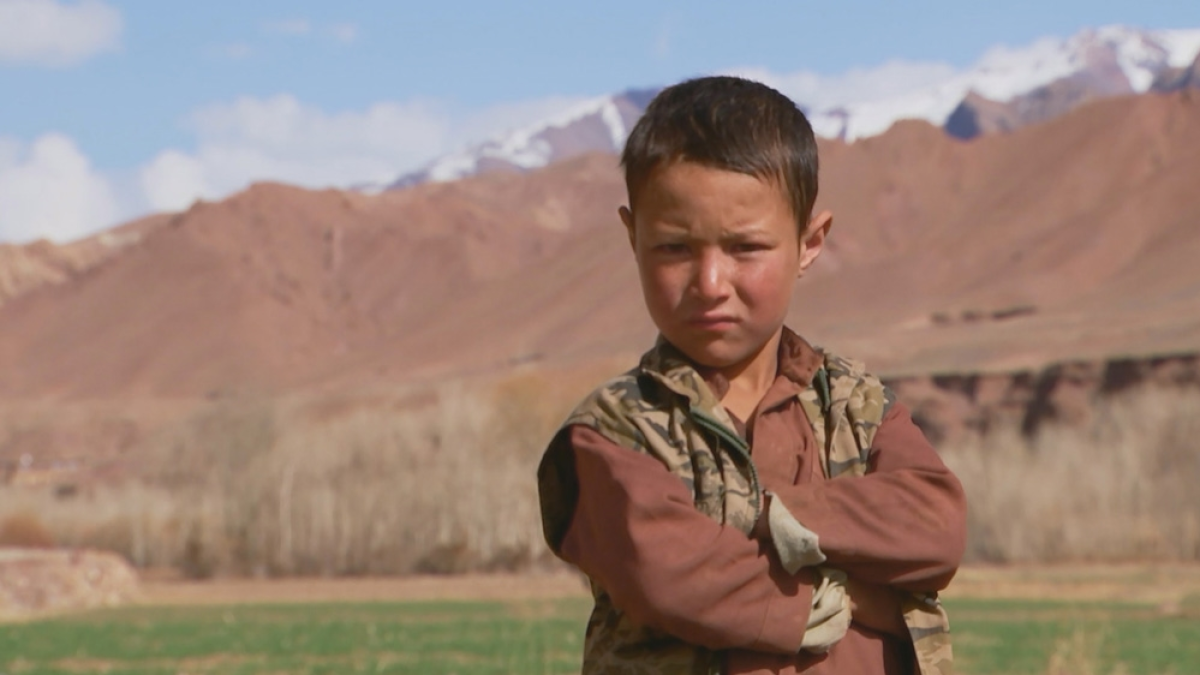
Wakil Kohsar/AFP/Getty Images
Historically, the Hazara people have endured systematic persecution, mass killings, genocide, forced displacement, and long-standing policies of exclusion – particularly at the hands of dominant ethnic groups, most notably Pashtuns/Afghans. These patterns of abuse are also documented in reputable Western sources, including the Harvard Human Rights Journal, the United States Holocaust Memorial Museum, and reports by the U.S. Department of State.
Our religious identity, ethnic features, and cultural differences made us visible targets of systemic violence and discrimination. This history was not confined to the past; it lived with us, quietly and constantly, in everyday fear.
That fear entered even the most intimate moments of childhood. When I cried, my mother or older sisters would whisper, “Don’t cry – Aowghoo is coming.” The phrase worked instantly. I imagined tall, long-bearded men carrying guns – faceless figures of danger assembled from stories, memories, and inherited dread. Whether such a man was actually nearby did not matter. The threat was real because the history behind it was real.

Paul Becker
Years later, I began to realize something unsettling: outside of my region, these terms (Aowghoo and Azra) meant nothing. In India, in Arab countries, even in many parts of Afghanistan, people did not divide the world this way. That realization forced me to reflect on how race and ethnicity are dynamic and socially constructed – how they are shaped by specific histories, geographies, and power relations rather than by any inherent truth.
As education, internet access, and broader exposure to the world reached my family and community, our language slowly began to change. The old binaries did not disappear, but they softened. We gained new words, new frameworks, and occasionally, new questions. Yet the emotional weight of those early divisions remains with me, a reminder of how deeply identity can be formed through fear and survival.
The relationships between ethnic groups in Afghanistan have long been defined by inequality, violence, and silence. Moving forward requires more than forgetting the past; it requires confronting it honestly. True peace demands accountability, justice, and a recognition of shared humanity – whether one has historically been labeled the oppressed or the oppressor.
I still carry the child who learned to read the world through Aowghoo and Azra. But I also carry the responsibility, as an adult, to imagine something beyond that divide: a future where identity is not a warning whispered to silence a crying child, but a story reclaimed with dignity, truth, and hope.