
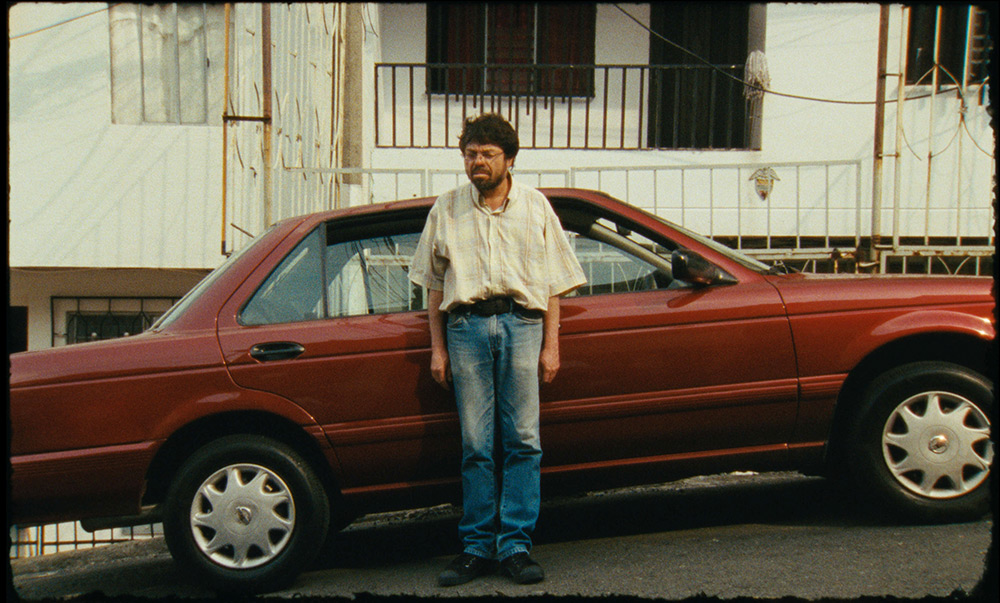
“A Poet” is a film about men who confuse sensitivity with identity, about artists who transform pain into a personality, the desperate need for recognition, and a brutally contemporary question: What happens when the world only rewards what can be sold?

Ocúltimo Medio de Contención Productions
There are films about successful artists, geniuses, talent, and inspiration, and then there’s “A Poet”, a film that dares to show something far more uncomfortable. The failed artist is not the typical misunderstood genius romanticized by cinema, no, here we see something worse. We see a man who perhaps does possess the genuine sensitivity to be a true poet, but who avoids facing the world.
This film portrays a coward, because the great theme of “A Poet” isn’t poetry itself, it’s identity. Because Oscar Restrepo (the protagonist) doesn’t just need to write, he needs to feel like a poet, and that’s when the tragedy appears. The film asks the question: What happens when art ceases to be a sincere pursuit and becomes the only place where a person can still feel valued?
The balance of comedy and drama is entirely successful. On one hand, Simón Mesa (the director of the film) has perfect timing for scene cuts, using them to deliver drama, suspense, and comedy.
“A Poet” is a profoundly political film, but it never delivers political speeches, it seems to focus on something much more ordinary. What happens when a society no longer has space for economically useless people? Restrepo doesn’t fail only because of his personal mistakes, he also fails because he lives in a system where sensitivity has no market value. And this makes the film much more complex than simply about a self-destructive, alcoholic man.
It is also a film about cultural precarity, social class, and the exhaustion of the contemporary Latin American artist. The film was very well received by critics after its premiere at the Cannes Film Festival, winning the following awards: Jury Prize – Un Certain regard; Golder Orange international Antalya award; Premio horizontes (Best Latin American Film); and Premio horizontes (Best Latin American Film).
Remake and Controversy
The story of this failed poet is being relocated to the United States for a remake, with producer Saïd Ben Saïd and filmmaker Nathan Silver at the helm. To begin with, this new film is disrespectful to Latin American cinema, as it’s not the first time Hollywood has done this, taking advantage of the limited visibility and lack of marketing in subjugated countries like Colombia.

Luxbox
They even had the audacity to not wait a year to make this request – instead, just nine months after the film’s release, they announced the remake, which was accepted by Simón Mesa.
The opinion of Ubeimar Rios and director Simón Mesa was that the remake was going to be an excellent way to give vision to this masterpiece but since many viewers disagree with that decision. They had to explain why, and one of the main reasons is the language. But they didn’t even look for another solution like dubbing, they went straight for a remake.
Another thing to mention is the fact that they’re going to Americanize this film, stripping it of its flavor. And on top of that, they’re going to set it in New York. What does that have to do with Medellín? The infrastructure, the extras — where are they going to portray the Third World in the most expensive city on the planet? How dare they? But I prefer to remain objective and focus on the release date of this remake, and how long it takes to prove they can adapt such a masterpiece.
The film directly connects with the Colombian critique of “poverty porn” something that Hollywood always does with Latin American movies, the idea of turning social suffering into an exportable product, not only in film but also in literature, festivals, cultural funds, and artistic branding.
Poverty transformed into a static commodity, and “A poet” critiques this in a very elegant way. Many may not be familiar with the term, but this film gradually builds upon it, demonstrating that Colombian or Latin American cinema isn’t just about misery. It’s not just a tangible product for supposed viewers to consume. It’s not just suffering, but also enjoyment: dances, music, love, flavor things many other European cultures lack.
I wonder how Hollywood is going to replicate or use a similar soundtrack, does Nathan Silver know anything about salsa, does he at least know how to dance? Hopefully, they get their hands on Colombian culture and learn something because it is not only the place that is important, but it is also the “sauce” that we the viewers are expecting to see in this remake.
I don’t imagine this movie without this kind of music, I would feel highly disrespected if salsa gets replaced by something like Justin Bieber or rock.