
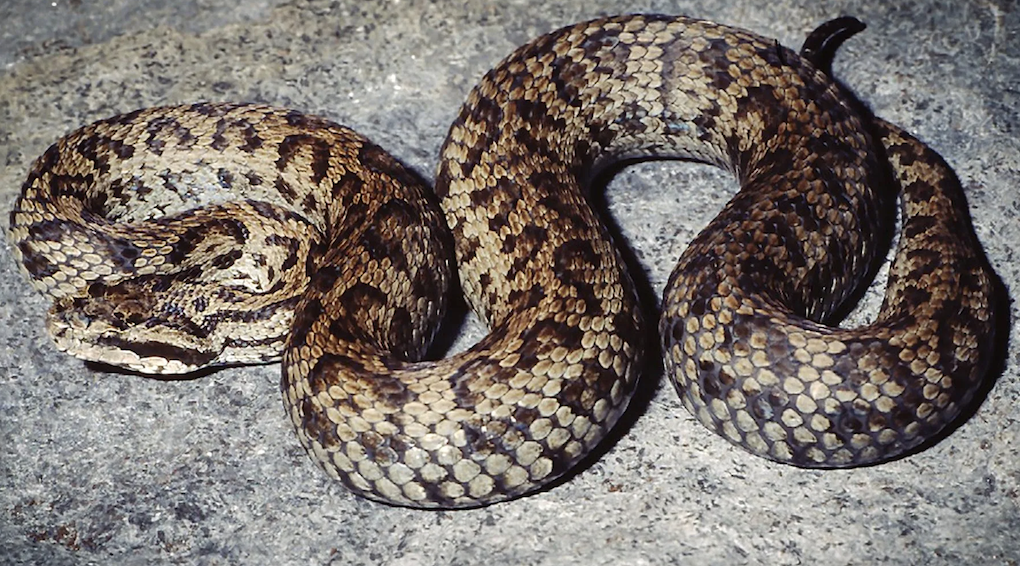
New discoveries reveal that what scientists previously viewed as the Himalayan pit viper was actually five separate species. Not only has this discovery come over 100 years after the snake’s first discovery, but three of the identified species had been previously unknown to scientists.
The Himalayan pit viper has been known to scientists for over 160 years. It was first reported in 1864 and categorized as a single species, which we now know to be untrue.
The way scientists identified these different species was by looking at the skeletal and physical traits of the snakes. There were clear genetic differences in the snakes as well as skeletal and physical traits that distinguished the different species.
Daniel Jablonski, who conducts research in Pakistan and Afghanistan said, “These mountain systems still harbor overlooked vertebrate diversity and hold important clues to the biogeography of Asia.”
Along with these approaches they also utilized specimens from natural history museums. They used DNA analysis to help differentiate the species and further categorize their lineage. Part of the DNA analysis was done by taking specimens from the 19th and 20th centuries that were kept in museums. This helped scientists find out that the original species found was actually multiple species and not one common ancestor of the originally discovered Himalayan pit viper.
“By combining modern field sampling with data from historical museum specimens, we uncovered evolutionary lineages that had remained hidden for more than a century after the original description of the Himalayan pit viper,” said Jablonski.
The species identified include the original Himalayan pit viper called Gloydius chambensis described in 2022, and three newly recognized species that live in different regions of Pakistan and Nepal.
The Himalayas have been rather understudied when it comes to wildlife. This new team of scientists combined genetic analysis, skeletal studies, physical characteristics, and ecological observations to look at the snakes in a closer light.
Snakes are a very important indicator in ecosystems as they are both predators in the food chain as well as controlling pest populations. Frank Tillack of the Museum für Naturkunde Berlin, Leibniz Institute for Evolution and Biodiversity Research, said, “Our work aims to close these gaps in knowledge and to lay the groundwork and provide inspiration for further, in-depth studies on this ecologically and medically relevant group.”
This study highlights the importance of natural history museums. Without these preserved samples this identification would be much more difficult and take a lot more resources. With the increase in scientific research and discoveries, museums play a crucial role in science fields.