
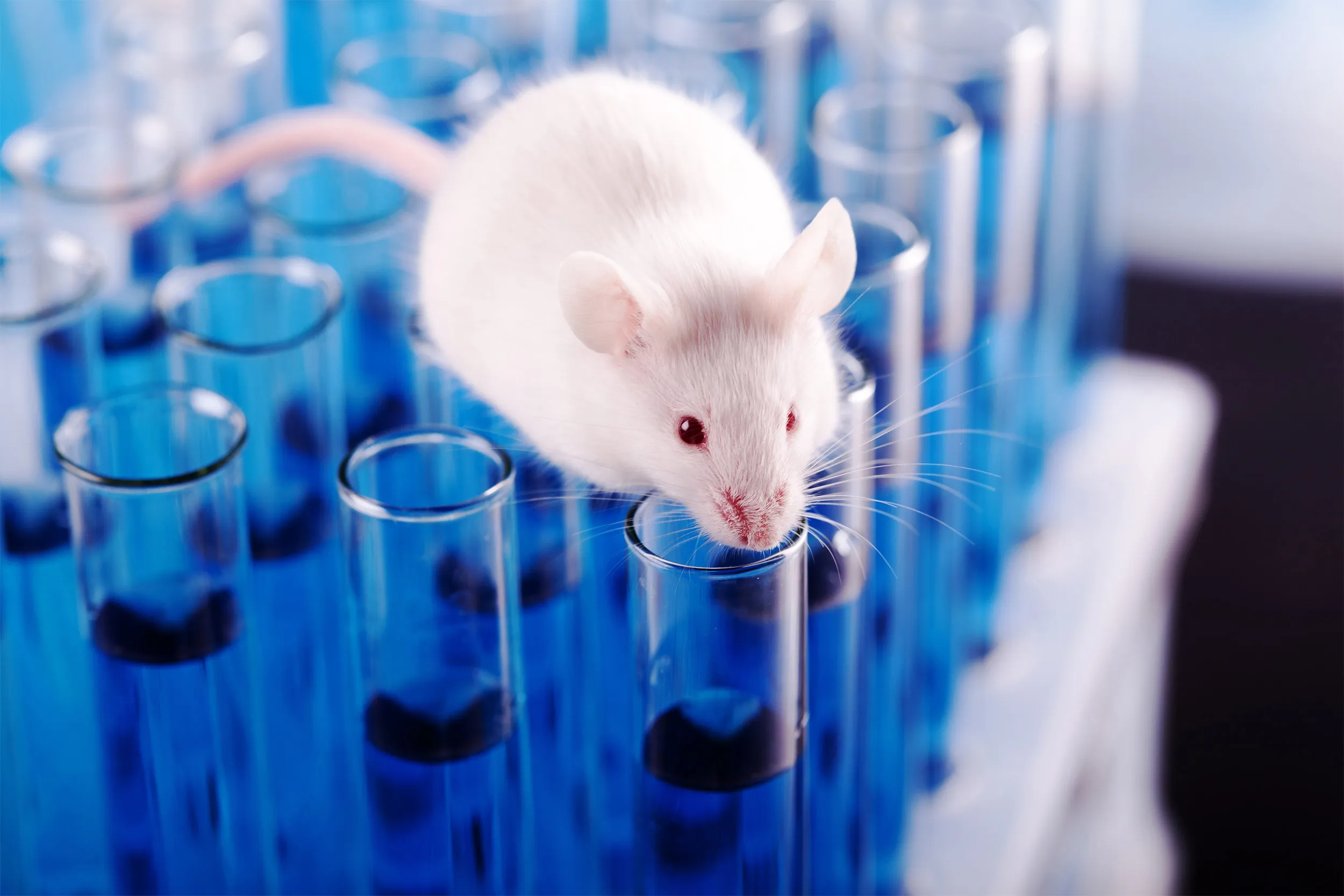
A new breakthrough discovery uses nanoparticles to reverse Alzheimer’s in mice. This is a breakthrough discovery in Alzheimer research and the search for a cure.
Previously, Alzheimer research was focused on managing the symptoms by destroying the buildup of plaque in the brain. This new technology instead repairs the infrastructure and workings of the brain, so it can do these natural processes on its own. Scientists shifted their focus onto the blood-brain barrier (BBB), creating nanoparticles that help restore this barrier.
The BBB is a network of blood vessels and cells that control what enters and leaves the brain. It is meant to prevent toxins from entering the brain tissue and push out toxins and pathogens. This barrier gradually breaks down in patients with Alzheimer’s, which lets harmful proteins build up in the brain and damages important functions.
A protein called amyloid-β (Aβ), is one of the common proteins found in patients with Alzheimer’s. It builds up plaque in the brain, being a sticky substance that easily accumulates. These groups of Aβ are toxic to brain cells and promote damage and death in neurons. This protein is typically cleared from the brain by the BBB, but in patients with Alzheimer’s, it does not.
These blood vessels have been found to play a larger role in the progression of Alzheimer’s than previously thought. To start to find a cure or help slow progression, damage to the vessels needs to be repaired first.
There is a protein called LRP1, which is meant to bind to the Aβ protein so it can be removed via the bloodstream. The problem is that if it binds too strongly, it will instead break down and cause inefficiency in Aβ removal, leading to buildup.
The nanoparticles created are meant to assist LRP1 by mimicking the molecules it interacts with. This causes the particles to “reset” its transport of Aβ proteins out of the brain.
They tested the new theory that Aβ is one of the main factors leading to neuron death. They took mice that were genetically engineered to have higher levels of the Aβ protein and had similar cognitive symptoms to Alzheimer’s patients. They administered the nanoparticles into the mice, with each mouse receiving three doses and scientists saw quick results.
Junyang Chen, co-author and researcher said, “Only one hour after the injection we observed a reduction of 50-60% in Aβ amount inside the brain.”
Long term results were tracked over months. They noted behavioral changes and memory testing results to see the disease’s progression. One experiment was done with a one-year old mouse, which is about 60 human years considering their lifespan, and six months after treatment, the mouse behaved with no abnormal cognitive decline.
The way Alzheimer’s works is that it destroys networks within the brain, which then breaks the connections between neurons. This causes neurons to die off, which is why memory loss and loss of motor skills as a common symptom. Loss of these connections between neurons causes them to die off. This neuronal loss eventually becomes fatal.
Alzheimer’s is the most common form of dementia, accounting for roughly 70% of all dementia cases. It is a devastating disease that causes memory loss, depression, and loss of fine motor skills. It is a fatal disease with only a four to eight year average survival rate after diagnosis.
This research is very new as it is still in its animal testing phase. This means that it still might fail in human patients. Despite this, the new research is revolutionary in how we approach Alzheimer’s and the development of future therapies.