
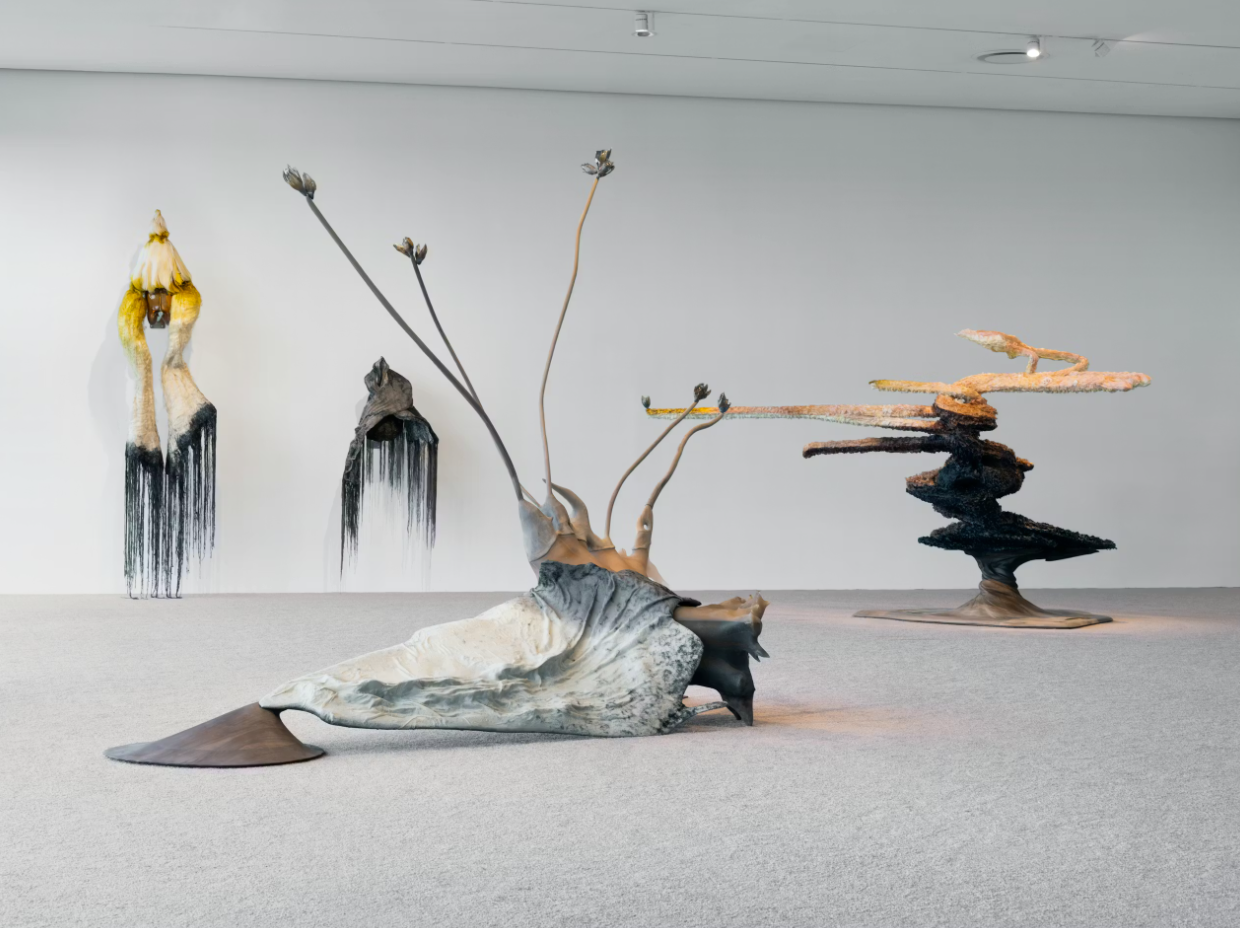
In a society that worships visual effort, contemporary art has a tendency of provoking distinctly negative reactions among viewers. With time, effort, and results frequently overlapping in the artistic process, simplicity in a final product seems to be an easy target for criticism. Stylistic choices are perceived as an inability to reach standards of what “good art” should be, and age-old debates continue to be rehashed.
Even the colorful world of artistic expression can’t help being viewed in black and white. Good art requires skill: detailed and time-consuming in the way that impresses people who linger over your shoulder. Good art draws people in. Good art makes sense.
So what happens when it stops making sense?
The disdain towards modern art in current years can be summarized with one recurring comment: “I could do that.” Discourse over the validity of certain pieces and what makes artwork “good” or “bad” shows no signs of stopping.
Pieces labeled as ‘modern’ or ‘contemporary’ have faced especially heavy criticism in recent years, including accusations of being “soulless cash grabs” requiring little skill or passion.
In Raine Wang’s article “Modern art is killing creativity”, she corroborates these beliefs. She writes, “Art is meant to be worth a thousand words in a single glance, but paintings framed in some of the most prestigious cultural centers in the world now often require a blurb on the side to even be understood. What once was a visual form of human expression has now become a reading comprehension exercise, no different from an article you might read online.”
Many consumers share Wang’s distaste for abstract contemporary pieces, insisting that a museum-worthy piece of artwork should be able to justify itself without reading paragraphs of background information.

Ela Bialkowska/OKNOstudio
Another contributing aspect to the shift of artwork displayed in museums is the increased technology in our daily lives. The increasing accessibility to photography over the last century has eliminated the previous importance of hyperrealistic paintings as a method of documentation.
Artists have additionally argued that much of the discourse surrounding modern art is due to the general public’s insistence on intellectualising any form of creation, especially when it lacks immediate visual appeal.
Some have also theorized the decreasing need for realistic depictions of how we live in this time period has allowed contemporary art to thrive in a way that hasn’t been possible before. The use of bright colors, abstract shapes, and vivid concepts in modern pieces demonstrate how more and more artists are utilizing the abstract in both their concepts and artwork.
When further examining the arguments against the validity of modern art, critics continue regurgitating the same pieces of evidence to prove its inadequacy (you’ve most likely heard of the banana taped to a gallery wall back in 2019.)
Criticisms exemplifying a handful of individual pieces as evidence against the entire modern and contemporary art movements unintentionally kickstarted an impossible debate – one that encapsulates entire decades worth of artists and creations.
When the same few pieces are used to justify the hatred of a much broader category, it brings up the argument that perhaps modern art itself isn’t hated – just certain pieces categorized in that genre.
Observing this phenomenon in its entirety, an even broader conclusion could be made: artwork has always been the world’s least restricted form of creation, so therefore the lines between what “counts” as art or not are impossible to define.
While it’s necessary to view some creative pieces through an analytical lens, I believe it’s equally necessary to let pieces perceived as “bad” or “soulless” simply continue existing as what they are; not built upon the pretense of individual approval or understanding.

La Biennale di Venezia
“El mundo del agua” by Santiago Yahuarcani, 2024.

© Estate of Agnes Martin
“Gratitude” is a minimalist acrylic painting made by Agnes Martin in 2001, now living in a private collection.

Jack Shainman Gallery
“Untitled (Studio)” by Kerry James Marshall.

Jason Mandella/Courtesy the Kitchen/©Anicka Yi/Artists Rights Society (ARS)
“You Can Call Me F” by Anicka Yi.

Camille Henrot/Courtesy Silex Films
“Grosse Fatigue” by Camille Henrot.