
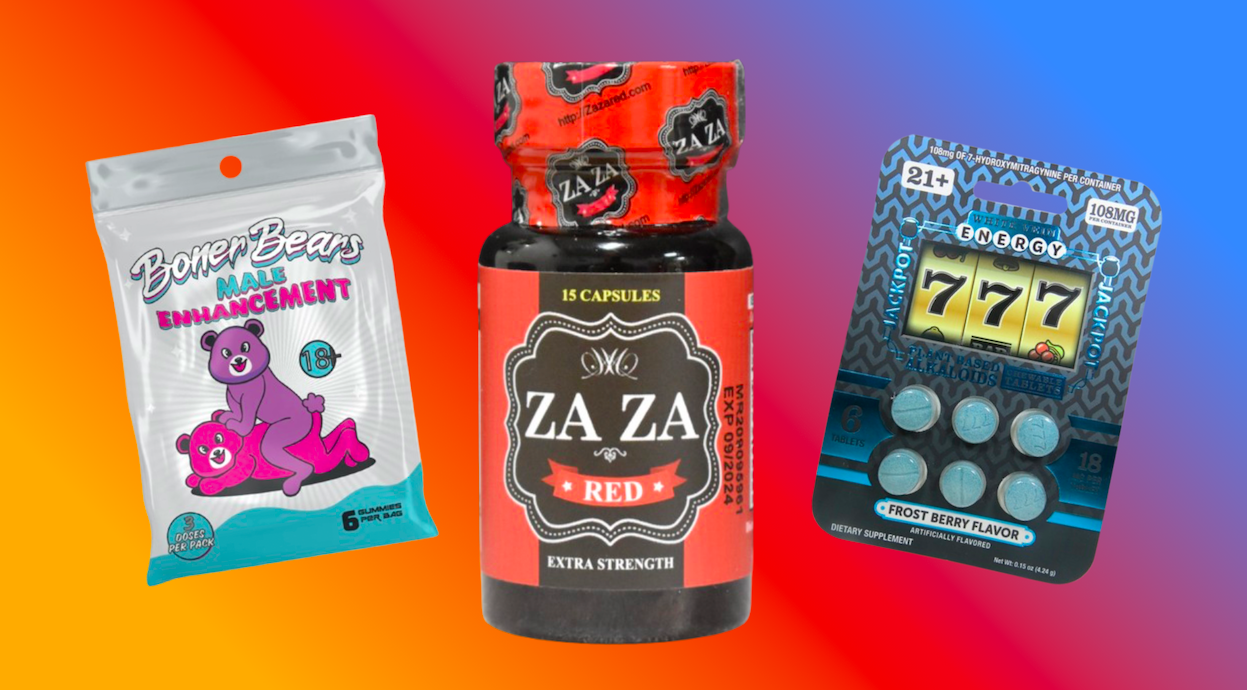
When stopping at a gas station, customers may notice brightly colored bottles near the register. These bottles contain a variety of substances, marketed in various ways, either as a supplement, an aid for sexual performance, or as a boost for energy. While easy to ignore, these drugs are highly addictive and often lack oversight or consistency.
One of these so-called “gas station drugs” is tianeptine. Sold under brand names like “ZaZa,” “Tianna Red,” and “The Devil’s Kratom,” tianeptine can often be found in bright red bottles. Tianeptine is a synthetic drug that mimics opioid effects, earning the nickname “gas station heroin.” Tianeptine sold at gas stations is not regulated, and some products may contain dangerous synthetic cannabinoids. Consumers also run the risk of addiction and withdrawal.
The harmful effects of these substances are not being communicated to consumers. In fact, these drugs are often marketed as “dietary and brain supplements” in the case of tianeptine. There is little oversight or regulation regarding these substances.
Their accessibility at gas stations makes it easy for drivers to take substances like tianeptine before getting back on the road. Without realizing it, someone could drive while under the influence of an opioid-like substance, believing they are taking a supplement, and potentially putting themselves and others at risk.
Another category of gas station drugs is the sexual enhancement products, which often feature bizarre, borderline humorous names in relation to animals, such as “Black Panther,” “Blue Panther,” “The Goat,” “Super Bull,” “Anaconda,” and “Boner Bears.” Behind the flashy marketing are products that may contain undisclosed ingredients and contaminants.
Regarding energy-inducing drugs, people should be educated on kratom. Kratom also has opioid-like effects and is sold in multiple forms, including one called 7-OH. 7-OH is a compound derived from the kratom plant that is naturally found in very small amounts, but is highly concentrated in 7-OH or even regular kratom marketed products. It is about seven times stronger than morphine.
According to a 7-OH information pamphlet from the FDA, consumers, including children, “can purchase these drugs as easily as buying candy.”
It’s easy to assume that these substances are used only recreationally, but television host John Oliver pointed out in his May 3 episode that some people turn to these products as, “it may be because they don’t have access to health care, have a mistrust of mainstream science, or are self-treating anxiety, depression, fatigue, or opioid withdrawal.”
The most important thing consumers can do is consult a doctor before taking any new substance and remain cautious of products with flashy marketing. Hopefully, regulations and stricter laws will be put in place in the years to come regarding gas station drugs for the sake of preventing the rise of addiction and overdoses on these substances.
If someone experiences a reaction to a product containing 7-OH, the FDA recommends calling the Poison Help Line at 1-800-222-1222. If the individual is unresponsive, call 911 immediately.