
*The ThunderWord reports on the federal spending cuts to public media as Highline reduces the ThunderWord budget for the 2025-2026 fiscal year.*
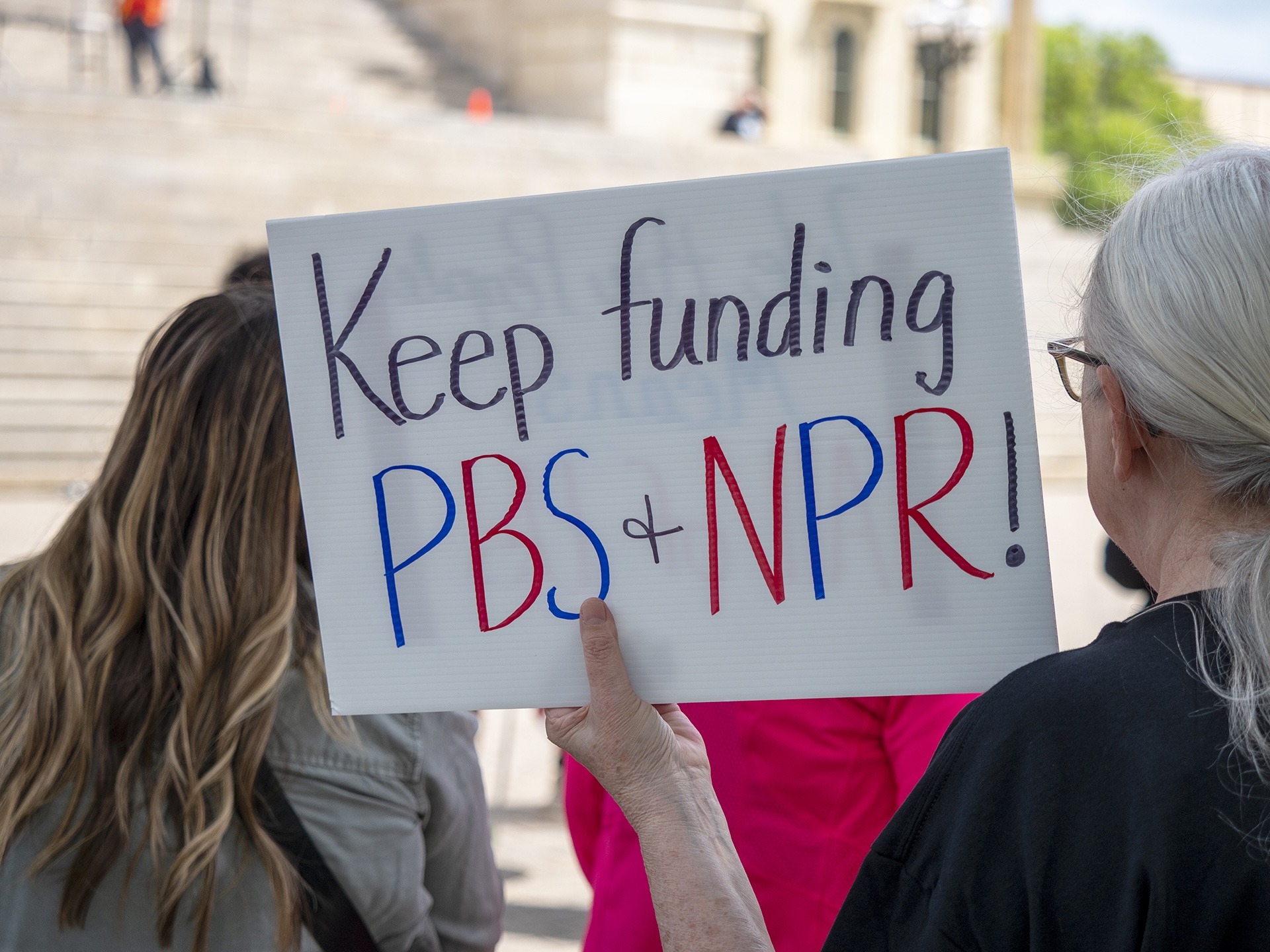
Congress has approved a Trump administration demand to rescind $1.1 billion dollars of public media spending, targeting NPR and PBS. Trump cites the “bias” reporting of these organizations, but station leaders say the move will disproportionately affect rural communities. The money was set aside to fund public media across the nation for the next two years, but with fiscal budgets already in place, stations will take the hit in the coming months.
The funds were previously allocated to the Corporation for Public Broadcasting (CPB), which supports local public media stations across the country through larger grants. The CPB is a congressional nonprofit set up to “ensure universal access to content and services that educate, inform, foster curiosity, and promote civil discourse essential to American society.”
Seattle’s 7th District representative Pramila Jayapal told NPR member station KUOW, “[One of the most concerning things] is what it means for the entire process if any time a president and the majority party can unilaterally rescind funding that was just appropriated.”

TheNewYorkTimes.com
“Most of the funding goes in grants to local radio and television stations that carry weather alerts, news, and other critical programming for every American to be able to have access,” continued Jayapal. “And while we may be okay in Seattle because we have a generous public, that is not the case in many rural areas. So, people will die if they can’t get weather alerts, like in North Carolina when there was a hurricane, or in the recent flooding in Texas.”
In Yakima Valley, NPR member station KDNA stands to lose up to 40% of their funding. This affects the region’s large Spanish-speaking population, as the station regularly runs news segments in Spanish for its listeners.
NPR only receives about 3% of their funding from the CPB, while smaller stations receive up to 70%-80% of their funds from CPB grants and other federal channels. CNN reports, “Once President Trump signs the bill into law, the Corporation for Public Broadcasting’s budget will be zeroed out for the first time since 1967.”
NPR CEO Katherine Maher says the immediate impact of these specific spending cuts will make many stations go dark and be bankrupt by the beginning of October. This means that programming will no longer be able to reach rural and small-town communities. Local stations plan to appeal to Congress for funds and donors to fill the gaps, but only time will tell where the money will come from.

TheNewYorkTimes.com
House Minority Leader Hakeem Jeffries (D) argued in opposition on the congressional floor, “This reckless republican rescissions package is going to undermine the ability of people in rural America and in small-town America to receive advance warning or necessary information when disaster strikes.”
Republicans and Trump administrators call the stations “bias”. In their arguments on the Senate and House floors, they cited stories that covered transgender people or race. Steve Inskeep with NPR said, “Incidentally, NPR transcripts show that many people who made the claims of bias in recent days have been heard in their own words on NPR News over the years.”
Maher said, “There is a tremendous amount of political pressure right now to align with the administration’s political priorities.”
Public media has received bipartisan support since the inception of the CPB. Despite republican presidents in the past requesting to shrink NPR and PBS budgets, Congress stayed firm until Trump. In May of this year, he signed an executive order halting further funding to the CPB.
In the order it states, “Unlike in 1967, when CPB was established, today the media landscape is filled with abundant, diverse, and innovative news options, making government funding of news media outdated, unnecessary, and corrosive to journalistic independence.”
This comes at a time when Trump is in active lawsuits against many news stations, including Fox News, the Wall Street Journal, and CBS. Paramount Global, CBS’s parent company, recently settled with Trump by paying out $16 million. Stephen Colbert, host of CBS’s “The Late Show,” criticized the move on television shortly before CBS announced the cancelation of Colbert’s show.
While stations look for other forms of funding, the ThunderWord is sending out the same message. Due to the ongoing budget crisis at Highline College, the ThunderWord’s budget has been cut in consecutive years. And despite the ThunderWord’s unprecedented growth during the last school year, Highline’s S&A board drew back 8% of the TWord’s budget for the upcoming year.
**Mavrie has been serving as editor for the ThunderWord since 2024. She is also the founding president of Highline’s Non-fiction Writers Circle.**