
The partition of British India over 78 years ago continues to cast a long shadow over the relationship between India and Pakistan, two nations that share a common history and people. Despite this shared heritage the bitter relationship is carried on by politics, and was further trenched in hardship by the recent deadly militant attack in Pahalgam.
On April 25, 2025, an attack in Pahalgam, Kashmir, resulted in the tragic deaths of Hindu pilgrims, a Christian tourist, and a local Muslim. India swiftly accused Pakistan of staging the attack, pointing their fingers towards Lashkar-e-Taiba, a terrorist group with ties to Pakistan, and alleging that the attack specifically targeted the Hindu population in what India considers to be territory under its control.

Pakistan has boldly denied these accusations. Prime Minister Shehbaz Sharif called for a transparent, credible and neutral investigation into the attack.
Following the Pahalgam attack, which India attributed to Pakistan, tensions escalated when India threatened to potentially withdraw from the Indus Waters Treaty, which governs the sharing of water from rivers originating in India that flow into the Indus River Basin in Pakistan.
In response, Pakistan issued a strong statement, declaring that, “Any attempt to stop or divert the flow of water belonging to Pakistan as per the Indus Waters Treaty, and the usurpation of the rights of lower riparian will be considered as an Act of War and responded with full force.”
After this, on May 7 India launched mission Sindoor in which they sent nine missiles into Pakistan at night into six cities targeting civilians and mosques which India believe is a “terrorist infrastructure”. There is no truth to these allegations. These missiles have killed at least 31 people including two kids.
In retaliation Pakistan launched mission Bunyan al Marsoos which targeted 26 locations in India. Pakistan did not attack any civilian area but went after army bases in India. They also launched a missile called Fatah-II aimed at Delhi. After that Pakistan also destroyed five Indian jets that came into Pakistan, but India is refusing to admit the loss.
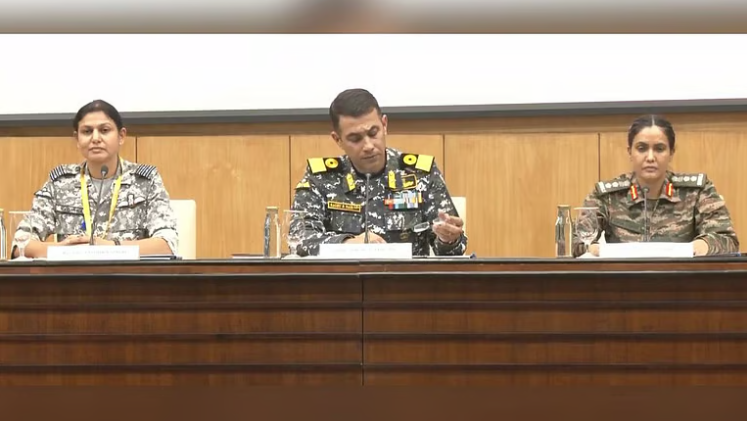
They have only admitted to one jet loss. Indian General of Air Operations AK Bharti avoided a direct answer but stated, “We are in a combat scenario and losses are a part of it.”
After this, President Trump mediated and called for an immediate ceasefire by both countries. He tasked Vice President JD Vance to talk to India and de-escalate things and assigned US Secretary of State Marco Rubio to talk to Pakistan and call for a ceasefire.
There are rumors that both countries broke the ceasefire but there has been no confirmation because both countries are blaming each other. Despite this, the truce is still held.
Prime minister Modi talked to the public on Monday for the first time since warfare and stated, “If another terrorist attack against India is carried out, a strong response will be given.” Further, Modi added “Water and blood cannot flow together,” hinting towards the Indus treaty being dismissed.
For right now both countries are clearly on edge, but currently held back by the ceasefire.