
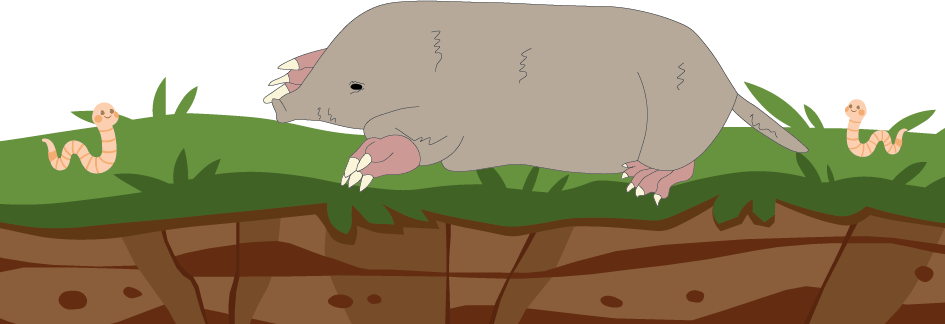
Are you tired of those pesky moles digging up your backyard in Washington state? If so, you’re not alone. With the usual onset of rainy weather, it’s no surprise that these small creatures are popping up all over our gardens.
Sure enough when you learn that Washington state’s moist climate and weather, soil quality, as well as abundance of earthworms creates an extremely alluring environment for moles. They can be easily identified by their characteristic dirt piles.

Sondury Rodriguez/THUNDERWORD
Moles have been known to cause damage to property, especially to lawns and plants, due to their tunneling. “They can destroy your yard, if you don’t get on top of it,” said a local community member and homeowner Colleen Williams.
“You’ll find a huge mound of dirt where they come up at night, and they make tunnels throughout your yard…so you’ll see a trail of mounds of dirt throughout your yard,” continued Williams.
“Because of the surface tunnels and mounds they create, moles may be considered pests in yards,” the Washington Department of Fish and Wildlife website said. “Moles may also inadvertently heave small plants out of the ground as they tunnel, or damage plants when their mounds cover small seedlings.”
While moles can be frustrating, they are also an important part of the ecosystem. Their underground burrowing helps aerate and enrich the soil and their primarily insect-based diet can be beneficial for your garden.
“Though moles are the bane of many lawn owners, they make a significant positive contribution to the health of the landscape,” said the Washington Department of Fish and Wildlife. “Their extensive tunneling and mound building mixes soil nutrients and improves soil aeration and drainage. Moles also eat many lawn and garden pests, including cranefly larvae and slugs.”
There are humane and environmentally friendly ways to manage their populations without causing harm. Instead of traditional methods of trapping or repellents, try making your lawn less attractive to moles by reducing irrigation and fertilization. This can help decrease the number of insects in your yard for them to feed on.
You can also invest time into recovering, repacking, and reseeding molehills. “Sometimes you can encourage them to go to your neighbor’s yard by filling up the holes and making it difficult for them to come up,” said Williams.
“The easiest way to prevent minor plant damage is to regularly visit problem areas, taking a few moments to reposition or uncover plants as needed,” advises the Washington Department of Fish and Wildlife.
Although the Washington Department of Fish and Wildlife warns homeowners to be patient in their approach to these nuisances. “It is important to understand that mole problems rarely can be resolved by a quick fix method, but that a continuing commitment to whatever solutions are adopted is required,” their website said.
Another option is to plant native vegetation that is less attractive to moles. Not only will this create a more beautiful and natural feel, but it can also help manage mole populations without causing harm.
So next time you spot a mole in your yard, don’t panic. Take a deep breath and try one of these friendly and effective solutions. Your backyard and the environment will thank you. After all, it is important to find ways to coexist in a way that is respectful to all.