
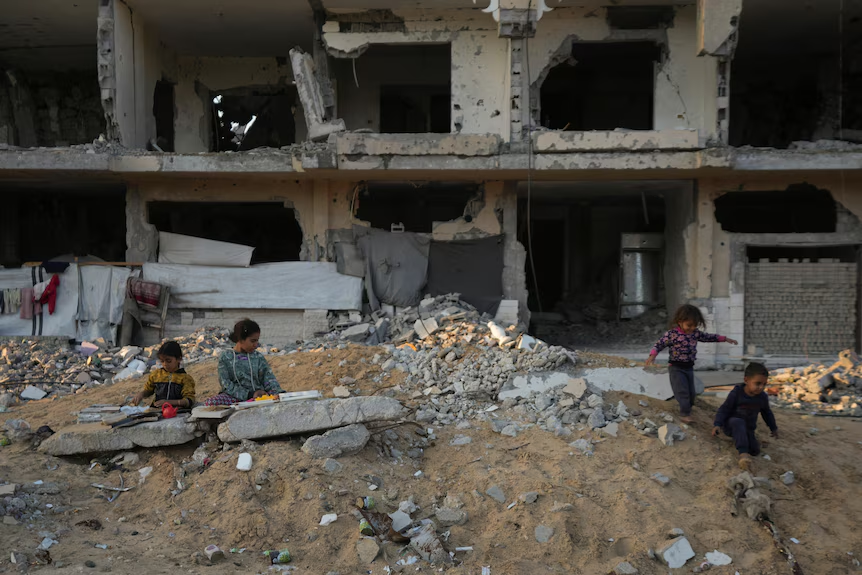
Before the genocide, people in Gaza lived ordinary lives filled with family, school, work, celebrations, and everyday routines. Since the war began, those routines have been dramatically disrupted, with many people facing displacement, loss, and uncertainty.
Although many residents faced economic hardships and restrictions due to the longstanding blockade, they continued to build careers, attend universities, run businesses, and spend time with loved ones.
The article “Remembering Life in Gaza Before Oct. 7” describes how daily life included weddings, holidays, education, and community gatherings despite ongoing political tensions.
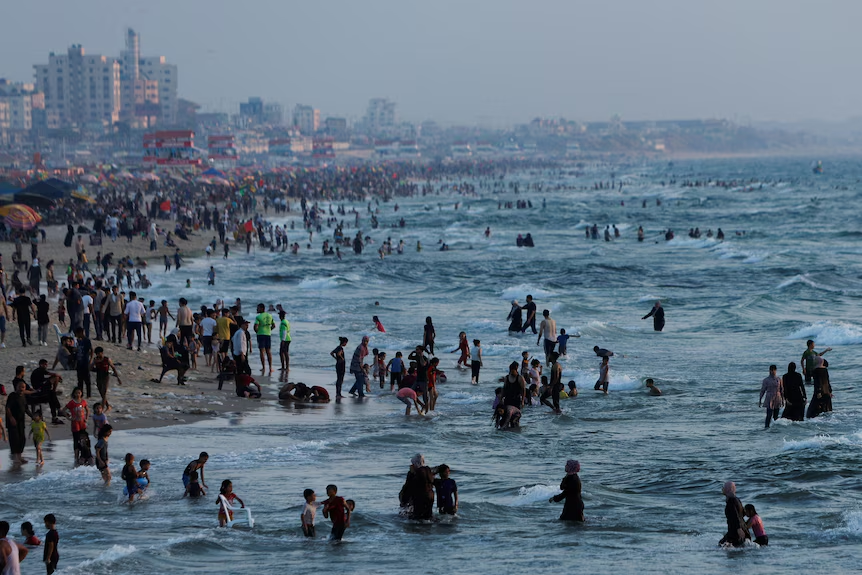
Palestinians enjoy their time at the beach with families in Gaza city in 2022.
Before the genocide, Gaza’s more than two million residents lived with significant restrictions on movement and economic opportunities. However, many aspects of everyday life continued. Children attended school, universities educated thousands of students, businesses operated in city centers, markets remained active, and social and cultural traditions continued to play an important role in community life, providing a sense of normalcy despite the ongoing political tensions.
Since the war began, many of those routines have been disrupted by the displacement and the destruction of homes and schools.
In the UNICEF article “Inside the Gaza Strip: A Day in the Life of Rahaf” an 11-year-old girl, who was displaced from Gaza City, describes her life in a camp for displaced families while attending classes in a temporary learning space. Reflecting on the life she lost, she said, “I miss our home, my bed and my books.” She also expresses hope that one day she will be able to return home and continue her education.
According to UNICEF, more than 95% of schools in Gaza had been partially or completely destroyed by November 2024, leaving hundreds of thousands of children without any access to formal education. Approximately 658,000 students in Gaza have been cut off from formal education and school activities.
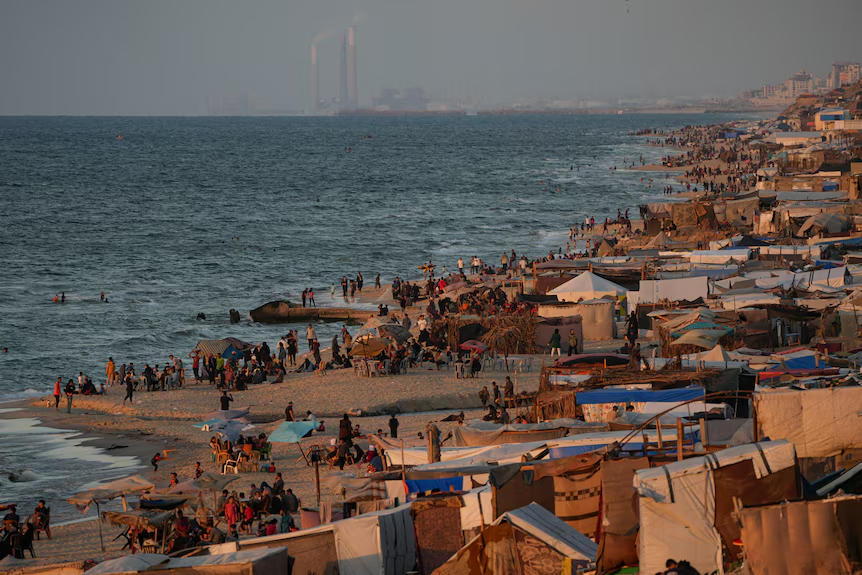
Abdel Kareem Hana
For many people in Gaza, the genocide marked a sharp divide between the life they once knew and the reality they face today. One of those people is Dr. Sohoaib Safi, a doctor who remembers spending time with family, raising his daughter, and planning for the future before the conflict. Looking back, he said, “Before the war, life in Gaza was generally difficult. But on a personal level, things were stable.” The outbreak of the genocide would soon change everything.
Dr. Safi explained that the war disrupted every part of life almost immediately for him and his family, who were forced to experience it with him. “When the war started, everything changed,” he said. “We were displaced on the first day. The house was no longer ours. The place no longer felt like home.”
As the war continued, he faced constant uncertainty and separation from his loved ones. Speaking about his daughter, who was able to leave Gaza, he said, “My daughter, who is now in Egypt, tells me every day that she misses me.” He added, “I don’t know if I’ll be able to see them again, I don’t even know if I will survive.”
Through his story, Dr. Safi illustrates how the genocide has affected not only people’s physical safety but also their families, homes, and hopes for the future. Dr. Safi’s experiences are consistent with accounts presented in “Life in Gaza, Before and After the War: A Doctor’s Story”.
Stories like Dr. Safi’s show that behind every statistic are real people whose lives, families, and futures have been deeply affected by the conflict.