
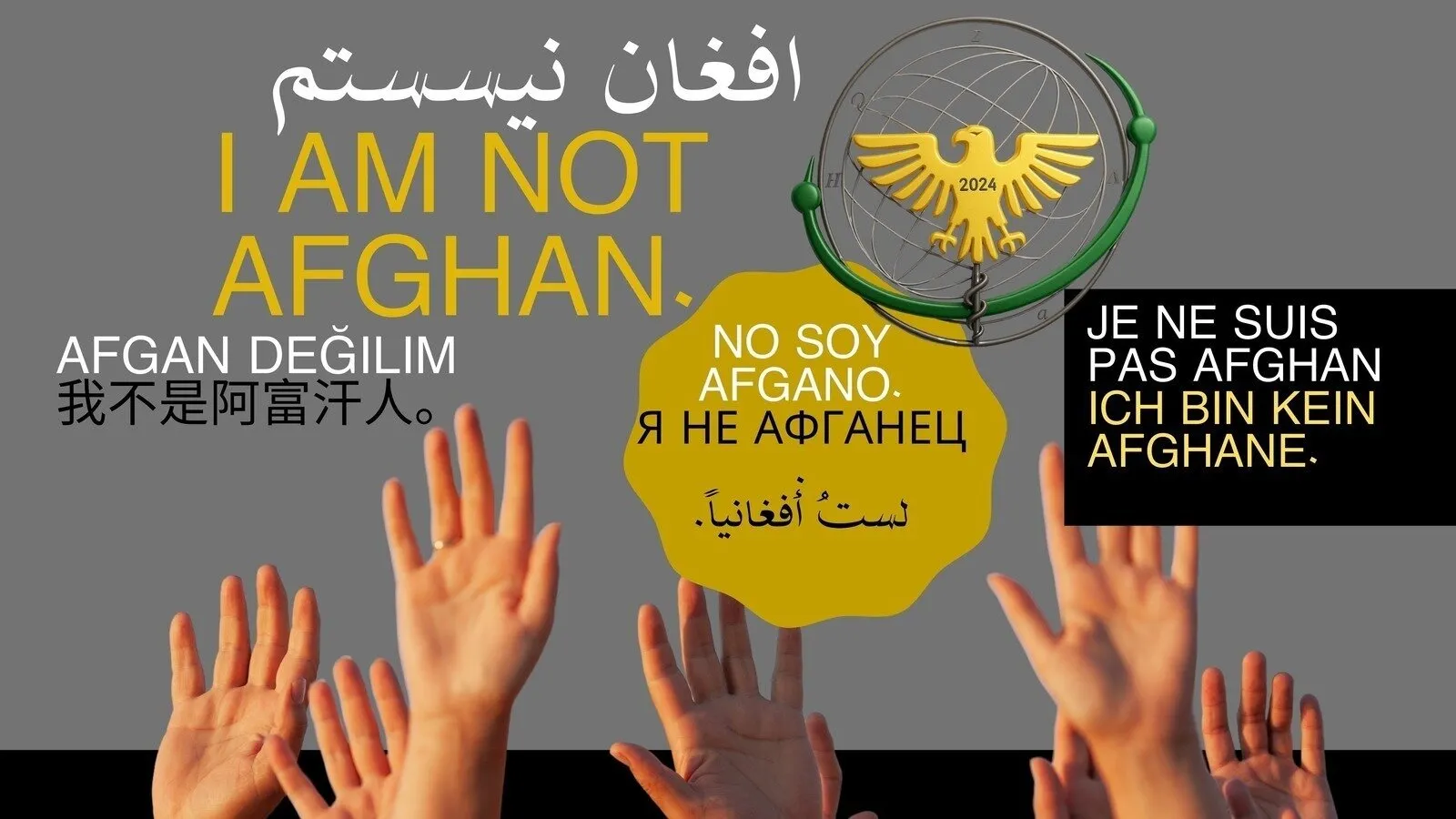
In the middle of heated debates on X, formerly known as Twitter, a phrase appears again and again from thousands of people from Afghanistan: “I am not Afghan.” For many outsiders, this can seem confusing. After all, Afghanistan is the name of the country. Wouldn’t “Afghan” describe everyone from there?
For people from Afghanistan, however, the issue is a bit complicated. It is tied to history, ethnicity, language, power, and identity — and to a feeling, shared by many non-Pashtun communities, that one group’s identity was turned into the identity of an entire nation.
As a journalist who has followed these debates for years, I have seen how emotional and deeply personal this issue can become. What may sound like a simple disagreement over terminology is, for many, a reflection of a much larger struggle over belonging, trauma, and recognition.
Afghanistan is a multiethnic country made up of many communities, with four major ethnic groups often identified as Pashtuns, Tajiks, Hazaras, and Uzbeks.

No reliable national census has ever definitively established the exact population percentages of these groups, and estimates vary widely. However, some estimates suggest that Pashtuns make up about 38 percent of the population, Tajiks 30 percent, Hazaras 20 percent, and Uzbeks 10 percent.
What is widely accepted is that Afghanistan has never been dominated by a single overwhelming ethnic majority. That reality has led many scholars to describe it as “a country of minorities.”
The controversy begins with the word Afghan itself. Historically, “Afghan” was used primarily as another name for Pashtuns, the country’s largest ethnic group. Even today, in everyday conversations inside Afghanistan, many people still use the word in that sense.
For instance, if I tell my mother that I am having lunch with my “Aowghan” friend — the colloquial pronunciation of “Afghan” — she would most likely assume that I mean a Pashtun friend. In many homes and communities, the word still carries an ethnic meaning before it carries a national one.
During the twentieth century period of state-building and centralization, Afghan rulers attempted to forge a unified national identity. The 1964 Constitution formally defined all citizens of the country as Afghans. To supporters, this was an effort to create national unity.
Critics argue that it effectively imposed the historical identity of one ethnic group onto everyone else. And this has become a root cause of many conflicts, tensions, divisions, and deep social polarization, fueling mistrust and resentment among ethnicities.
Language also became part of the tension. Afghanistan has long been deeply shaped by Persian language and literature. For centuries, Persian served as a major language of administration, poetry, trade, education, and urban life across much of the region. According to various sources, including CIA reports, around 77 percent of the population speak Persian.
Pashto, meanwhile, is spoken by a smaller portion of the population — with some estimates suggesting that about 48 percent of the population can speak it — yet it was heavily promoted by the modern Afghan state as the only official language and part of its nation-building project and efforts to construct a unified national identity.
These language policies of Pashtun/Afghan nationalism often created resentment among non-Pashtun communities, many of whom felt that their own languages, histories, and cultural identities were being marginalized or pushed aside.
Some historians, including Jonathan L. Lee, argue that the creation of modern Afghanistan was also influenced by the desire of rulers to distinguish the country from neighboring Iran, another Persian-speaking civilization with deep cultural ties to the region.
Over time, this effort to build a separate national identity sometimes intensified ethnic and linguistic divisions inside Afghanistan itself.
For critics of the term “Afghan” as a universal label, the problem is not simply linguistic. They believe it erases the country’s diversity and reduces many communities to an identity they do not historically associate with themselves.
A group of activists in Melbourne, Australia, who successfully campaigned to change the name of the “Afghan Bazaar” argued that the term “Afghan” carries deep historical trauma for many non-Pashtun communities.
For them, the word is associated not simply with imposed and fabricated nationality, but with centuries of political domination, repression, forced assimilation, and violence carried out under Afghan rulers and state.
Many argue that the root of the problem lies in the country’s name. Some advocate for reviving “Khorasan,” a historical name used for parts of the broader region centuries ago, arguing that it belongs to no single ethnic group.
Others consider such proposals unrealistic in the current political climate and instead prefer the term “Afghanistani” — similar to “Pakistani” or “Kazakhstani” — to describe citizens of Afghanistan without attaching them to a specific ethnicity.
Jalal Nazari, a feminist and gender studies commentator, said in a series of Instagram videos that “anyone who insists on ‘Afghan’ as a national identity — which I consider entirely artificial — is either a Pashtun/Afghan or someone who has themselves become a victim of colonial ideology through ignorance.”
The debate has also become especially visible online. Activists associated with hashtags like #IAmNotAfghan argues that labeling every citizen of Afghanistan as “Afghan” is historically inaccurate and dismissive of the country’s ethnic complexity. This campaign has been carried out mostly in Persian, with some content also produced in English.
What makes the conversation difficult is that identity in Afghanistan has never been simple. A person can feel deeply connected to their ethnicity, language, region, and history while also feeling attachment to the country as a whole. But when national identity feels tied too closely to one ethnic narrative, many others begin to feel invisible within it.