
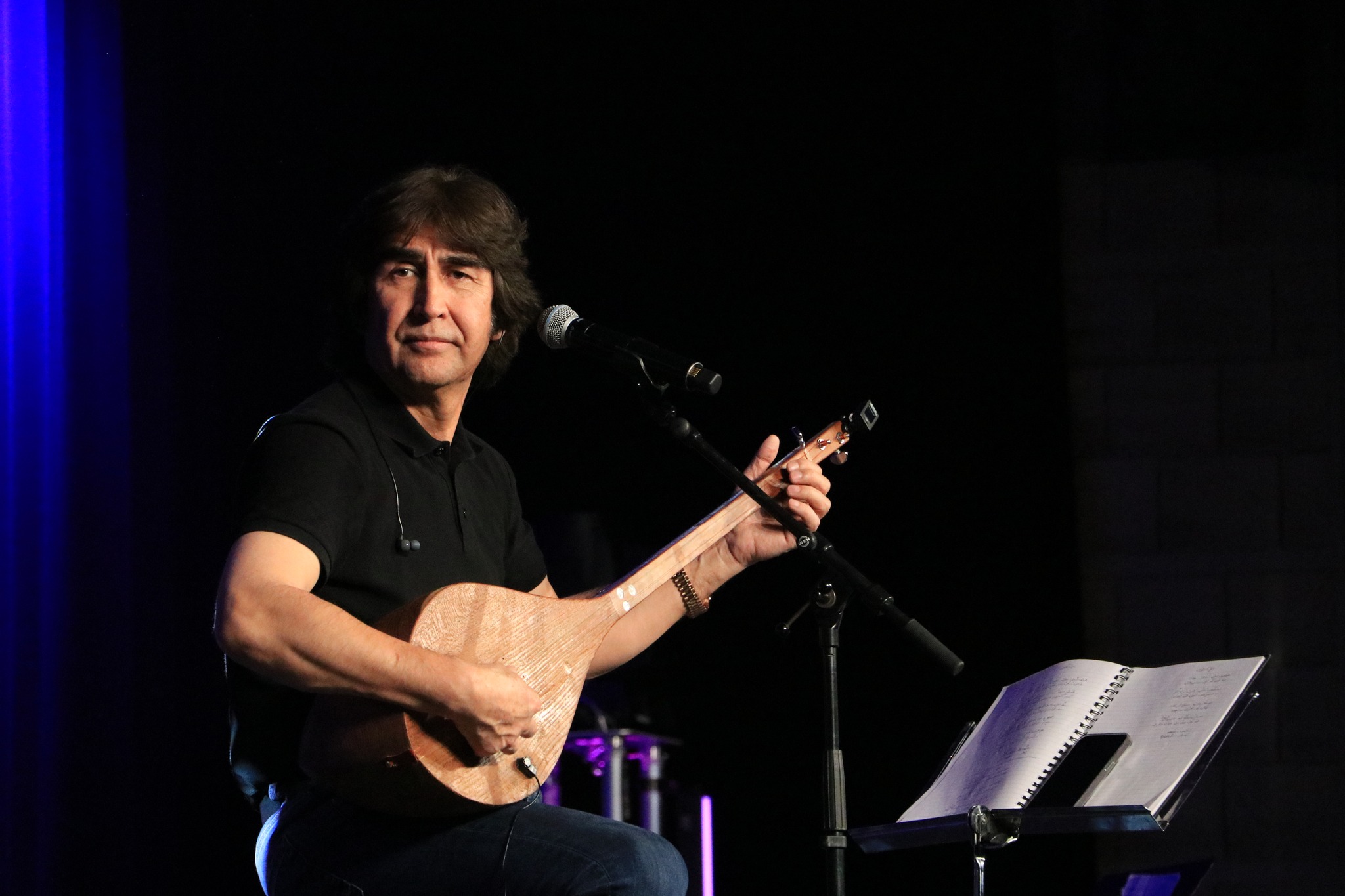
Where song, memory, and resistance meet in the voice of Dawood Sarkhosh
Around April 26, my Facebook feed filled with the same face, the same voice. Old concert clips resurfaced. Grainy recordings from decades ago played again. People were not just celebrating – they were holding on.
It was the birthday of a renowned Hazara singer, Dawood Sarkhosh. But that wasn’t the whole story.
For years, Sarkhosh’s birthday has not been like this. This time felt different. The flood of messages carried something heavier: gratitude, memory, and a quiet, unspoken fear. Behind the celebration was a truth his fans could not ignore. For more than a year, the 55-year-old folk musician has been battling cancer, enduring surgeries and long treatments. Many of his admirers hesitate even to name the illness, as if saying it aloud might make it more real.
So the birthday became a moment to say what might otherwise remain unsaid.

Facebook
People shared what they had carried for years. Videos from 37 years ago, filmed in Quetta, Pakistan, spread widely again, as if time itself had folded back. Each post felt personal, yet part of something collective – a shared archive of memory and meaning.
Ali Amiri, a professor, writes: “The sorrows and joys of a generation live in the voice of Dawood Sarkhosh. He has sung of war and exile, displacement and suffering, hope and love and the dreams of a people – and now, each of us, in one way or another, finds ourselves in his voice.”
Sarkhosh was born in central Afghanistan, in a region many Hazaras call Hazaristan. When he was just 12, war shattered his world. In a single wave of violence, he lost 23 members of his family, including his older brother, Sarwar Sarkhosh – himself a powerful and iconic musical influence.
In 1983, he fled to Quetta, Pakistan. Years later, in 1999, he moved again – this time to Europe, eventually settling in Vienna, Austria. From exile, he built a career that crossed borders. He toured the United States, Canada, Australia, Iran, Russia, and much of Europe. He released eight official albums, along with countless live recordings that circulate among listeners.
Sarkhosh belongs to the Hazara community, a people who have endured generations of persecution and violence in Afghanistan. In the 1990s, during one of the country’s most brutal periods, his songs did something rare: they gave language to pain and turned it into strength. These “revolutionary songs,” as many Hazaras call them, spoke of resistance, dignity, and survival.
During the civil war, Hazara fighters are said to have played his music on the front lines, drawing courage from his voice. As noted in the book “Let Me Breathe” by Aziz Royesh, Dawood’s songs were not just art – they were a source of motivation, even protection. Over time, this transformed Sarkhosh into more than a performer. For many, he became the “voice of a people.”
And yet, his music did not remain in one place. Over nearly four decades, it has evolved. His later work leans toward mainstream and pop, reaching audiences far beyond the Hazara community. Today, he is widely known among Persian-speaking listeners, including in Iran, where his voice carries both familiarity and depth.
Kazim Ehsan, a journalist, after quoting one of Dawood’s lyrics, writes: “The power of Dawood Sarkhosh’s music lies in its refusal to hide behind abstraction, complexity, or heavy symbolism – and in its quiet avoidance of slogans. Instead, with striking simplicity and clarity, he lays bare a wound that has remained open for centuries. Listening to his songs, one is reminded of those moments when, after each attack and repression of the Hazara people, many of our own compatriots respond not with empathy, but with a troubling sense of celebration.”

Facebook
For me, his music has always been something closer than admiration. I have lived with his songs for as long as I can remember. They are woven into my childhood memories, into quiet moments of reflection, and into the gradual shaping of my identity – especially during the years I spent in Quetta, Pakistan. As a Hazara, his voice helped me understand where I come from – and, in some ways, who I am. Even now, when I listen to one of his songs, time loosens its grip. Hours pass without notice. The music does not just fill the room; it fills something within me.
That is why this birthday felt different. People were not simply marking another year of his life – especially a difficult one. They were acknowledging what his life has meant to theirs. In post after post, the message echoed, even when the words changed: your voice has been our shelter; your songs have been our memory.
And perhaps that is the quiet power of artists like Dawood Sarkhosh. They do more than entertain. They gather scattered pieces of identity, belonging, and resistance – and shape them into something we can carry. Around April 26, that voice returned, louder than ever.