
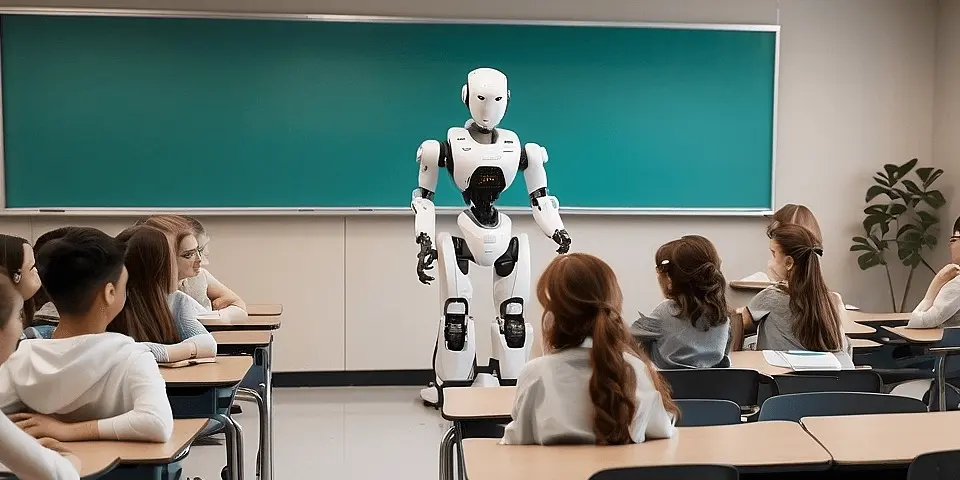
Think about how you use AI in your day to day life and how you’re using it. AI has changed our society in many ways. One specific change is in education.
Let’s start with the good news. AI use has a lot of useful assets when it comes to education. For example, it helps students who learn differently by teaching them in a way they need.
According to “AI’s impact on education in 2025” by Cengage group, “AI’s greatest potential is in personalization and tailoring learning to each student’s needs.” Stephanie Hogan, a civics teacher at Mount Rainier High School, said, “For positives, it can help give teaching discussions, reflect and connect questions, and saves time.”
According to Cengage group, another enhancement of AI use is that “94% of graduates who received some form of AI training in college say it has benefitted them, leading to greater job stability [47%] , more respect at work [42%], faster promotions [34%], and higher salaries [34%.]” Higher-ed students also believe they know more about AI than their instructors, and 45% of them wish that their professors used and taught AI skills in relevant courses.
Furthermore, many people use AI to help create new ideas and to help with research. The Cengage Group said, “The Teen and Young Adult perspectives on AI reports, say [53%] uses AI now for gathering info and that 51% use it for brainstorming ideas.”
Another convenience of AI is helping students learn in a different way. As stated in “AI in education: How AI is transforming education 2025” by Salam, “AI transforms education by personalizing and automating tasks.” According to him this has led to a 65% rise in test scores.
Lastly, a strong AI advantage is that it frees up space for teachers to build relationships with their students. According to the article by Salam, “AI grading tools cut teachers’ workloads by 70%, freeing time for student interactions.”
Now that we’ve gone through all the good stuff, let’s move on to the not-so-bright side of AI use in education.
One major negative impact is the dishonesty in students’ work which causes students’ education to decrease in quality. In Salam’s article it states, “AI tools facilitate academic dishonesty, with 24% of charter high school students reporting AI prone cheating incidents.”
As a result of students using AI to cheat, it also leaves other students worried about their own work just because other students are cheating. According to the article by Cengage group, “Students who don’t use AI say they feel the pressure of constant suspicion and spend extra time editing their own writing to sound ‘more human’.”
Another disadvantage is people start to depend on AI, harming students’ critical thinking skills. According to Cengage group’s article, “With the growing dependence of AI for learning, communication, and entertainment, students are exposed to digital environments that might lead to negative consequences for their well being.”
Bruce Taylor, a statistics teacher at Mount Rainier High School, said, “[AI acts] negatively, students abuse it, [students] do not have creative and critical thinking, and [AI] is not always 100% correct.”
Another disadvantage is that it’s stopping people from connecting with others around them. The article continues, “The engagement with AI technologies may affect students’ ability to form social connections, relax without digital stimulation or maintain a healthy balance between academic and personal life.”
As a result, it could impact communication skills and emotional intelligence. In the article by Cengage group it also says that students may become more isolated and less skillful at real world social interactions and teamwork, which are critical to their overall social development.
Another negative impact that article states is, “Among 387 university students report that social support was found to mediate the relationship between loneliness and AI usage, suggesting AI might increase loneliness when students perceive it as a primary source of support.” This shows that students who depend on AI lose important social skills and are prone to being lonely.
This all ties together that AI is neither positive nor negative but the way we choose to use it creates a positive impact or a negative one. So, think wisely about how you’re using AI and what you’re using it for.