
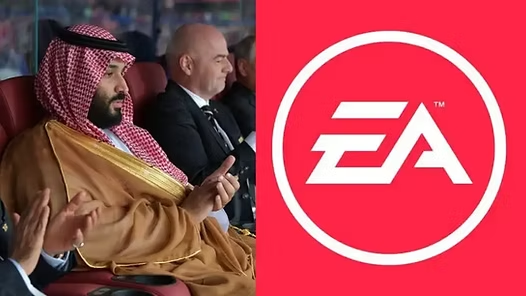
EA announced that it would be going private in a buyout deal with Saudi Arabia and Jared Kushner’s Affinity Partners investment firm back in late September. To all my fellow Bioware fans, this news has been a devastating blow. For the unfamiliar, Bioware is owned by EA, a video game publishing company from the US.
In brass tacks, Saudi Arabia now owns EA and by proxy, Bioware through a buyout deal that converted EA from a public company that works to keep its investor happy with an ever expanding income, to one that focuses on project sales alone. This sounds like a positive on its own, but these projects will be largely supervised by Saudi Arabia.
This is where the worries come in as the crown prince of Saudi Arabia’s political track record is anything but pleasant and welcoming. While it’s unclear if these fears will come to pass, it’s not exactly unlikely either. Even worse, layoffs came just a few months before in February, so morale was already incredibly low at the once great studio.
Aside from the downright terrible treatment of Bioware staff by EA executives and the obvious disgusting concept of working with a tyrant, EA going private is an incredibly bad sign. While it’s been a month since the acquisition, nothing has been said since. The silence is deafening, and worries continue to grow as Bioware’s progressive voice will most likely be silenced.
This is not the first time I’ve written about Bioware and its games. I’ve been a fan since I was in sixth grade, so I’ve grown up with their games for a good chunk of my life. While their games are far from perfect, they inspired me and many others while also making us feel heard.

Bioware
Whether you want to play as a noble human warrior, an edgy elven assassin with a vengeful streak, a fish out of water Qunari mage, or your classic grumpy dwarf, Bioware gave that freedom, and it let you carve the world in your image as you did.
One of the incredibly unique things about Bioware games was that the actions you took in the previous game directly decided how the world was represented in the next entry. Let’s say you saved a village of elves from a tyrant’s army. In the next game, that village would have grown into a city with a statue of your previous character proudly displayed in the center.
While this specific event I’ve described doesn’t actually happen in the game, the point remains. Every major choice you made would be addressed in later games. Many would matter in that same game later down the line, so you would occasionally feel consequences for your earlier choices.
Bioware has been around since 1995, and in a time where homosexuality was a lot less welcome in pop culture, Bioware proudly represented it and gave players the option to romance whatever companion they wanted (barring some exceptions of course).
It is that legacy of representation and freedom that many (me included) fear will soon end thanks to this buyout. It’s hard not to be negative about this, as after all, this is bad news. There is no silver lining, it’s just bad.
The gaming industry has been in a sad state of affairs since 2016 thanks to the sharp surge in alt-right rhetoric flooding the community as a result of “Gamer Gate.” While the term for it is unserious, “Gamer Gate” was a major event, for lack of better words, in gaming history. Yes, I know that sounds a little ridiculous, but it’s an unfortunate truth.
Cries of wokeness and DEI as complaints against studios like Bioware, Ubisoft, Larian Studios, Naughty Dog, and many more are the result of Gamer Gate, which should be enough of an explanation on why it was such a negative event.
This sudden and initially dismissed rise in alt-right radicalization is why the industry has become so hostile. That, and the corporate gears that grind the life out of their developers whilst paying them pennies and dimes.
This buyout was simply a small domino in the largest domino chain in political history. I doubt Bioware will survive. Even if it does, it won’t be the same as many developers have admitted that even they believe EA will force them to tone down their more progressive messaging.
Despite the buyout, “Mass Effect 5” is still in development (like it has been for years now) and there’s been little shown. With this sudden buyout and the admittal that the studio has nothing substantial to show for it even now, it’s not exactly a bright future to look forward to.
Even if Bioware somehow remains unchanged, it’s been on a downturn since “Dragon Age: Veilguard” failed to draw new life into the “Dragon Age” franchise. Regardless of your personal opinion on the game entry, it just wasn’t enough to keep the series alive thanks to executive mismanagement and a lack of a unified vision.
If you’re a fan of the studio’s works (like me), then be prepared to be disappointed as it’s highly unlikely that Bioware will release anything on par with their previous works. Regardless of how many of the developers are longtime veterans of the industry or not, the influence Saudi Arabia will most likely exert will hollow out any depth the games would’ve had.
I wish I could say “hopefully things change for the better,” but it’s a little early as this was a recent change for the worse. Unfortunately, there’s not much to say. Bioware was a great studio, and I wish it didn’t turn out this way, but it did.