
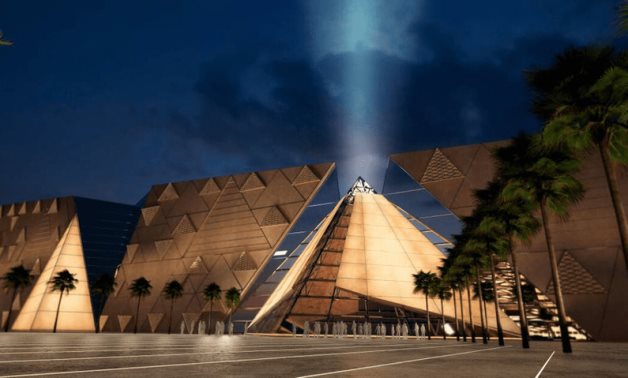
Egypt has unveiled its new “Grand Egyptian Museum” (GEM), just miles away from Cairo and the pyramids of Giza. This archeological powerhouse boasts the largest collection focused on a single civilization. With its opening, the people of Egypt have a proper resting place for their rich history.

Artnet News
After beginning construction in 2002, expectations for GEM grew as decades passed. To the relief of museum goers, final construction does not disappoint. Heralded as the “fourth pyramid” of the region, this new addition fits right along with the 4,500 year old pyramids Egypt is known for.
Besides its shape and structure, museum goers will have the chance to view other pyramids from inside GEM. The north and south walls are aligned with the Pyramid of Khufu and Menkaure.
Design elements were also included to pay homage to the great pyramids. For example, sand colored concrete and translucent alabaster stone were used in production.
Inside, GEM visitors are greeted by the house statues of the prominent Pharaoh Ramesses II. This long standing Egyptian ruler is honored with 20 large artifacts scattered throughout this introductory exhibit, all of which span the course of Ramesses II’s long reign.
As guests make their way through the museum, they will be greeted with temple fragments and other ancient Egyptian deities. The most recent of which comes from the 13th dynasty, making it over 3,600 years old.

Handout – Egypt Foreign Press Center-State Information Service
The GEM boasts 12 main halls, most popular of which are the exhibitions surrounding the life and leadership of King Tutankhamun (Tut). For the first time in history the entirety of the boy king’s tomb is on display.
Most exciting of all is the golden mask of King Tut. Outside of its legendary iconography, the design of the mask can shed light on the skill of Egyptian craftsmen of the time. The mask is made of two layers of high carat gold and stands about two feet tall.
Weighing 25 pounds, historians estimate that pieces of the mask were originally hammered together. From there, skilled artisans assembled the face with dimension in the eye brows and nose, as well as the outward appearance of makeup.
Tut’s unveiling includes three overlapping coffins made out of gold materials. Among the king’s possessions includes a golden throne, statues of gods as well as jewelry and amulets. The ruler also prepared other common materials to take with him to his journey in the afterlife. Objects such as a bed, chairs, dining utensils, daggers, and bows can be found in the king’s custody.

Mohamed Abd El Ghany/REUTERS
While the GEM has many objects to boast, notably among its artifacts are the fully intact Khufu ships. Made for the explicit purpose of carrying kings to the next world, these wooden ships are around 4,600 years old. This aging makes them some of the oldest discovered ships in history.
Currently Egyptian historians and activists are calling for the return of world famous artifacts currently on display in other countries’ museums. Items such as the Rosetta Stone, the sculpture of Queen Nefertiti, and the Dendera Zodiac would now have their rightful place at GEM, nestled safely back in their home country.