
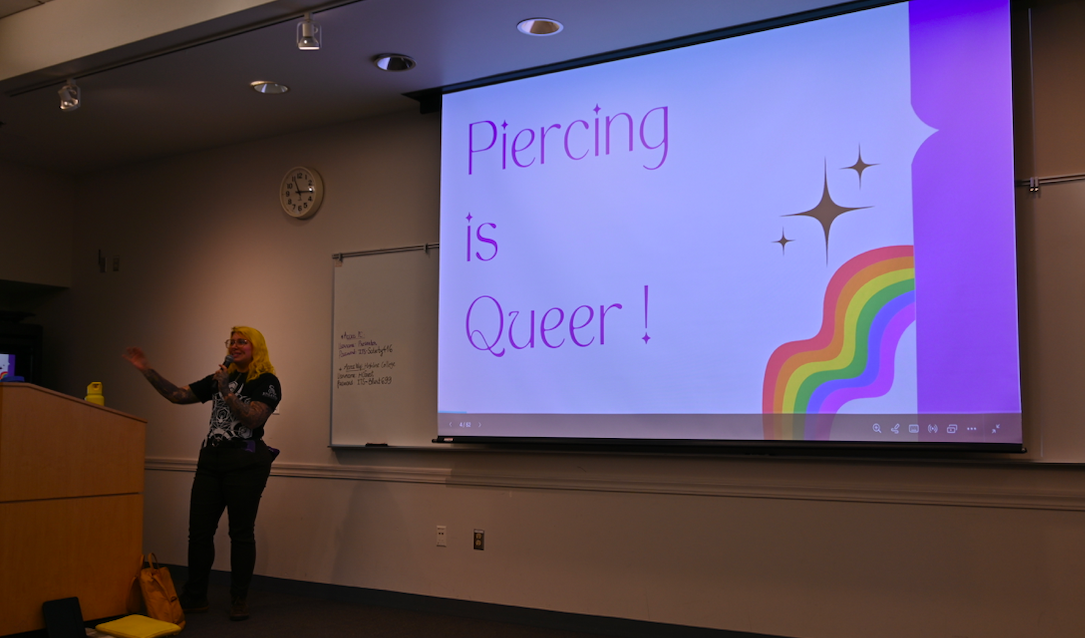
Highline’s Q-Center hosted an opportunity to learn about the history of body modification practices in LGBTQ spaces, with a special presentation by guest speaker and professional piercer Lynn Loheide.

Stephen Glover
On May 28 Thunderbirds united in Mt. Olympus to learn about everything from piercings, stretchings, tattoos, their evolutions and how to safely manage them.
No stranger to the industry, Loheide has achieved 13 years of experience and owns Nexus Body Arts in Seattle. They also run a successful blog and social media presence, with over 750,000 followers on TikTok and 96,000 on Instagram @lynnloheide, and dedicate themselves to body modification history.
The history taught throughout the event spanned from the 1970s to the present. Pioneers of piercing from Bob Flanigan to Ron Athey and Raelyn Galina were highlighted, and key events emphasized the evolution of practices we perform today.
A majority of impactful techniques to body piercing originated from the HIV/AIDS epidemic. This important piece of queer history pioneered the safety practices we use today, as Loheide emphasized that “[…]before 1981, piercing needles were used four to five times before being retired.”
The epidemic sparked outrage against the practice of piercing, recounted as being “heavily under attack” and “stigmatized due to their connection to queer culture.” Fees were enforced to discourage gay male clients from being pierced, as well as people of color from being tattooed.

Stephen Glover
With the rise of the internet came the rise of acceptance for body modification, as the website BMEzine, founded by Shannon Larratt in 1994, eventually got on the list of the top 30 websites visited online, launching the industry by bringing together a community.
As part of the presentation, Loheide made sure to feature the importance of research for any form of body modification. It’s extremely important to educate yourself on how to safely manage your piercings, and ways to make sure your piercer is qualified.
“Literally every piercing can be a gender affirming piercing if it appears that way to you,” Loheide states.
All-in-all, your body and how you choose to appear is a form of personal expression. Especially for LGBTQ people, where identity can be a constant struggle, body modifications like piercings can become a safe space.
You can learn more about countless pieces of queer history and piercings through Loheide’s website and social media, along with their Youtube @Lynn_Loheide.