
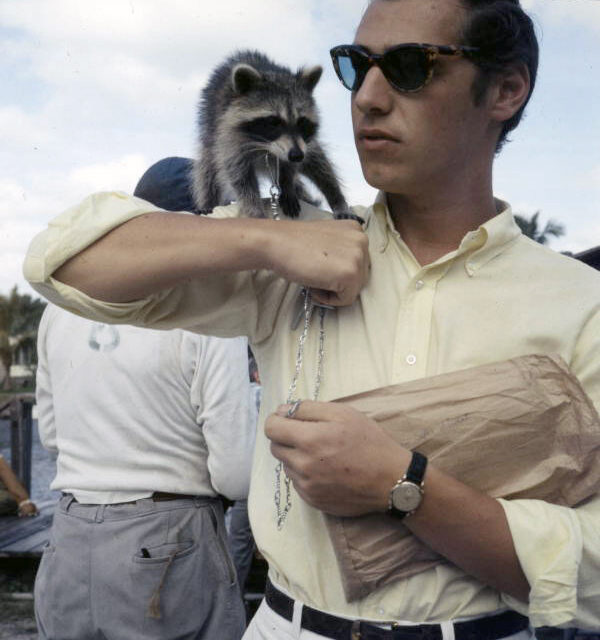
When thinking about the concept of pets, coyotes and raccoons aren’t the first animals that come to mind. However, two intriguing cases of self-domestication may change that.
Self-domestication is an evolutionary survival tactic used by species who are losing their habitats to human urbanization. It is a process that scientists have characterized as reduced reactive aggression. This is the single trait that starts domestication. Reduced reactive aggression eventually leads to tameness or docility, seen in domesticated animals today like the house cat or dogs.
Although domestication is a genetic process, it can start with the animal or humans. Most people know domestication as the human process of selective breeding animals into what we want them for. Self-domestication is where animals continually live in urbanized areas and try to assimilate to life in cities. This can be seen through imitating domestic dogs’ behavior or gradual genetic changes. Changes in the domestication process are marked as genetic changes that show no evolutionary benefit.
Most animals in urban spaces are pushed into self-domestication for survival. With the destruction of their habitats and declining prey populations, these animals are starving. If you have seen a coyote in your neighborhood, chances are it was looking for food.
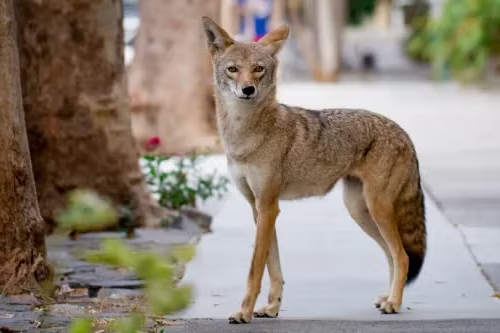
Coyotes are already the size of a mid size domestic dog, which makes them fairly good candidates for living in urban areas. Their small stature and agility allows them to sneak around easier with little to no foliage and jump fences.
Most theories on how coyotes started to self domesticate lies in the already-domesticated dogs. They would see these pampered indoor dogs who had stable access to food and shelter and saw that the people taking care of them could do that for them as well.
In some cases, domesticated dogs will breed with coyotes creating a mostly domestic puppy. Part of evolution is selective breeding, because the creatures with the strongest genes or traits will have a higher chance of survival. A mostly domesticated puppy is more likely to be raised in a household environment and be surrounded by humans, making it more likely to survive in an urban setting.
Humane World for Animals
The lack of food for coyotes, and the abundance of pets in urban areas, leads to coyotes stalking and eating these animals. Although we adore and cherish our pets, if you leave them unsupervised outside it is only the food chain taking its course.
Besides lack of food and the destruction of habitat, wild animals also face threats from humans. Many animals get hit by cars and killed, which results in the abundance of road kill littering highways and roads near big cities. Many people in cities also fear these animals, calling for animal control and sometimes law enforcement. This widely leads to the mistreatment of these animals and relocation to areas they likely have never been to themselves.
The difficulty with cities is that the people living in them do not always take kindly to the animals they forced out of their home. This manifests as fear and threats towards these animals including hurting, poisoning or even killing of these animals. This is harmful to all species, but is exacerbated by the increase of urban places where wild animals used to thrive.
Humans do not necessarily need to fear these animals if they see them roaming. By all means be cautious, it is still a wild animal and could potentially carry life threatening diseases, however, this does not justify the cruel treatment these animals are receiving.
Before the 1700s, coyotes were primarily kept to deserts in Mexico and the prairies of central North America. Since the 1700s, they have greatly expanded their range when they started appearing in cities. Coyotes were first spotted in cities in the 18th century in Chicago but disappeared during the 19th and 20th centuries.
Coyote distributions are different from other carnivores in North America like bears and wolves as they were not pushed out of cities. The absence of large carnivores in urban landscapes has big implications for the coyotes. Their presence in these urban landscapes without larger carnivores makes them an apex predator in these environments and affects the prey population in cities as well.
If you are to see a wild animal in your area or neighborhood, it is best to leave them be. Do not go up to them, try to interact with them, or call them. This can scare the animal which could potentially lead to an attack.
Raccoons are native to North America but have spread all over the world through being imported by humans. Raccoons traditionally live in forests, but, as forests gave way to cities with increased immigration to the Americas, they found ways to adapt.
Despite their small size, raccoons’ closest phylogenetic ancestors are the bear, and the two animals share long snouts. Or…they did.

CNN
While coyotes have been known to breed with domestic dogs, raccoons do not participate in the same kind of domestication process. Instead, raccoons that live in dense, human-populated areas seem to be evolving within the span of a few generations, most notably a reduction in the size of the snout which may be an attempt to mimic the appearance of human-kept animals, like cats or dogs. There was a 3.56% reduction in snout length in urban raccoons versus rural raccoons.
Like coyotes, urban raccoons are commonly viewed with fear and disgust. These animals do not have easy lives, with events like getting run over by cars or having animal control called on them being common. Rural raccoons, however, do not face these challenges to the same degree due to a decreased level of human interaction. Researchers are theorizing that the reason behind the change is increased access to food for urban raccoons – also known as human garbage.
Many questions about this chain of events remain unanswered. Will the self-domestication process work? Will there be other physical changes to raccoons? Only time will tell. Like with any other wild animal, be sure not to feed any raccoons. No matter how cute they may be, they’re still not used to being in close proximity to humans and they could become violent and pass on diseases, such as rabies.

Isaac Stewart/THUNDERWORD