
Queerbaiting is the notion that media, more specifically the creators of said media, can capitalize off their audience by including or hinting at queer storylines, but never fully or explicitly depicting them. In turn, disservicing the story that the fans have invested in. Often done as a marketing technique, it’s conclusively false advertising.
Throughout the course of the “Stranger Things” season five press junket, creators Matt and Ross Duffer have proven their capacity for it.
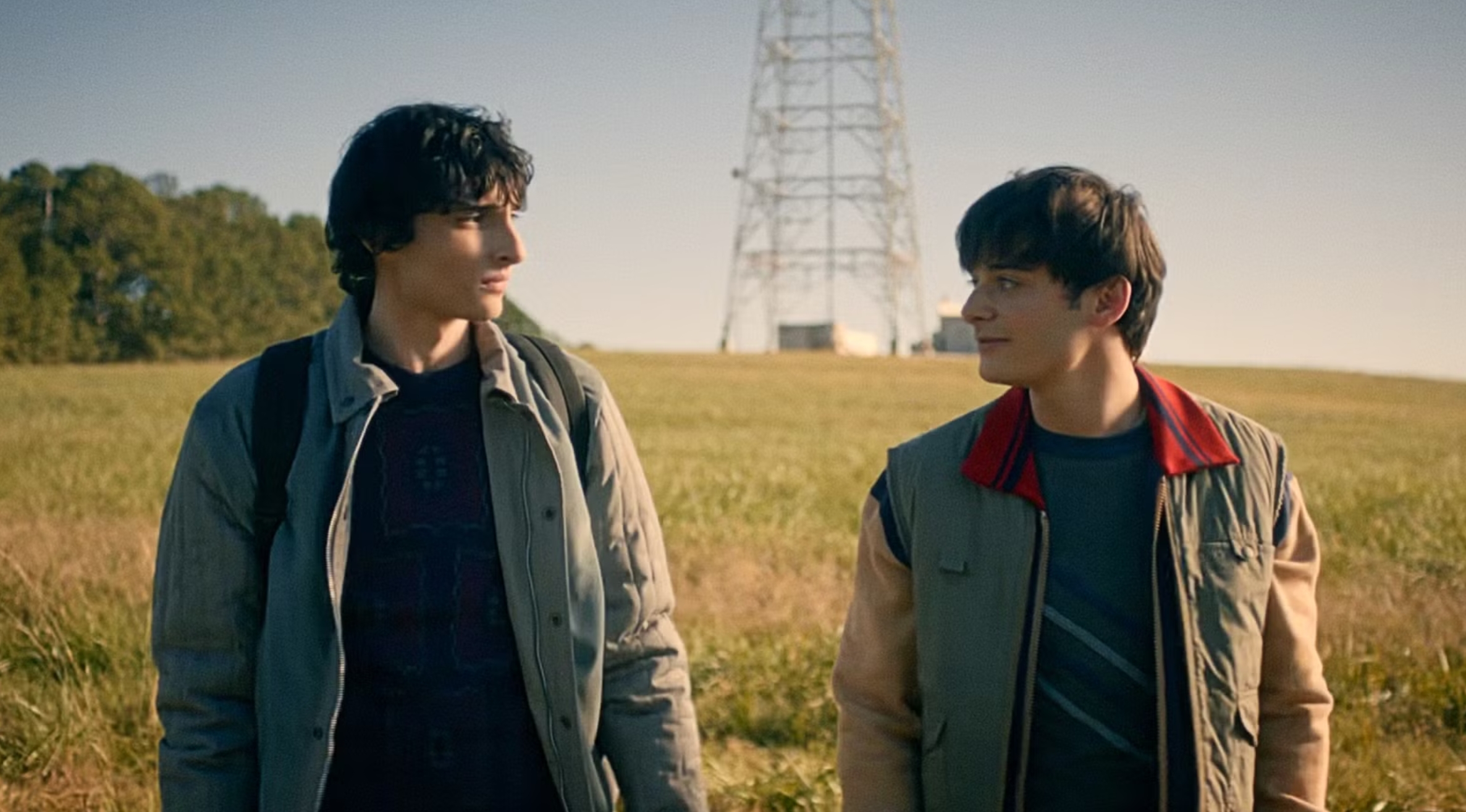
Both the Duffer Brothers and Shawn Levy (producer and director) have praised Finn Wolfhard and Noah Schnapp over their performances this season, specifically in saying they have “emotionally driven scenes” where they are acting opposite of each other. They do this with the knowledge that these two actors are fan favorites, but more importantly, with the relevance that the characters they portray are a popular romantic pairing in the show. Most notably referred to as Byler.
However, the praise of emotional vulnerability between these two characters aren’t representative of the character arcs (and subsequent endings) that were given to these actors for season five. That isn’t to say that praise is undeserved. But in comparison, Gaten Materazzo and Caleb Mcglaughlin (who portray Dustin and Lucas respectively) had career defining performances in season five. Specifically throughout both parts of season five. If those aforementioned praises had described them, it would have actually been true.
The narrative changes through these implied statements because the cannon of the show doesn’t matter when the intention is to get more engagement. This engagement is specifically exploiting the interest audiences have in the characters of Mike and Will. An audience that made up the majority of the “Stranger Things” fanbase for the better half of a decade.
This marketing tactic isn’t just found in promotion for the source material, it’s found in the source material itself. In analyzing the character of Will Byers, his entire arc of self-actualization has everything to do with Mike. It has to do with remembering his friendship with Mike in season two, quite literally saving him from being possessed by an inter-dimensional monster. It has to do with grappling with his sexuality and that ongoing pressure throughout season three and four. More specifically, how it relates to the unrequited love he has for his best friend.
For Will, these themes are recurring over pivotal moments for his character and the series itself. Even in season one, he didn’t necessarily possess autonomy as a character. The audience was introduced to him only through the eyes of other people, with Mike’s perspective being prioritized in that storytelling.
The character focus in “Stranger Things” has always been what makes the show. In fact, this is especially evident by two factors. First, the audience’s perception of the show is largely centered around these characters. This is evident by how much the character endings in season five upset the fanbase. Second, we can see this in the character endings themselves. And, their beginnings.
Let’s start with the aforementioned self-actualization arc that Will has. By needing to fulfill his potential, he as a character needed to feel like he didn’t have any. For the most part, this is exactly how his character began. His mother, Joyce Byers, mentioned to chief of police Jim Hopper in season one that Will is a “special kid.” It’s largely implied that what makes Will special isn’t just his sensitivity in comparison to other kids, it’s because he’s gay.
To reiterate this implication, Joyce recalls how Lonny (her ex-husband) used to call her son slurs and physically abuse both Will and Jonathan (Will’s brother). Her concern in this scene not only stems from the fact that her son is missing, or how scared he must be. In the ’80s in Indiana (where “Stranger Things” takes place), the implication is largely that Will might’ve been a victim of a hate crime.
As the seasons progress, Will continues to be the essential puzzle piece that ties the characters in Indiana to the Upside Down. Arguably, more than Eleven. In season two, he is quite literally used as a device to fight against the Mind Flayer while he is being possessed. In season three he continues to have this supernatural connection to the Upside Down, while also dealing with growing up. Which for Will, this is especially difficult given that his childhood was effectively taken away from him.
In season four, the defining feature of this ongoing struggle in his arc is emphasized – he’s gay and in love with his best friend. Again, the reason why Will’s character arc failed was because it was so closely linked to this. Meaning the only way for it to be resolved is through Mike. The recurring theme of self-actualization is found in practically every character. Except Mike Wheeler.
It’s hypocritical that the Duffer brothers had to confirm in an interview that through Mike’s micro-expressions in Will’s coming out scene, he was understanding Will was in love with him. In saying those micro-expressions are important, they are simultaneously destroying the validity of the analysis that fans have done of Mike Wheeler. And in turn, the show.
A singular nod from Mike is important in that scene, but looking at Will’s lips repeatedly during continuous heart-to-heart conversations throughout the duration of season three, four, (and honestly) five is entirely dismissible. As the show progressed, those increasingly common scenes between Mike and Will directly parallel the actual romantic relationships in the show.
Mike has always been the friend that showed Will sympathy to a greater extent than other members of the party. He always understood and defended him. He’s the one that first acknowledged that Will was gay.
He’s the one that was awkward hugging him in the airport, that even after the show has ended, was still never explained why he was so weird to his childhood best friend. He’s the one who’s been flirting with him for the better halves of seasons four and five. Regardless of if you think Mike Wheeler is gay, there are subtleties to his actions and subtext to his character. And the explanation of the depth of that character was ultimately and entirely ignored.
We can see how that contrasts with Mike’s actions with El when El takes Mike into the void to say goodbye before sacrificing herself at the end of season five. Mike is still unable to say I love you, which was a significant plot line in season four. The confession itself was after a conversation where Will specifically instructs him to say I love you, despite his (still unresolved) reluctance to.
In what was supposed to be a defining moment in Mike Wheeler’s non-existent arc, it reiterated the emptiness that they made of his character. Unlike Will, those moments and themes aren’t poorly resolved – they’re not mentioned at all. But it doesn’t make them any less prominent to the show’s story. And more importantly, how prevalent they’ve been to Mike’s journey throughout the show.
I want to emphasize the sentiment that the queer bait was never Will Byers being gay. Will Byers has always been gay. It’s the possibility that Mike might’ve shared those feelings, especially since the audience has only ever perceived their relationship through Will’s perspective.