
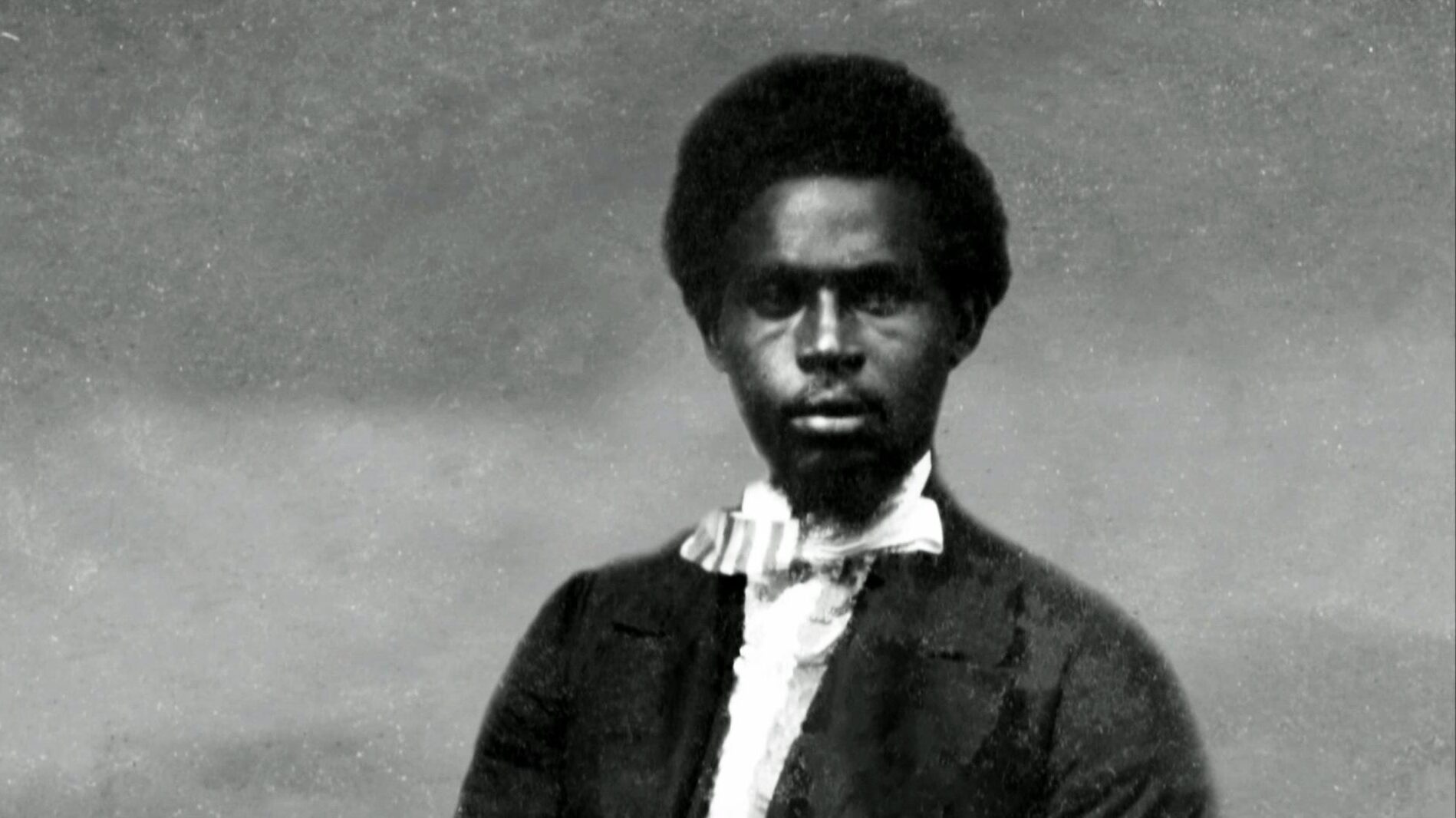
Before He Was a Congressman, He Was Property
Robert Smalls was born on April 5, 1839, in Beaufort, South Carolina, enslaved from the moment he entered the world.
His mother, Lydia Polite, was enslaved in the home of the McKee family. Like many enslaved children born into domestic spaces, Smalls grew up close enough to observe power and close enough to understand it. He saw how white men moved freely through the world. He saw how uniforms commanded respect. He saw how authority was performed.
And he paid attention.
As a teenager, Small was sent to Charleston to work. There, he took jobs along the waterfront – longshoreman, sailmaker, rigger – slowly learning the mechanics of ships and harbors. By the time the Civil War began, he had become deeply familiar with the Confederate vessel CCS Planter, a transport ship outfitted with cannons and used to deliver supplies and ammunition.
The Confederacy trusted him to steer the ship. They never imagined he was steering towards something else.
The Night He Chose Freedom
In the early morning hours of May 13, 1862, Smalls put a plan into motion that had been forming quietly in his mind.
The white Confederate officers aboard the Planter had gone ashore for the night, leaving Smalls and the enslaved crew behind. It was a routine they had followed before.
This time, Smalls decided it would be the last.
He gathered the crew. He brought their families aboard. He put on the captain’s straw hat and uniform, disguising himself in authority, and guided the ship out of Charleston checkpoints, giving the correct signals at each stop.
Every wrong move could have meant execution.
But Smalls had memorized the harbor. He knew the tides. He knew the codes.
When the ship cleared the final Confederate fortification, he replaced the Confederate flag with a white sheet, a surrender signal, and sailed towards Union forces.
By sunrise, Smalls had delivered a Confederate military ship, its artillery, and sixteen formerly enslaved people to freedom.
He had not just escaped.
He had outmaneuvered the Confederacy.

Library of Congress via AP
From Enslaved to Officer
Smalls’ bravery made national headlines in the North. He provided Union officials with critical intelligence about Confederate defenses in Charleston Harbor. His knowledge of Southern waterways made him invaluable to the Union Navy.
Eventually, Smalls became the first Black captain of a U.S. military vessel. The same country that once classified him as property now relied on his leadership in uniform.
But his story did not end with war.
Rewriting the South
After the Civil War, Smalls returned to South Carolina, quietly, but politically.
During Reconstruction, he was elected to the South Carolina State Legislature and later to the U.S. House of Representatives. In Congress, he advocated for public education, civil rights protections, and economic opportunities for formerly enslaved people.
He fought for integrated public schools in the South that resisted them. He worked to ensure that Black citizens could vote and hold office themselves
Perhaps most symbolically, Smalls later purchased the very house in Beaufort where he and his mother had once been enslaved.
He did not just survive history. He reshaped it.
The Legacy of Audacity
Smalls understood something essential: freedom was not given. It was taken, defended, and built upon.
He was strategic. Patient. Calculating. Brave.
His escape was cinematic, but his life afterward was just radical. He refused to let Reconstruction be defined solely by backlash and retreat. For decades he worked inside a system that had once denied his humanity, demanding it live up to its own promises.
Rober Smalls died in 1915.
History often reduces him to “the man who stole a ship.”
But that description is too small.
He stole a ship. He commanded a fleet. He helped rebuild a state. And he proved that even in the darkest chapter of American history, audacity could chart a new course.