
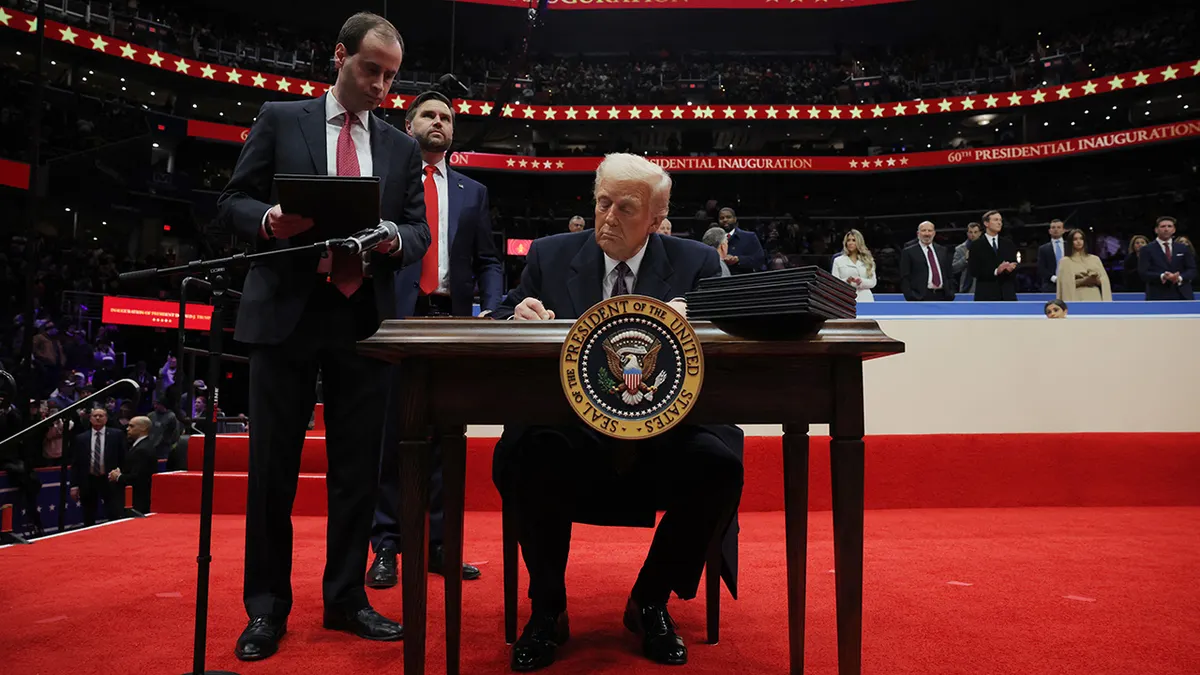
When former President Trump returned to the White House, many people expected bold moves, but almost no one expected pardons to become one of the earliest headlines of his second term. Within weeks, Trump issued a wave of pardons to political allies, campaign loyalists, and even celebrities caught in swirling legal battles. The decisions instantly reignited one of the biggest debates around presidential power: Should one person have the authority to completely erase federal convictions?
While pardons are nothing new, the patterns of Trump’s latest round stand out. Some focused on people directly involved in attempts to overturn the 2020 election. Others connected to the reality-TV and hip-hop world that has followed Trump for years. Together, they reveal the complicated mix of politics, loyalty, and public influence that surrounds him – and the long shadow these choices cast on how future presidents might use their power.

Carlos Barria/Reuters
A presidential pardon wipes away a federal crime, like it never happened. It’s one of the broadest powers any president has, and usually there’s a formal process involving the Justice Department. But according to NPR and Time, Trump made many of his second-term decisions through a much looser, more personal approach. Some pardons went to people tightly connected to him, others went to figures who brought media attention or celebrity buzz.
This mix of political insiders and public icons shows how Trump’s pardons aren’t just legal decisions, they’re a window into who he trusts, who he rewards, and the kind of public narrative he wants to build.
One of the most talked-about decisions was the pardon of Rudy Giuliani, Trump’s longtime attorney who worked closely on efforts to overturn the 2020 election results. According to reporting from CBS and MSN news, Giuliani was facing charges tied to his role in promoting false electors and pressuring state officials. By pardoning him, Trump essentially erased years of investigations and legal risks tied directly to Trump’s own political battles.
Giuliani wasn’t alone. Trump also pardoned several people who supported the false-elector strategy in states like Arizona, Michigan, and Georgia. CBS news reported that many of these individuals were state-level Republican officials or activists who pushed claims of election fraud despite courts rejecting them.
For Trump’s critics, this looked like political payback – a reward for loyalty and a shield for people who helped his cause. For his supporters, the pardons were a correction to what they saw as “politically motivated” prosecutions.
Either way, the message was clear: Trump protects those who stand with him, especially in conflicts tied to the 2020 election.
While Trump’s political pardons grabbed most of the early headlines, another storyline rose from a very different corner of his orbit: the celebrity world. Over the years, Trump has maintained a complicated relationship with hip-hop culture and reality-TV figures, and that connection showed up again as legal battles involving major entertainers collided with White House decisions.

Ron Galella/WireImage
That sense of loyalty, and personal feeling, extended beyond politics. When asked about possibly pardoning music mogul Sean “Diddy” Combs, Trump said, “Well, he was essentially, I guess, sort of half innocent … it’s more difficult.” The comment hinted that emotion and familiarity could weigh just as heavily as legal arguments in Trump’s decisions.
Even though sources like AOL and Fox News noted that Diddy didn’t actually receive a pardon, rumors spread fast that he was trying to secure one while facing multiple lawsuits and federal investigations.
Speculation sparked intense reactions online, rapper 50 Cent even mocked the situation publicly, according to AllHipHop. Lawyers close to R. Kelly’s legal team also commented on how rare it would be for someone in Diddy’s situation to get a presidential pardon, pointing out that most people facing similar charges never come close to qualifying.
Even without a confirmed pardon, the fact that Diddy’s name stayed in the same conversations as Trump political allies says a lot about how celebrity culture shapes public expectations. Trump has pardoned famous artists before, and many people wondered if he would do it again, especially when headlines connected him to major names in music and entertainment.
Another layer came from conversations around R. Kelly, who remains in federal prison. His lawyer weighed in on whether Trump could step in, according to MSN Music, suggesting that even though it’s legally possible, it would be extremely unusual.
These celebrity discussions added a dramatic twist to the usual political debate, bringing fans, critics, and media personalities into the conversation about who deserves forgiveness and who doesn’t.
In short, Trump’s pardon power wasn’t just a political tool, it became a part of a wider pop-culture moment, where legal questions mixed with public image, online reactions, and the influence of high- profile figures.