
Growing up, I looked forward to Saturday nights. Even at an age where half of the jokes went over my head, “Saturday Night Live” was an important part of my weekly routine. When the pandemic hit, it became a weekly lifeline, providing a bit of relief in times of political polarization and widespread misinformation.
Last Saturday, “Saturday Night Live” returned after a summer-long break. While the cold open addressed Trump and mocked his criticism of late-night television, the rest of the episode hardly mentioned him at all, a stark contrast to past seasons. After recent pressure from FCC Commissioner Brendan Carr, which led to a temporary suspension of Jimmy Kimmel’s show, I can’t help but think that this is no coincidence.
At face value, late-night television might seem less valuable in our age of streaming services, social media, and reduced usage of cable television. According to a Pew Research Study, over half of surveyed Americans don’t subscribe to any cable or satellite TV.
Add to this the challenges to Kimmel, Colbert, and potentially others, and late-night feels like a dying art. But we should not give up on late-night television, and we certainly should not let political differences add fuel to the fire.
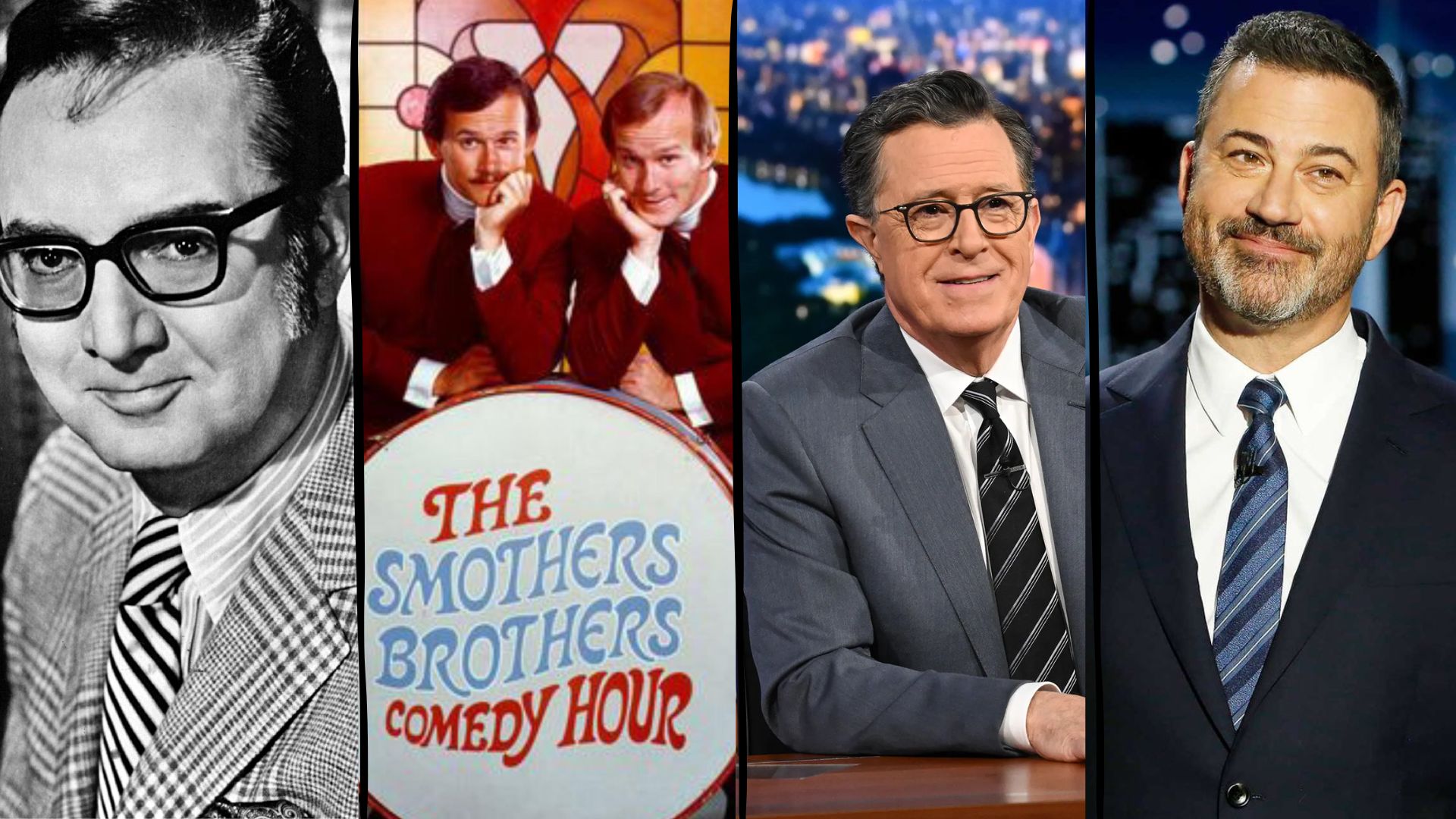
Late-night talk shows have been a long-standing tradition in the media since the 1950s. While there were other late-night shows that paved the way, “The Tonight Show with Steve Allen” set the stage for late-night as we know it, combining elements of a talk show with those of a variety show. He was the first to include audience participation with outrageous gags, a common practice in late-night television to this day.
Other shows, such as “The Smothers Brothers Comedy Hour,” started pushing buttons politically. Tom and Dick Smothers, who hosted the show, were a musical comedy duo that sought to make their CBS show cater to a younger, more politically charged audience. They invited musicians such as folk singer Pete Seeger and also Harry Belafonte, both of whom performed music criticizing military involvement in Vietnam and the police, respectively. Eventually, CBS snapped and abruptly removed the show from the airways in April of 1969.
Despite these instances, late-night television continued to blossom throughout the years, even sustaining itself through the hosting shifts that occurred in 2014 and 2015 when Jay Leno, David Letterman, and Jon Stewart gave up their positions hosting various late-night shows, thus creating vacant seats filled by Jimmy Fallon, Stephen Colbert, and Trevor Noah, respectively.
Critics of late-night television might point out its lack of diversity. The number of women and people of color hosting late-night shows is surely small, but I see this as an opportunity for growth. Perhaps more of the future hosts will diversify the voices of late-night comedians.
What if, instead of throwing late-night television out the window, networks instead focused their attention on how they can improve late-night for the better? If late-night is dying, we shouldn’t just sit back and watch it happen. We should save it while we still can.