
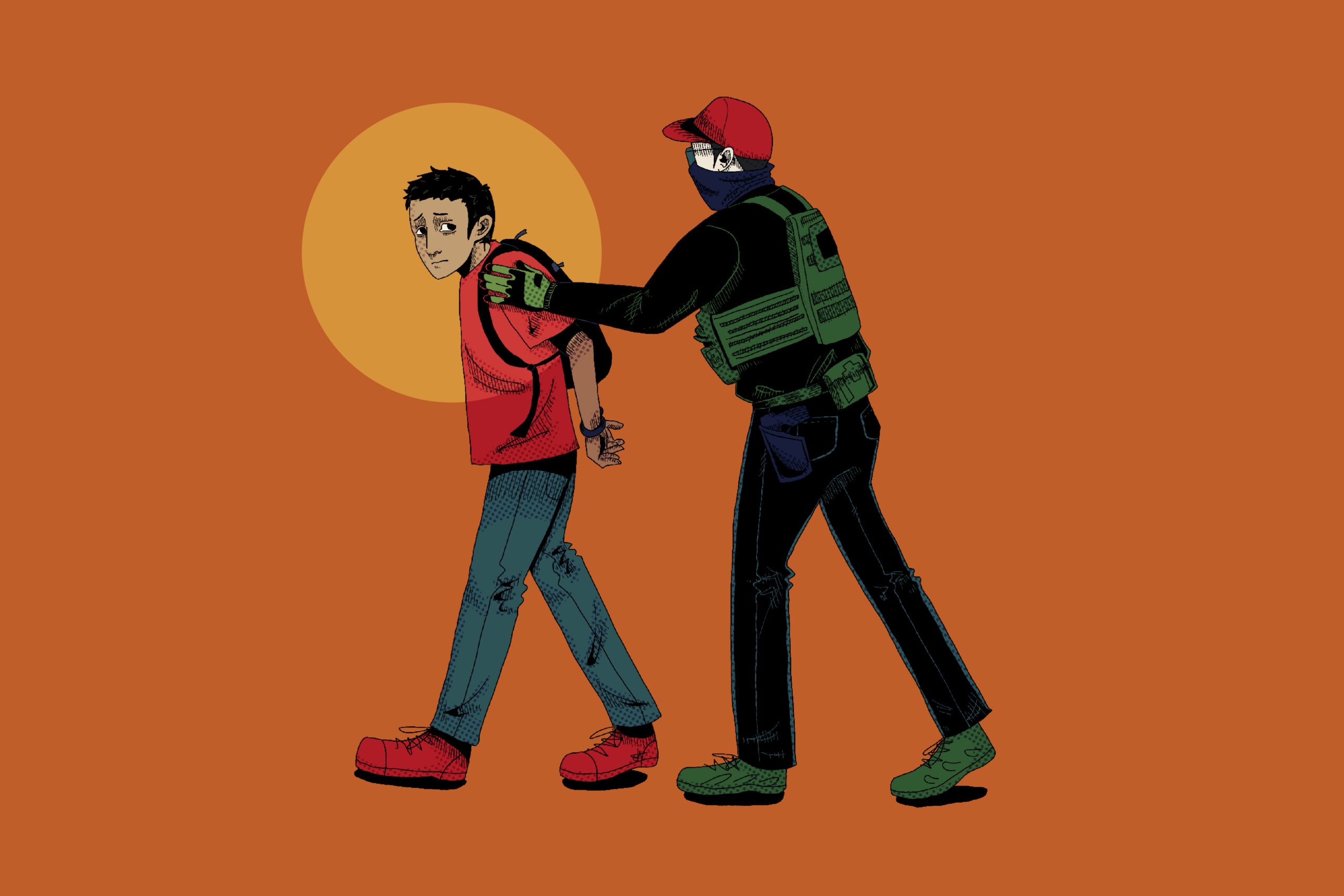
Since the beginning of this year, 300 student visas have been revoked by the current executive administration. This may lead to many visa bearing students asking what protections they have on and off campuses.
Mahmoud Khalil, Rumeysa Ozturk and Alireza Doroudi – if you’re a student on an F-1 or J-1 visa these names might be uncomfortably familiar to you. Without prior official notification, or request to appear before a judge, these students were detained by government officials. All of the students mentioned above are being held in I.C.E. custody. This custody is out of their current resident state, away from their family, and without due process.
Due process, as defined by the 14th Amendment, entitles an individual with the right to be notified of the penalty/crime they are being accused of, as well as notice to appear before a judge for legal proceedings. It ensures these proceedings will include an opportunity for the accused to be heard. Finally, it outlines this must be done by an “impartial tribunal”.
The United Nations general assembly of 1945 declared due process as a human right, after the actions of Nazi Germany in World War II.
Joshua Colangelo-Bryan of Human Rights First, a lawyer representing Yunseo Chung, an international student with a recently revoked visa, provided the following take when prompted on the underlying reason why these students are being targeted: “The government has been very clear that it intends to expel people who have green cards if they express ideas, particularly relating to Gaza, that it doesn’t agree with.”
While this idea may seem alarming, Colangelo-Bryan did have further insight on the current administration’s efforts. “The government’s actions are an unprecedented and unjustifiable assault on First Amendment and other rights, one that cannot stand basic legal scrutiny,” he said.
In Washington State, law WAC 132F-121-020, protects and upholds students, rights, freedoms and responsibilities. This law applies to all students enrolled in publicly funded institutions regardless of citizenship status. This bill decrees that every student has the right to academic freedom, “…rights of free inquiry, expression, and assembly upon and within college facilities,”
So attending an on-campus protest in support of a cause you believe in, is well within your rights. This expression includes what you wear, and how you chose to present yourself on campus and while attending classes.
Locally, the University of Washington, Seattle University, and Gonzaga University confirmed 15 students have had their visas revoked since the beginning of this year. No notice was given to either the students, or the respective establishments. These universities are standing behind their students, by offering resources for legal services, mental health services, and academic support.
Washington law also extends to outside of the classroom: “…Students and student organizations are free to examine and to discuss all questions of interest to them and to express opinions publicly and privately.”
This can be applied many ways, including social media interest and creation of content, as well as lawful public activism.
The law also includes a right to due process, which applies to the following areas: “… to be secure in their persons, quarters, papers, and effects against unreasonable searches and seizures is guaranteed.”
On April 1, a U.S. district judge began the process to challenge Khalil’s treatment. His rights as a U.S. based student are being upheld, and detailed in the 67 page document filed. As of the writing of this article, advocates and challenges to the current administration’s plans are happening daily.
If you feel your rights are in question, there are still avenues to fulfill your academic pursuits. By familiarizing themselves with local laws and legal expectations, students can still fully pursue the authentic educational career that they are entitled to.