
Stanley Kubrick was one of those rare directors that, depending on who you ask, never had a bad film in his entire directing career.
For those who don’t know, Stanley Kubrick was an American director who made a large number of film classics. He died in 1999.
He was also infamous for being very controlling over his film set. He had a vision of what he wanted the film to be. If you didn’t give him exactly what he wanted, then it was time to do another take until you got it right.
While his way of doing things definitely wouldn’t fly today, you can’t argue with the results.

His most famous film, 2001: A Space Odyssey (1968) is a science fiction film that was also a collaboration with author Arthur C. Clarke.
The movie’s plot is about a mysterious black monolith that seemingly helps uplift humanity throughout history. The U.S. government has found another monolith on Jupiter, and is sending a science team on a spaceship to investigate.
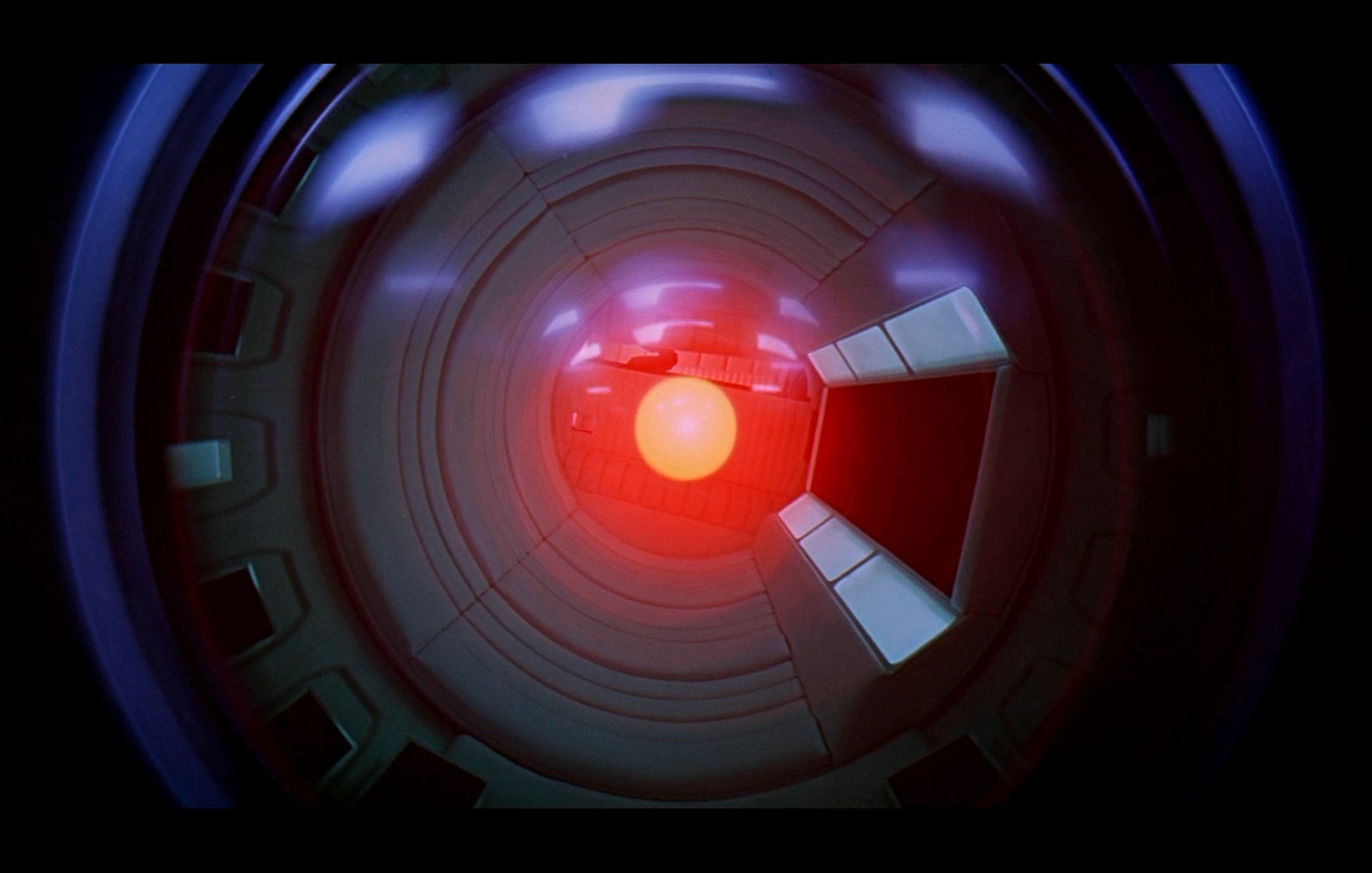
During transit however the ship’s computer, HAL 9000 (Douglas Rain), goes crazy. The only people able to realize something is wrong are Dr. Dave Bowman (Keir Dullea) and Dr. Frank Poole (Gary Lockwood), the only members of the crew not in stasis for the trip.
This picture can be a difficult watch if you’re not ready for it. It’s very slow, with a lot of build up to the main plot. To give an idea of what I’m talking about, the movie is 2 hours and 29 minutes long. But the main plot with Hal and the journey to Jupiter doesn’t start till around an hour in.
The film is less of an epic space opera and more of a think piece about the nature of humanity.
A lot of the plot is left up to interpretation on what it all means and what it’s trying to say.
A lot of things are shown but not a lot is told or explained. What is the black monolith and why is it uplifting humanity? Why has HAL gone crazy? And what does the very trippy and abstract ending mean? These things are never explained, with all being left up to the viewer to make sense of it.
So if you’re not into artsy fartsy films that are vaguely philosophical and ask about the nature of people, this may not be the film for you.
Moving away from the murkier parts of the film to the technical side, the film is a master class in acting, cinematography, sound design, and world building.
The film uses many different special techniques to trick the audience into thinking the characters are in space, like having a camera set stationary on a rotating set to make it look like a character is moving up and down a wall.
There are many moments in the film where the audience is taken out into space and the lack of sound is exceedingly creepy. This contrasts with quick cuts to the inside of the ship, which can be full of noise.
The character of HAL 9000 is not only expertly brought to life by Douglas Rain’s always calm voice, which just adds to his menace, but how efficiently he’ll just kill a person adds to the uneasy feeling throughout.
Like the rest of the film however, HAL is a pretty interesting concept.
In many ways, HAL is the ultimate achievement, an A.I that is pure logic and whose priority is always on what’s most important, the mission. He’s what many people strive to be, extremely intelligent and is efficient at all costs.
But in many other ways, he’s the ultimate screw up, an emotionless machine with no soul. He understands humanity but doesn’t have any. There’s no bargaining or pleading with him. If he thinks you’re a threat, you’re gone. And he’ll use every resource at his disposal in order to achieve his goal.
2001: A Space Odyssey can be a very divisive film, with some finding it an overly pretentious bore, while others see it as a masterpiece with interesting concepts and an iconic villain.
Moving on to one of the final films Kubrick made before his death, Full Metal Jacket (1987).
The plot follows a marine private whose name is never given, but is referred to as “Joker” (Matthew Modine), and his experience in the Vietnam War, starting in basic training and continuing to him on active duty as wartime journalist for the Army.
This is ultimately an anti-war film, not only showing the horrors of war but also the destruction of the young men drafted into the service and their reconstruction as unquestioning killing machines being sent to the slaughter.
It shows this in many ways, from never telling the audience the real names of the characters, just their nicknames given to them, to all of their hair being shaved to a buzz cut at the beginning. This makes them almost indistinguishable from each other. We see the grueling tasks they need to do, not only in the field, but just to pass basic training.
The flick is fondly remembered for the first 40 minutes, when the marines are in boot camp, more specifically the Late R. Lee Ermey’s portrayal as Gunnery Sergeant Hartman. The insults and the way he berrates his cadets is not only memorable, but almost completely ad libbed by Ermey on set, who was a retired drill instructor in real life.
Another stand out performance is Vincent D’Onofrio’s performance as Private Pyle. The film never makes clear what his issue is, but it’s clear he has some mental disability. This makes the bullying he recieves by Hartman and the others, as well the destruction of his humanity, more tragic.
But just because the first 40 minutes are more memorable than the rest of the film does not mean that the rest of the movie is bad. Far from it, it’s still a great time with many powerful and memorable moments.
While Matthew Modine is more reserved while in boot camp, when he makes it to Vietnam he’s allowed to be a lot more expressive and more of his own character. A great example is the fact that he has “Born to Kill” written on his helmet but has a peace sign pinned on his uniform. This physical contrast shows the turmoil in the character. He’s been trained to be an effective killer, but still holds on to his humanity, more specifically his humor.
The action is also well done, while also showing the chaos and horrors of war at the same time.
Another big thing in this film’s corner is just how quotable it is, from all of Ermey’s insults to all the strange ways the soldiers act in the field.
Both of these films showed just how great of a filmmaker Stanley Kubrick was. He could make something more contemplative or something more mainstream and still come out with a good product.
Patrick will soon be releasing his next film, about the horrors of the restaurant industry, Full Dinner Jacket.