
The hit show “Euphoria” recently premiered its third and final season after years of anticipation, instantly sparking multitudes of online discussion among fans. Arguably one of the most divisive pieces of television in recent years, the series has gained some of the highest praise as well as some of the harshest criticisms…but why?

IMDB
The generation-defining HBO series made its debut in 2019, instantly becoming a hit among teenagers. Starring Zendaya and a majority-female cast, the struggles of drug addiction, trauma, and relationships are portrayed through a colorful and glittery lens. Numerous themes of adolescence are explored through carefully curated cinematography, instantly capturing the attention of millions.
Much of the “Euphoria” criticism can be traced back to a single source: the writers room. The creator/executive producer/director Sam Levinson opted for a very unique script-writing process – a process in which he is the sole contributor.
As the series progressed, questions regarding the non-traditional writing approach began to surface. While many agree that Levinson’s work isn’t necessarily bad, they also believe the show would massively benefit from a full team of people able to offer diverse voices and perspectives to the script.
For a show mainly centering the lives of teenage girls, many agree that collaborating with more women during the creative process would’ve preserved much of the show’s original appeal, allowing the plot to expand past the viewpoint of a single writer.
As the series finally comes to a close, fans are left wondering what happened to the promising character arcs from season one, and why almost all of them still feel unfinished.
When it comes to characters, “Euphoria” has arguably produced the most controversial ones in recent years. Dissecting the show layer-by-layer becomes difficult when many of the characters and plot lines aren’t consistent, leaving audiences struggling to conclude if their storylines were intentionally complex, or if it truly was just a case of poor character creation and development.

IMDB
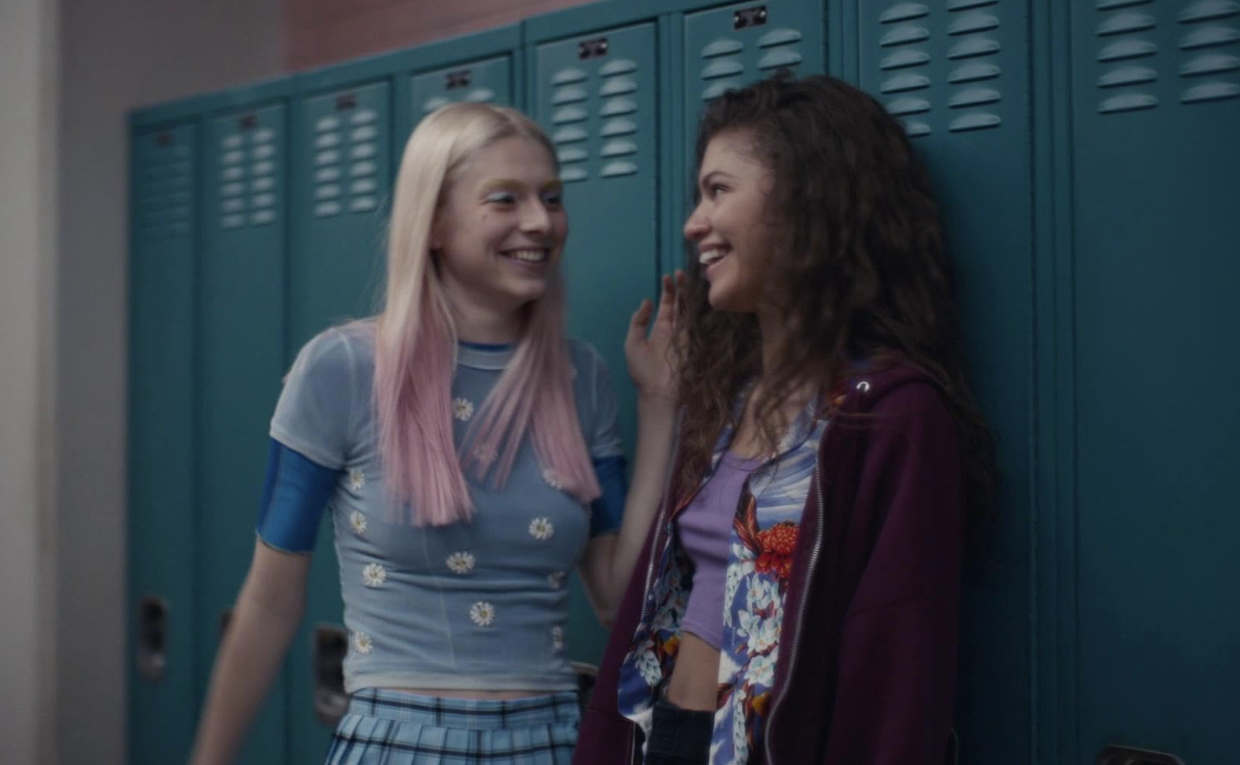
The character of Jules (portrayed by Hunter Schaefer) is a prime example of the highs and lows of “Euphoria’s” characterization. While widely adored throughout season one, seasons two and three triggered an influx of hate for this character and her storyline – but what changed?
Much like many “Euphoria” main characters, Jules was set up to continue her storyline throughout the rest of the series. A 16-year-old trans girl struggling with self-expression, close proximity to addiction, and not knowing exactly who she is yet, Jules’ story struck a chord in many viewers. However, the following seasons instead seemed to change the core aspects of this character and her motivations, leaving fans even more confused.
Her characterization reaches its peak in “Euphoria’s” second special episode released in 2021, “Fuck Anyone Who’s Not a Sea Blob”. Heavily co-written by Schaefer, it gives the audience a chance to view the Rue and Jules’ relationship through new eyes, giving fans newfound appreciation for the depth of her character.
Heavily praised for its writing, this episode takes place in a therapy setting with occasional looks into Jules’ thoughts and memories. It is the only episode narrated by someone other than Rue, and is told almost exclusively as a monologue.
Schaefer makes a point to portray Jules’ character to have a complicated relationship with men, femininity, and the social constructs intertwined with both. This episode seems to be the starting point of Jules beginning to separate her self-worth from male validation, which continues being explored in season two.

IMDB
A notable quote is, “I built my womanhood around what men want and what men want is boring, simple and not creative.”
Despite this, fans have described her season three character as a completely different person. While many criticize changes in her personality and mannerisms, others argue that her character arc was completely lost in translation. Relying almost entirely on a random sugar daddy for her apartment and money, it doesn’t seem like the same Jules who was so intent on separating herself from the perception and validation of men.
“[Jules’] storyline just feels strangely fragmented to me this season. It’s like we’re watching the remains of a bigger arc after huge chunks were removed and it makes it extremely hard to connect with her character. Every episode feels like entire scenes or episodes of development are missing with her,” writes one fan after watching season three.
While Levinson’s writing throughout “Euphoria” struggles to stand on its own most of the time, his portrayal of drug addiction has gained consistent praise for emotion and accuracy. Writing from his own experiences with addiction, Levinson crafted a character that resonated with so many people who’ve struggled with addiction, or been surrounded by it. The continued excellence of Zendaya as Rue brought heartbreaking realism to the main character, with many viewers deeming “Euphoria” to be the most accurate portrayal of addiction in current media.
Levinson excels when portraying the drastic highs and lows of drug addiction in Rue, as well as the pain experienced by her close family members and friends. Depicting painful sides of grief, addiction, and mental illness that are rarely explored to this extent in the media, many viewers of this show say Rue’s character gave them an entirely new perspective on those who are addicted to drugs.

IMDB
First released in the spring of 2019, the large gaps between seasons has additionally not done the storytelling any favors. From much of the cast being uninterested and moving on to other projects, to controversies around surrounding cast and crew only growing, it’s become increasingly difficult to separate “Euphoria” characters from their real-life counterparts.
When asked about the four-year gap between season two and season three, Levinson said, “The fact that we’re actually here and we’re able to pull this season off—that’s nothing short of a miracle. Some people asked why it took so long between seasons two and three. There were obvious factors—the strikes, trying to make a schedule work with our very in-demand cast—but the real time was in trying to figure out how to find a way to pay respect to those who we lost.”
The final episode of “Euphoria” premiers on May 31, 2026, and fans are holding their breath anticipating how the series spanning over half a decade will come to an end, with characters’ fates being officially finalized.