
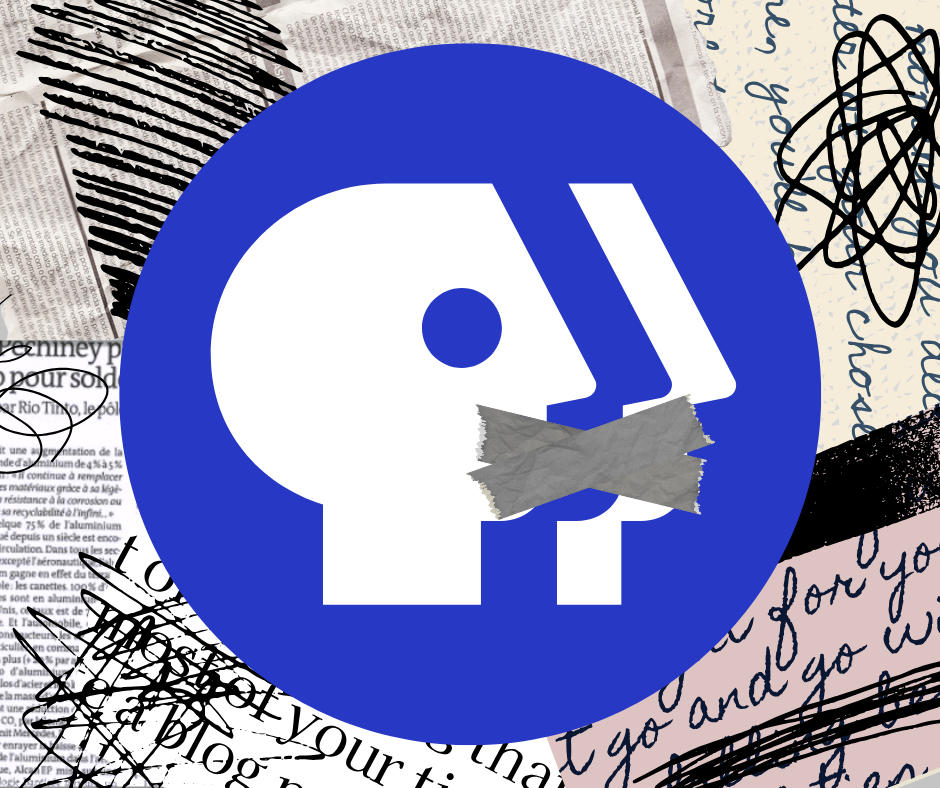
The Public Broadcasting Service, or PBS, has always been an invisible string throughout my life.
When I was five years old, my grandmother passed away. Some of my last memories of her were in the hospital watching “Downton Abbey.” “Downton Abbey” became a source of comfort for my grandmother, for my mom, and me as we sat with her in the room. To this day, my mom and I will rewatch it, and every time, memories of my grandma come flooding in, even though I knew her for a short time.
I know I am not alone in my love for PBS and the stories it promotes. My upbringing was also marked by iconic shows from PBS Kids, such as “The Cat in the Hat,” “Wild Kratts,” and “Sid the Science Kid.” These shows bring education to households that may not otherwise have access.
Earlier this month, Trump issued an executive order seeking to cut all federal funding for PBS and National Public Radio (NPR). Trump claims that PBS and NPR have not been presenting “a fair, accurate or unbiased portrayal of current events to tax-paying citizens.” It should not be up to Trump, an extreme political figure with an agenda, to decide if a media outlet is biased or not. I don’t see Trump complaining about right-wing media outlets like Fox News.
While PBS only gets about 15% of its funding from the federal government, that cut still means that the program will have to hope that private donations increase or dramatically change the amount and type of content it produces, which is scary.
Trump is trying to strong-arm media outlets into reporting favorably about him and his administration. What Trump is telling the world is thus: if you say something negative about him, then he’ll cut your funding.
This is a clear-cut example of an administration influencing the media that the public consumes, which is, to put it mildly, completely unacceptable.
Much of the content on PBS throughout the years has focused on education and teaching citizens the importance of kindness and community. “Mister Rogers’ Neighborhood” was known for being a show that encouraged kids to be kind to their neighbors. Programs like PBS NOVA provide free, high-quality documentaries about a variety of topics within science. “Masterpiece” is an offshoot of PBS that focuses on period dramas that provide a perspective on what life was like in days gone by. In other words, PBS has something for everyone.
And, of course, there is “Sesame Street,” an iconic show featuring Jim Henson’s muppets and teaches children valuable lessons, such as the importance of friendship and effective problem solving. Recently, it was announced that all past and future episodes of “Sesame Street” will be moved to Netflix due to funding cuts. While it is great news that the show will live on, it is quite heartbreaking that it now has to live on a subscription-based platform, dramatically reducing the number of audience members it will reach.
It’s hard to imagine a world where I can’t find the Cookie Monster or Big Bird on a publicly accessible channel, yet this is where we find ourselves.
So, what can you do? You can donate to a local PBS station or the PBS Foundation. You can also spread awareness about media suppression by continuing to read the news, share impactful stories, and listen to non-biased journalists. When we listen to journalists, we render Trump’s efforts at media suppression useless.
A day without PBS is a tragic day in the neighborhood.