
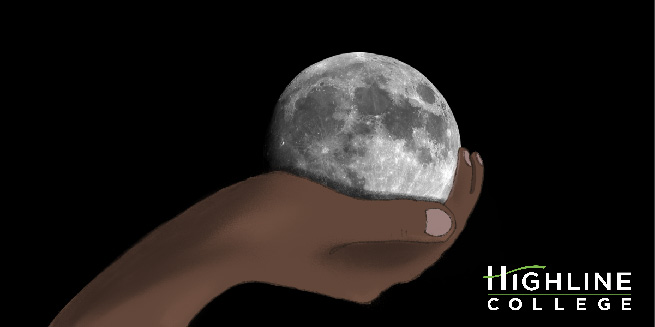
You read that right. The Moon, as we know it, is shrinking. And this isn’t from a “Despicable Me” movie where Gru is shrinking the moon. The Moon is shrinking, in real life. It isn’t really anything to be worried about, though.
The Moon has only shrunk about 50 meters (164 feet) over the course of several hundred million years. Given that the Moon’s diameter is 11,400,048 feet long, (2,159.1 miles), its width has been reduced by approximately 0.00144%.
The Moon shrinking does actually cause a few things, though.
As the Moon’s interior cools, it begins to contract. Unlike Earth, the Moon does not have tectonic plates, so stress builds within its single outer shell. The contraction causes its surface area to decrease, making the crust wrinkle and change, forming unique features unlike anything we’ve seen here on Earth. The stress can get released in seismic events known as “moonquakes”.

ZME science
The Moon’s surface is also categorized in two different sections: the Lunar Highlands and the Maria (also known as the mare). The Lunar Highlands is the lighter and higher in altitude part of the Moon, and the Maria is the darker, lower in altitude part of the Moon.
Lobate scarps, a type of ridge, and a very common Moon terrain feature, are created when a block of rock is thrust over another fault as the Moon contracts. Scientists realized that lobate scarps don’t account for all of the tectonic activity they see on the Moon, so they decided to investigate a different feature called small mare ridges (SMRs). They found that while lobate scarps only occur in the Highlands, SMRs can only be found in the Maria.
“Since the Apollo era, we’ve known about the prevalence of lobate scarps throughout the lunar highlands, but this is the first time scientists have documented the widespread prevalence of similar features throughout the lunar mare,” explained Cole Nypaver, a research geologist at the Center for Earth and Planetary Studies.
With the new detection of SMRs, scientists now will be able to understand lunar tectonic activity and possibly prevent seismic risks for future astronauts – on a global scale.