
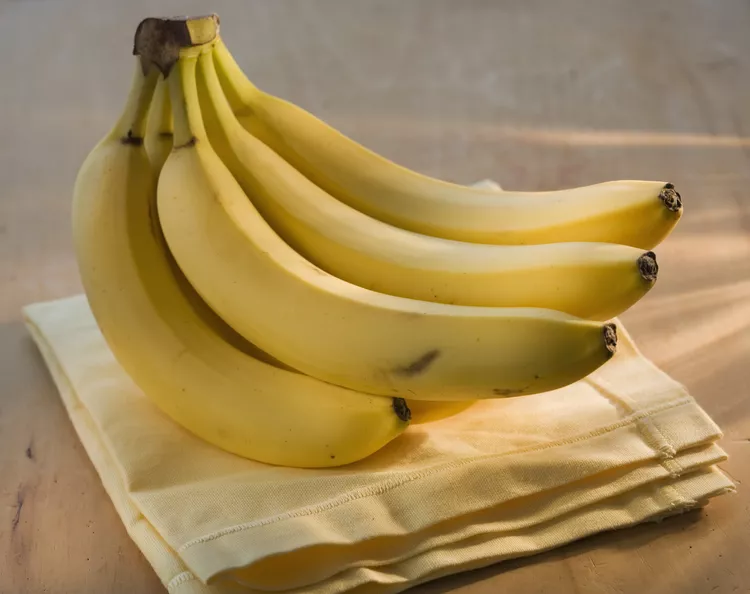
Cavendish banana plants are being assaulted by the fungus Fusarium oxysporum f. sp. cubense worldwide, causing them to wilt and die. Fortunately, in this time of crisis, scientists may have just found something that could save bananas for generations to come.
“Fusarium wilt – also known as Panama disease – is a destructive soil-borne disease which impacts farmed Cavendish bananas worldwide through its virulent Race 4 strains,” said Dr. Andrew Chen, a researcher at The University of Queensland.

Wikimedia Commons
Fusarium oxysporum f. sp. cubense attacks banana plants through the roots, invading the xylem vessels (a transport tissue that moves water and nutrients up from the roots to the stem and leaves) blocking the flow of water and nutrients throughout the plant.
The disease is split into two different strains: Sub Tropical Race 4 (STR4) and Tropical race 4 (TR4).
TR4 is the deadlier strain – it can impact bananas in both tropical or subtropical climates, regardless of environmental stress. On the contrary, the STR4 requires some environmental stress, like cold temperatures or waterlogging.
Fortunately, there might be a solution.
“We’ve located the source of STR4 resistance in Calcutta 4, which is a highly fertile wild diploid banana, by crossing it with susceptible bananas from a different subspecies of the diploid banana group,” Dr. Chen said. “We mapped STR4 resistance to chromosome 5 in Calcutta 4. … This is a very significant finding; it is the first genetic dissection of Race 4 resistance from this wild subspecies.”
For over five years, the research team crossed Calcutta 4 with susceptible bananas from different vulnerable subspecies, and compared the DNA of plants that survived the disease to the ones that didn’t.
“While Calcutta 4 provides crucial genetic resistance, it isn’t suitable as a commercial cultivar because it doesn’t produce fruit which are good to eat,” Dr. Chen said. “The next step is to develop molecular markers to track the resistance trait efficiently so plant breeders can screen seedlings early and accurately before any disease symptoms appear. … This will speed up selection, reduce costs, and hopefully ultimately lead to a banana that is good to eat, easy to farm, and naturally protected from Fusarium wilt through its genetics.”
So, sometime in the new future, we might unlock a new generation of super bananas.