
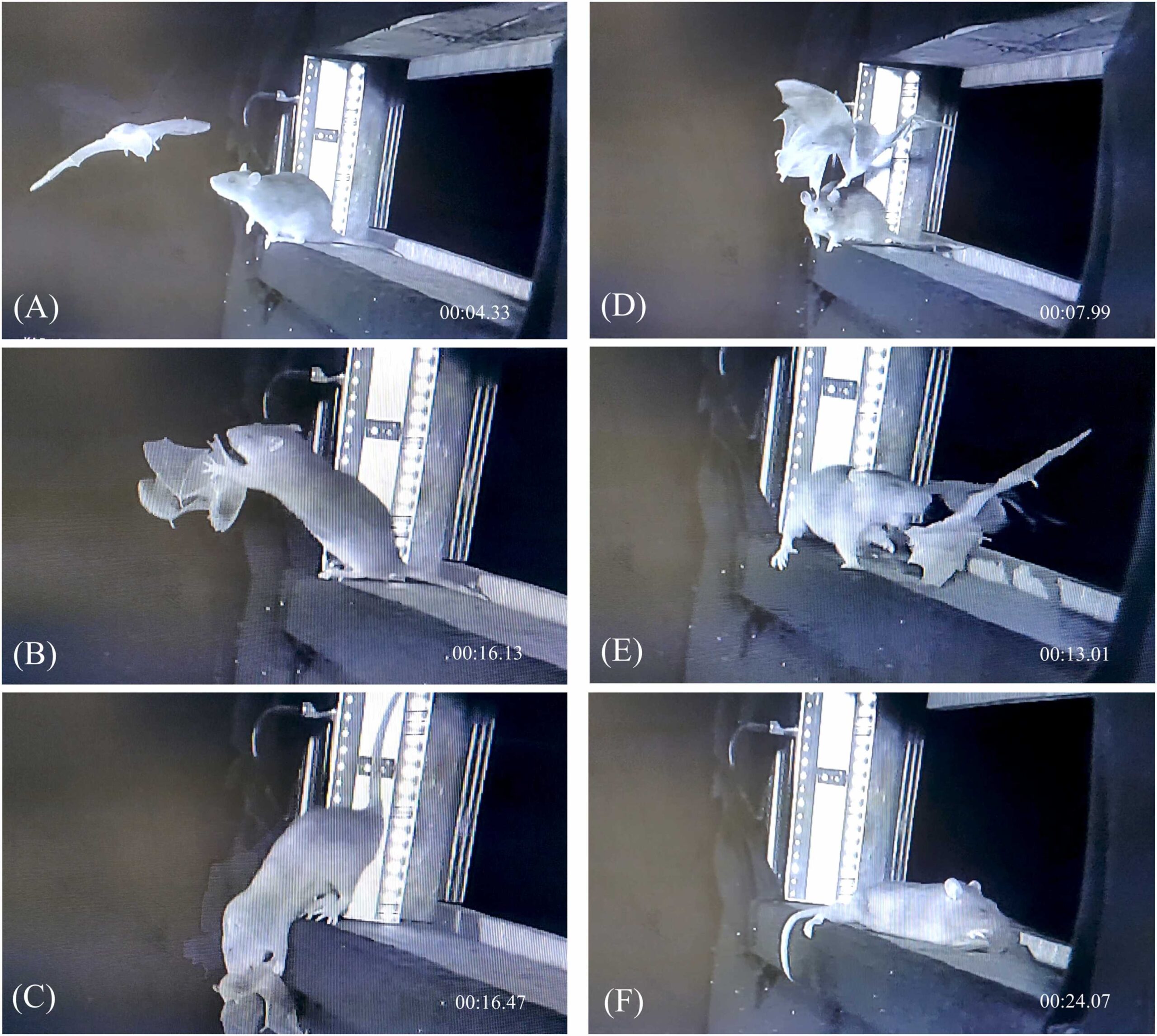
A few months ago, scientists investigated a cave in northern Germany. Inside, a hidden infrared camera captured something strange: A rat hiding in a corner jumped at an unsuspecting bat, jumping out of the shadows before swiftly dispatching it. With bat populations already low, scientists jumped in to research the threat. Rats had never been known to hunt bats, so this encounter bewildered scientists.
The rats were identified as brown rats (Rattus norvegicus), one of the world’s most common and invasive predators. The research team turned to other bat caves around the area to see if they could get similar findings like the one shown on the infrared camera.
They did.
Mirjam Knörnschild, the head of the Behavioral Ecology and Bioacoustics Lab at the Museum of Natural History in Berlin, said, “We … [found] rats patrolling the entrances and exits of the cave, and we found caches of more than 50 dead bats that rats had stored. … It made us think that this is not a unique problem after all.”
Brown rats are able to stand upright, balancing using their tails just long enough to allow them to catch a bat in mid-flight. More research pointed out that they could just attack the bats when they are resting on the ground or hibernating. Their hunting techniques have been caught on video.
Unfortunately, these rats are so talented that only a few rats could end up killing thousands of bats in a year – and there aren’t only a few of them. Rats also aren’t the only thing contributing to the bat massacre. Millions of bats worldwide are also being killed by wind turbines, with 200,000+ of those bats being in Germany. While Germany has now set regulations for wind turbines, older wind turbines that were built before still contribute to bat population loss.
If that wasn’t enough, on a more global scale, bats are also being ravaged by the Pseudogymnoascus destructans, a fungus causing the white-nose syndrome, which has killed millions of bats in North America. While bats in Europe and Asia have developed a resistance to this fungus (as it originated there), it still causes major problems for bats.
Researchers were worried that the rats could push some bat species into extinction. Bats are slow-reproducing animals, so it takes a while for them to recover from losses.
“Rats are smart and fascinating creatures,” Knörnschild mentioned. “I don’t have anything particular against rats. It’s just when there are a lot of them, they can wreak havoc.”
To prevent more bats from suffering, Knörnschild and other researchers recommend stronger measures to prevent the rodents. Some of their countermeasures include rat-proof waste containers, and blocking rodents from the bat cave entrances.